Dojo Velvet Twin Sai Carry Case - Black Vinyl
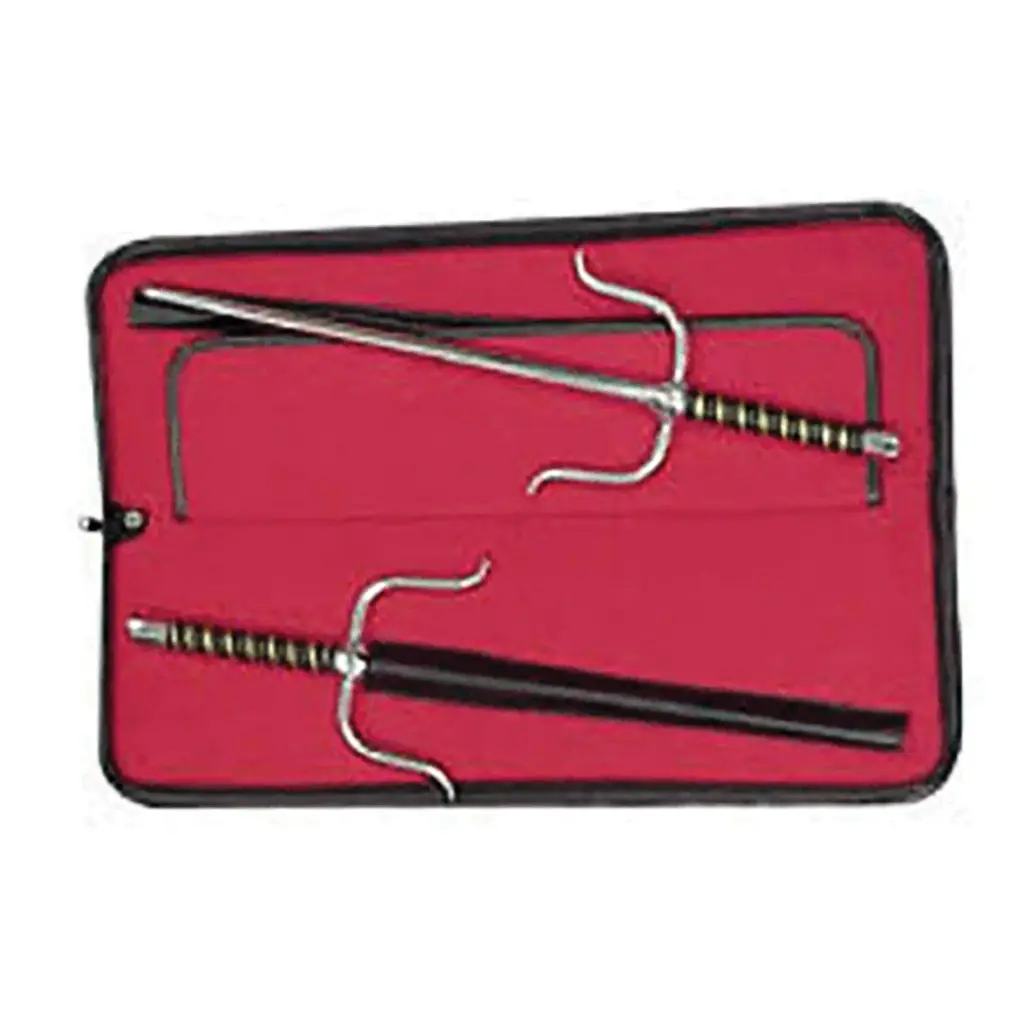
You feel the shift the first time you lay your pair inside this sai case. The velvet-lined interior grips the metal gently, turning everyday transport into a quiet ritual. Your sai stay locked, separated, and ready—no clatter, no scratches, no guesswork. The black vinyl shell shrugs off car trunks, dojo floors, and long walks to class. You don’t just show up carrying weapons; you arrive looking like someone who respects what they train with. This double sai case makes that clear before you say a word.
You know the difference between just tossing your sai in a bag and laying them down like they matter. One looks rushed. The other feels like a small bow before the work begins. The first time you unzip a dedicated sai carrying case and see your weapons resting in red velvet, you feel that shift in your gut—this isn’t just gear anymore. This is part of your practice.
Why a dedicated sai carrying case changes how you show up
There’s a moment before class, before a demo, before testing, where the room is still sorting itself out. Shoes off. Belts being tied. Light chatter. Then it’s your turn to bring out your weapons. With a proper sai carrying case, you don’t fumble in a backpack or unwrap a towel. You set a simple black case down, unzip, and open it like a book. Red velvet, polished metal, everything right where you left it.
People notice. Not because you’re showing off, but because there’s no hesitation. Each sai has its place, held by straps that keep tines from kissing and scratching each other. The double-carry layout means your pair lives together, side by side, just like you drill—left and right, balanced and ready. You’re not digging or sorting. You reach, and your hand lands exactly where it should.
The build of this sai carrying case and what it means for you
From the outside, the black vinyl shell looks clean and unassuming. That’s good. It doesn’t scream for attention walking from your car to the dojo or crossing a parking lot at night. Vinyl shrugs off scuffs from concrete, the slide across a back seat, and time on the floor by the wall while you train. You wipe it down and it looks the same as it did last week.
Inside, the red velvet-style lining hits you immediately. Not as some luxury flex, but because of how it feels against metal. Your sai don’t rattle. They don’t slide around. The finish you’ve already invested in—chrome, steel, blacked-out, or polished—stays protected from the tiny abrasions that add up over months of careless transport. The padding cushions the tines and handles, turning every trip from trunk to training space into a smooth, predictable ritual instead of a gamble.
The zipper runs the full edge, so the case opens flat. No awkward half-open struggle. No trying to work weapons around a tight opening. You lay the case down, open it fully, and your sai are displayed the way they should be: straight, centered, and secure. The rounded corners keep the whole thing from digging into your side or catching on other gear when you carry it.
Carrying your sai in real life: from car trunk to dojo floor
Transport is where most weapons take their damage, not during training. A proper sai carrying case quietly fixes that. Dual handles balance the weight so you’re not pinching a thin strap or hugging an awkward bundle to your side. You grab both handles, feel the weight of your pair settle evenly, and your body relaxes into a natural carry.
Walking into the dojo, everything feels simpler. You’re not juggling a gi bag, a water bottle, and loose metal that could clink if you move too fast. You stack your items: gi bag on one side, sai case on the other. The case’s slim profile means it slides next to your bag instead of taking over the room. When it’s time to train, you don’t have to make a production out of it. Drop to one knee, unzip, and your everyday sai are waiting exactly where they belong.
For instructors, this matters even more. When students see you open a weapon case like this, they see your standard. You’re teaching without saying a word: this is how we treat weapons. Not as toys. Not as props. As tools deserving of care. If you’re a retailer, the same rule applies—laying a pair of sai in velvet inside a black case instantly raises their perceived value. It tells the buyer these aren’t just metal sticks with prongs; they’re part of a tradition.
When a double sai carrying case becomes an extension of your practice
There’s a small but important difference between having weapons and having a setup. A double sai carrying case gives you that setup. Your mind relaxes because you know exactly where everything lives. You don’t waste mental energy worrying whether your tines are scratching against each other, or if your handle wrap is getting chewed up in transit.
Instead, you start to build a quiet ritual around it. After training, you wipe your sai down, check the tines, and slide each one back into its place. Right side, then left side. The velvet catches any stray moisture. The straps hold firm. When you zip the case closed, it’s like closing a chapter on that session—work done, tools respected, ready for next time.
Over months, that rhythm shapes how you feel about your training. You stop thinking of your weapons as loose objects and start treating them as partners in your progression. That’s not marketing fluff; it’s the reality of anything you handle with consistency and care. A dedicated carrying case becomes a small, reliable boundary between chaos and clarity. On one side is the noisy world—trunks, commutes, crowded hallways. On the other side is the red-lined calm where your sai wait for the signal to work.
Questions people ask before buying a sai carrying case
Will this sai carrying case actually protect my weapons in daily use?
If your sai move frequently—from home to car to dojo and back—a proper sai carrying case makes a real difference. The padded velvet-style interior keeps metal from banging together, and the straps separate and secure each weapon. Combined with the durable black vinyl exterior, it protects against both cosmetic scratches and the slow wear that comes from casual transport.
Can this double sai case handle full-size training sai?
This is built as a double-carry case for standard training sai, the kind most students and instructors use in class and demos. The interior layout is designed for a pair, with enough room for typical handle length and tines without cramming them in. If your sai are unusually oversized or heavily customized, you’ll want to visually compare dimensions, but for most everyday practitioners, it fits the pair they already own.
Is a dedicated sai carrying case worth it if I already use a gym bag?
A gym bag will move your gear, but it won’t protect your sai from each other, from keys, from shoes, or from whatever else gets tossed inside. A dedicated sai carrying case gives your weapons their own environment—padded, separated, and quiet. If you’ve invested time breaking in a pair you like, or money on a finish you want to keep clean, the case pays you back in how your weapons look and feel six months from now.
Can I travel with this sai case without drawing attention?
The black vinyl exterior is intentionally low-profile. It looks more like a simple instrument or gear case than a weapon carrier. There are no loud graphics or shapes that scream what’s inside. That said, you’re still responsible for following local laws about transporting martial arts weapons, but the case itself helps you move with less visual noise.
Picture the next time you arrive at the dojo. You step in from the street—traffic noise fading behind you, mat noise soft in front of you. In one hand, your usual bag. In the other, a simple black rectangle that feels solid but not bulky. You set it down, unzip, and open it flat. Red velvet. Your pair of sai resting exactly where they should, no dings, no rattle, no dust from the trunk.
In that small, quiet moment, you feel the difference. You’re not the person scrambling for loose weapons at the bottom of a bag anymore. You’re the one who treats every part of this art with intention. Owning a dedicated sai carrying case doesn’t make you a better martial artist overnight—but it does pull your habits in that direction, one respectful zip at a time.