
Field‑Forged Mercenary War Sword - Brown Wood
You don’t hang a mercenary sword like a movie prop. You lean it by the door, within reach. This medieval mercenary sword feels like that—50 inches of straight, honest steel with a blood groove and real wood in your hand. The sheath creaks softly as you draw. It’s not flashy, it’s believable. You look at it once and know: if you needed steel that meant business, this is what you’d grab.
You don’t buy a mercenary sword because you want to play knight. You buy it because some part of you has always wondered what it would feel like to grip real, working steel—the kind a man or woman on the road would have carried when coin was earned the hard way. You picture it leaning against a wall in your space, not as decoration, but as a quiet statement of who you are when things get serious.
How a Medieval Mercenary Sword Fits the Story You’re Really Telling
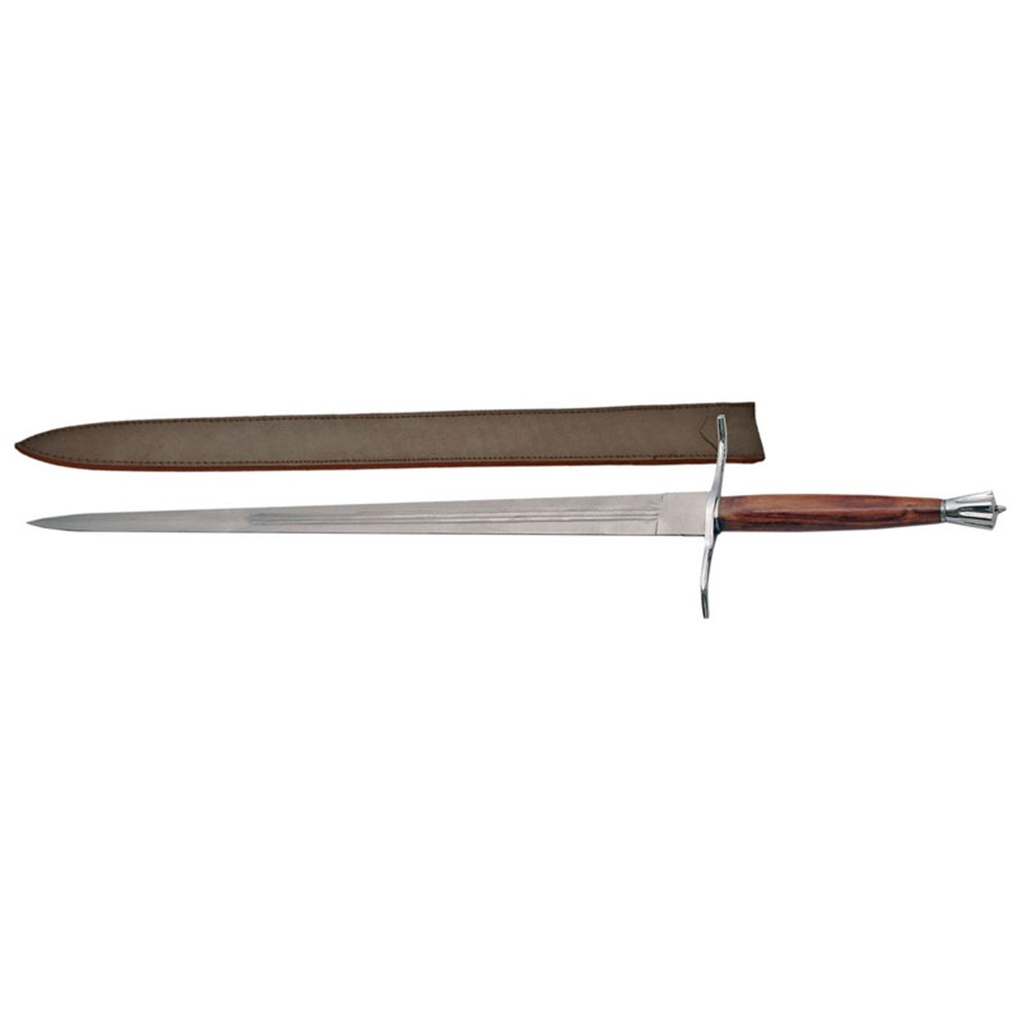
A medieval mercenary sword hits different than a flashy fantasy blade. There’s no dragon sculpted into the guard, no glowing runes; just a long, straight silver blade with a blood groove running clean down the center, a simple crossguard, and a brown wooden handle that actually feels like something you could have swung in anger. When you pick it up, it doesn’t feel like cosplay—it feels like work.
This 50-inch sword puts weight in your hand and a clear line in your mind: this is what people carried when nobody was coming to save them. The single-edged, tapered point tells you it’s thrust-ready; the fuller lightens the blade just enough that you can move it without fighting it. You don’t have to know blade geometry to feel that balance. You just notice that when you raise it, it wants to track straight.
The Medieval Mercenary Sword That Chooses Function Over Flash
When you choose a medieval mercenary sword like this, you’re quietly rejecting the wall-hanger look. The polished silver blade is clean, but not over-ornamented. The blood groove isn’t a gimmick; it’s a nod to how real swords were lightened for battle. The crossguard curves down just enough to protect your hand without snagging on your grip. The faceted metal pommel anchors the whole thing with a subtle, almost industrial feel.
The wood handle is where the design really clicks. It’s not wrapped in faux leather or plastic; it’s smooth brown wood, shaped to sit in your palm without hot spots. When your skin meets that wood, the sword stops feeling like a replica and starts feeling like equipment. You can imagine it absorbing sweat, living with wear, taking on the story of whoever holds it most.
The Texture of Steel and Wood in Your Hand
Run your thumb along the flat of the blade and you feel the shallow channel of the fuller under the polished surface. Close your fingers and the wood warms under your grip. There’s a tiny shift when your hand slides down and meets the cool metal of the pommel—wood to steel, warmth to chill. Those details are what make this feel like a real mercenary weapon, not a costume prop.
Carrying a Medieval Mercenary Sword in the Real World
Owning a medieval mercenary sword isn’t just about hanging it up; it’s about how it fits into your actual life. The included brown sheath changes everything. Instead of a bare blade you’re nervous to move, you get a slim, stitched scabbard that lets you carry the sword from room to room, to events, or out to training without babying it.
You slide the blade home and hear that low, leather‑like whisper as steel disappears. The sheath hugs the length of the sword, keeping that long, straight profile protected while you transport it. Whether you’re walking into a reenactment camp, a friend’s backyard for cutting practice, or just rearranging your display, you’re not wrestling a naked edge. You’re moving with a sheathed weapon that feels like part of a kit.
From Wall Display to Field Use in One Motion
Mounted on a wall or standing in a corner, the sword and sheath together read as simple, grounded, and believable. When you reach for it, the motion is clean: grip the wood, feel the weight, draw in a single, unbroken pull. In that moment, you stop being a collector admiring a piece and start being the person the piece was built for.
When a Medieval Mercenary Sword Makes More Sense Than a Fantasy Blade
If you’ve ever held a huge fantasy sword and felt that mix of amusement and disappointment—cool to look at, useless to move—you already know why a medieval mercenary sword like this exists. This design comes from a time when swords had to be both lethal and carryable. No impossible curves, no absurd spikes. Just a straight, tapered blade that does what a sword is supposed to do.
Compared to a decorative wall sword, this feels grounded. The 50-inch overall length gives it presence without making it cartoonish. The narrow point and single edge suggest control and direction rather than chaos. When you swing or thrust, you’re not fighting the sword; you’re feeling it flow with your shoulder, elbow, wrist in a line that makes sense.
And that’s the real difference: with this kind of medieval sword, your body believes what your eyes are seeing. The way it balances, the way the handle fills your palm, the way the blade tracks—everything quietly tells your nervous system, “Yes, this would have worked.”
Questions People Ask Before Buying a Medieval Mercenary Sword
Is this medieval mercenary sword just for display or can it be used?
Most people want a medieval mercenary sword that looks authentic enough to display but feels real in the hand. This design, with its full-length fuller, wood handle, and included sheath, is built to be handled, trained with responsibly, and carried to events—not just stared at on a wall.
How long is this mercenary sword and will it feel too big?
This sword is 50 inches overall, which gives it real medieval presence without pushing into oversized fantasy territory. If you’re used to shorter blades, it will feel substantial at first, but the blood groove and tapered profile help keep the weight manageable, so you can grow into it rather than be overwhelmed.
What makes this feel like a real medieval sword instead of a toy?
The honest materials and proportions do most of the work. The polished silver blade with a central blood groove, the simple metal crossguard and pommel, and the brown wood handle and sheath create a grounded, functional look. When you grip it, the balance and textures sell your brain on the idea that this is closer to a real mercenary’s weapon than a costume prop.
Is a sword like this legal to own and display?
In most places, owning and displaying a medieval mercenary sword at home is legal, but laws can vary by state, city, or country. If you plan to transport it—to events, friends’ houses, or cutting practice—carrying it sheathed, secured, and out of reach in a case or trunk is usually the safest and most responsible approach. Always check your local regulations before carrying any large blade in public.
The Moment You and Your Medieval Mercenary Sword Become One Story
Picture a quiet evening. The room’s dim, just a desk lamp and whatever light leaks through the curtains. You reach for the sheath, feel the grain of the wood under your fingers, and draw the blade free. The polished steel catches a thin line of light; the blood groove runs like a shadow down the center. For a second, you’re not standing in a modern room at all—you’re on a packed dirt road, cloak pulled tight, steel your only insurance policy.
That’s what owning a medieval mercenary sword really gives you: not just a long blade and a brown wood handle, but a bridge between the life you live and the life you sometimes imagine. It leans by your wall or hangs in quiet readiness, a reminder that underneath the emails and errands, there’s still a part of you that would have done just fine in a world where the only contract that mattered was the one you could defend with steel.