
Hi-Vis Guardian Inert Training Pistol - Yellow Polypropylene
The first time you drop this inert training pistol into a new shooter’s hands, you see it—the shoulders relax. Your training pistol looks and feels like a full‑size duty gun, yet that hi‑vis yellow frame leaves zero doubt it’s safe. Draws, holstering, retention drills all run smoother because nobody’s flinching at live‑fire risk. You stay in teacher mode, not damage‑control mode, with a training tool that backs up the way you run your range.
You’ve seen it happen a hundred times. A new student steps onto the range, trying to act calm, but their eyes keep sliding to the guns. Their hands hover. Their stance is stiff. They’re not ready to listen yet—they’re just trying not to screw up around live firearms.
Then you hand them a bright yellow pistol that can’t fire a thing.
Fingers finally relax around the grip. Breathing evens out. You can almost see the moment they realize: this part is safe. That’s where the real training starts.
Why an inert training pistol changes how you teach
If you’ve ever tried to teach draws, holstering, or retention with a live firearm—even cleared and double-checked—you know the tension never fully leaves the room. Students are split between learning and worrying about what happens if someone messes up.
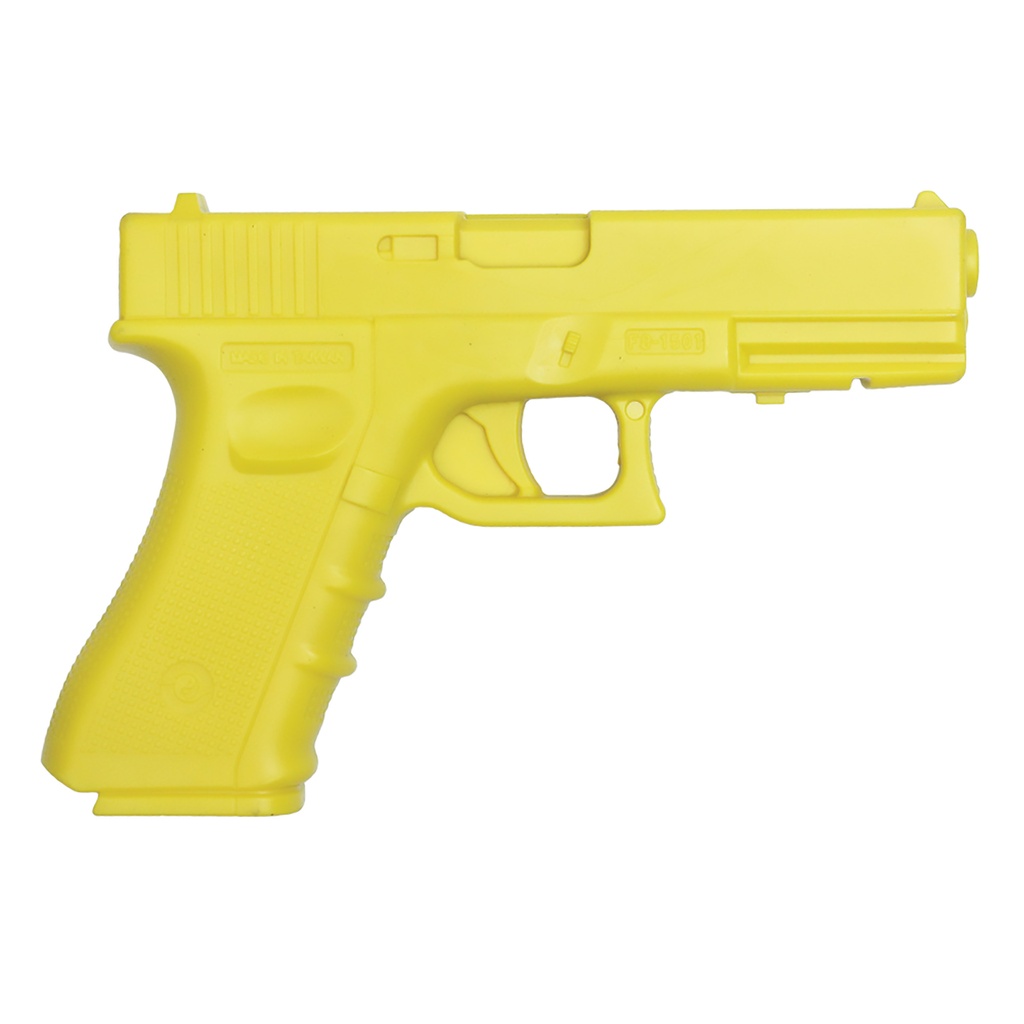
An inert training pistol lets you flip that script. This isn’t a blue gun that only sort of matches your duty setup. It’s a full-size, realistic training pistol molded from solid polypropylene with a clear semi-auto duty profile: squared slide, accessory rail, molded sights, even the undercut trigger guard. At about nine inches long, it fills the hand like a real sidearm, so your students’ muscle memory actually transfers.
And yet, that hi-vis yellow? It announces itself before it even leaves your holster. No moving parts. No removable magazine. No way to accidentally load anything. You’re running the same draw stroke and holster index they’ll use on their carry gun—without a live round anywhere in the picture.
How this inert training pistol earns trust in the first five seconds
Put yourself in your student’s shoes. They touch a gun and immediately wonder: “Is this really unloaded?” Even if they know the safety rules, that fear hums under every rep. When you place an inert training pistol in their hand, the question shifts from “Is this safe?” to “What do I do first?”
The hi-vis yellow polypropylene body does half your safety briefing for you. One glance tells them this is a dedicated training tool. No chambers. No slide cycling. No magazine dropping free if they grip wrong. Just a solid, molded replica that exists for one thing: helping them learn without the risk of a negligent discharge.
The textured grip—with finger grooves and molded panels—anchors their hand the way a real duty pistol would. They feel the front strap under their fingers, the backstrap against the heel of the palm, the squared trigger guard as their support hand locks in. That realism means when they graduate to their live pistol, the motion doesn’t feel new. It feels familiar.
Built for hard use: what the yellow polypropylene actually does for you
Range gear gets dropped, kicked, tossed in duffel bags, and forgotten in hot cars. A good inert training pistol has to survive all of it and come back ready for the next class without growing sharp edges or cracking where it matters.
This training pistol is one-piece molded polypropylene from muzzle to backstrap. No pinned parts to rattle loose, no slide to misalign, no controls to snap off when someone fumbles a disarm drill. Polypropylene shrugs off concrete, cleans up with a wipe-down, and doesn’t care if it sits in the back of a patrol car or an equipment locker for months.
You can run it through weapon-retention scenarios, gun grabs, close-quarters training, or dry holster reps over and over. That bright yellow frame keeps its visibility, so even as the surface picks up scuffs, it still reads instantly as a non-lethal training pistol from across the room.
How an inert training pistol fits into your everyday training flow
Think about your class timeline. There’s always that middle section where you’re trying to bridge the gap between classroom theory and live-fire work. That’s where this inert training pistol quietly becomes your most-used tool.
From classroom chair to confident first draw
You walk a row of students in a classroom, each with a yellow training pistol in a holster. You correct grip, stance, and draw step by step. Nobody’s worrying about muzzle direction yet—they’re still learning where their hands and hips go.
Because the profile mirrors a modern duty pistol, every rep matters. The molded sights give them a visual index when they extend toward an imaginary target. The squared slide and ejection port outline let you talk through mechanics without risking a chambered round. You aren’t just waving around a generic plastic shape; you’re walking them through the form of an actual sidearm in a consequence-free zone.
On the range, when live fire finally enters the story
Later, when the class moves to live fire, you can still keep an inert training pistol on your belt. One student struggles with re-holstering safely. You swap their live pistol for the yellow one, run three or four slow-motion reps, then hand back their firearm. The correction lands without raising everyone’s blood pressure.
For instructors, range officers, security trainers, or firearms program leads, this becomes the quiet constant in the background: your go-to tool when you want to fix form without loading risk into the moment.
When an inert training pistol matters more than another live gun
It’s tempting to spend budget on another real pistol instead of a dedicated training replica. But ask yourself: how many mishandled moments never happen because you had a bright yellow inert training pistol in play?
New shooter who sweeps the line when turning? You catch it with a training dummy in their hand, not a live weapon. Force-on-force drill where adrenaline spikes and focus narrows? The unmistakable color keeps even observers calm. Demonstration in a classroom or shop floor? You lift a non-firing model that says “trainer” before you even open your mouth.
Compared to a taped-up live gun or a half-realistic prop, this inert training pistol carries one defining message to everyone in the room: we take safety seriously enough to have a tool made just for this.
Questions people ask before buying an inert training pistol
Is this inert training pistol safe to use in a classroom or public demo?
Yes. It’s a one-piece polypropylene replica with no moving parts and no way to chamber or fire ammunition. The hi-vis yellow color makes it obvious at a glance that this is an inert training pistol, which helps reassure students, staff, and bystanders during demos.
How close is the feel of this inert training pistol to a real duty gun?
While it doesn’t duplicate weight exactly, the full-size profile, grip texture, finger grooves, and molded sights closely mimic a modern semi-auto duty pistol. That makes it valuable for draws, holstering, retention work, and basic handling drills where realistic shape matters more than exact weight.
Can I use this inert training pistol for retention or disarm drills?
That’s one of its strongest uses. The solid polypropylene construction and lack of moving parts mean you can run hands-on retention and disarm scenarios without worrying about damaging a slide, trigger, or magazine. The bright yellow frame keeps everyone clear that it’s non-lethal throughout the drill.
End of the day, you’re packing up brass buckets and wiping down benches. One piece of gear always ends up back in your hand: that bright yellow inert training pistol. It’s scuffed, maybe, but still unmistakably safe—still the tool that turned nervous strangers into students who trust you. Next class, when a new shooter’s hands shake around a live gun, you’ll reach for it again. Not as a toy, not as a prop, but as the quiet partner that lets you teach the way you always meant to—confident, clear, and fully in control of every moment.