Vanguard Relic Hand-Forged Medieval Sword - Black Leather
You don’t hang a medieval sword like this just to look at it—you wear it. The first time that hand-forged blade settles against your side in the shoulder harness, you feel your posture change. The leather-wrapped grip fills your hand like it’s always belonged there. This isn’t costume clutter. It’s the moment your kit stops looking like a hobby and starts feeling like a life you’ve stepped into—confident, grounded, and ready for whatever story you’re walking into.
You feel it before you see it. The soft drag of leather across your shoulder, the weight settling clean and vertical along your back. Someone calls your name at the event gate, and when you turn, the black scabbard shifts just enough to remind you: this time, your medieval sword isn’t a prop in your hand—it’s part of you.
The first time you carry a hand-forged medieval sword that actually looks and feels like it belongs in the age it came from, something subtle happens. You stop adjusting your costume and start inhabiting a character. Your steps get heavier in the dirt. Your hand knows exactly where the hilt sits without looking. And you realize this isn’t just about owning a blade. It’s about finally feeling like you deserve to wear one.
When a Medieval Sword Turns Costume Into Character
A lot of people show up to faire or a reenactment with something that looks like a sword from ten feet away. Chrome shine, hollow handle, no weight, no story. You’ve probably held one. It feels like swinging a toy—your brain knows it isn’t real.
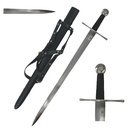
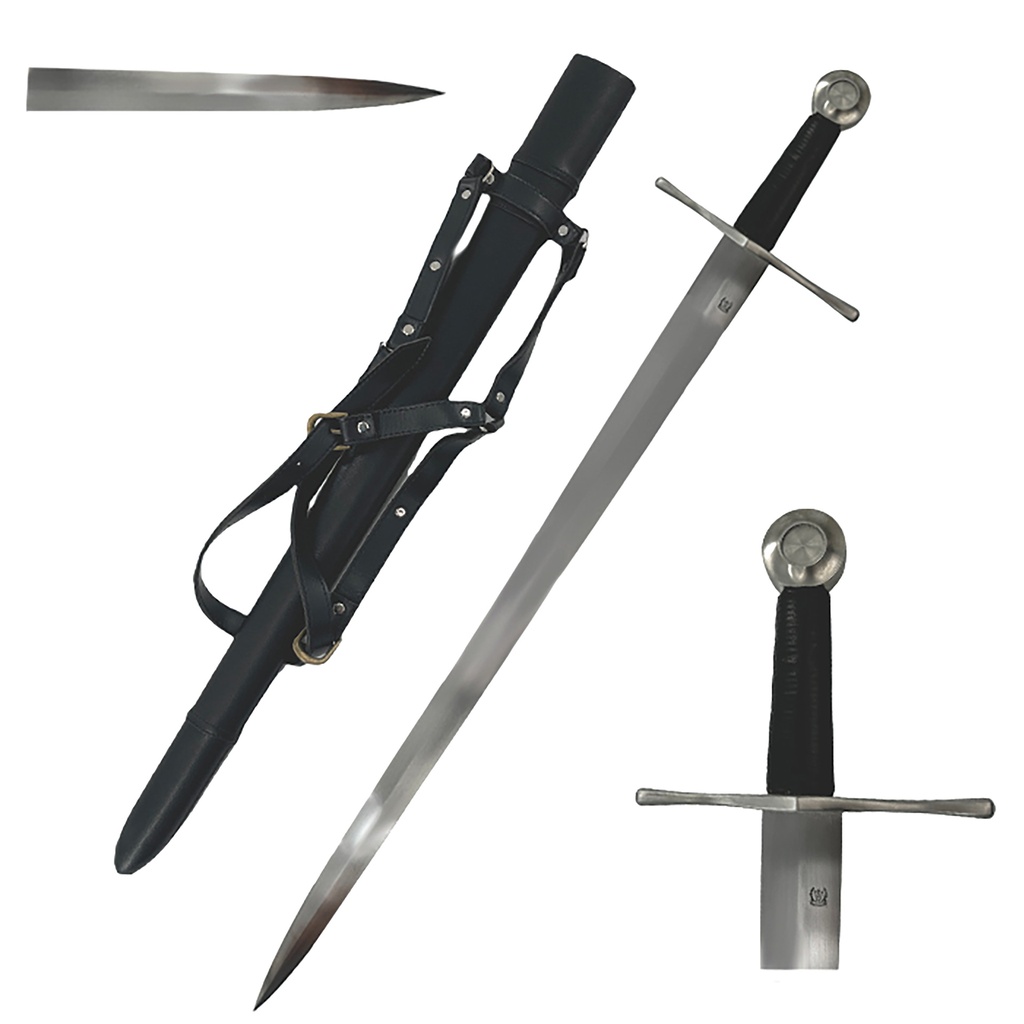
This hand-forged medieval sword lands differently. At 35 inches overall with a 1045 high carbon steel blade, it has that real-world density your body notices the second you draw it. The polished blade catches light in long, honest lines instead of mirror-chrome glare. The straight crossguard doesn’t scream fantasy—it quietly says, "I was built to work."
And that’s what this means for you: when you rest your palm on the leather-wrapped hilt, you don’t feel like you’re playing dress-up. You feel like you’ve stepped into the kind of story where steel mattered. Your grip closes on real leather strips, not molded plastic, and every time you slide the blade from its black scabbard, there’s that low, satisfying whisper that reminds you why you chose a genuine medieval sword in the first place.
Why a Hand-Forged Medieval Sword Feels Different in Your Hand
There’s a reason your eyes caught the words "hand-forged" and didn’t move on. Deep down, you know the difference between something pressed out of a machine and something shaped under a hammer. With 1045 high carbon steel, this blade sits in that sweet spot between resilience and ease of maintenance—tough enough for training cuts and controlled drills, without becoming a nightmare to keep in shape.
The forging process leaves its truth in the blade, even under the polished finish. The spine feels solid, not hollow. The tapered point tracks exactly where you send it. As you practice a simple cut into a hanging target or run through a basic guard transition, you feel the weight settle forward just enough to guide the motion without pulling you off balance.
The Small Details Your Hands Notice First
The leather strips on the grip aren’t just there to look period-correct. They give your fingers texture to bite into when your palms get slick with sweat during drills or a long day at an event. The disc pommel isn’t ornamental weight—it acts as a counterbalance, so when you raise the medieval sword into guard, it doesn’t fight you. It sits where you put it. That’s the quiet confidence you get from a blade that’s been built to be held, not just hung on a wall.
Carrying Your Medieval Sword: From Wall Display to All-Day Wear
There’s display ownership—where your medieval sword lives on a bracket and gathers dust—and then there’s the kind where it goes on with your boots. The included black scabbard and shoulder harness change how you relate to this blade before you ever draw it.
You slide the harness on, adjust the buckles once, and the sword settles into that sweet spot against your back or along your side. The black scabbard keeps the look understated and serious—no gaudy fittings, no costume shine. Just a clean, rigid sheath that matches the black leather grip and silver fittings so everything on you feels like it belongs together.
The Moment It Becomes Part of Your Kit
Picture walking across packed dirt toward a melee demonstration, both hands free, feeling the scabbard shift with your steps. Someone nods at your rig, eyes tracking from crossguard to pommel. They don’t ask, "Is that real?" They ask, "May I see it?" And when you draw, the blade comes free in one smooth pull, the steel flashing just long enough to make you glad you chose something that could actually stand up to more than a photo op.
When Choosing the Right Medieval Sword Really Matters
Maybe you’ve been borrowing blades at practice, always promising yourself you’ll get your own "one day." Maybe you’ve already bought a cheap wall-hanger that rattles, flexes wrong, and lives permanently on a nail because you don’t quite trust it. This is the moment you reach for something better.
A 35-inch hand-forged medieval sword like this hits that versatile middle ground. Long enough to carry presence as a knight, guard, or seasoned wanderer; manageable enough for you to draw, re-sheath, and move through crowds without feeling clumsy. The single-edged, tapered blade keeps things visually clean and historically grounded, so whether you’re building a new character, joining a reenactment group, or just wanting a serious centerpiece for your collection, it doesn’t lock you into a narrow role.
What this means in your day-to-day is simple: when the invite hits—faire, photoshoot, practice, or a backyard cutting session—you already own the piece that makes you say yes without hesitation. No more scrambling for a loaner. No more apologizing for "this old thing." Your medieval sword is ready before the plan even finishes forming.
Questions People Ask Before Buying a Medieval Sword
Is a hand-forged medieval sword like this actually usable, or just for display?
This hand-forged medieval sword is built with 1045 high carbon steel and a rigid scabbard, so it’s more than a wall piece. It’s suitable for light training, controlled cutting, and serious costume or reenactment wear. You still treat it with respect, but it’s made to be handled, not just stared at.
Will this medieval sword be too heavy to wear all day at an event?
The 35-inch length and balanced build keep the weight manageable, especially with the included shoulder harness distributing it across your body. After a short adjustment period, most people find it becomes part of their movement, not a burden—but you’ll still feel that satisfying presence of real steel when you walk.
What makes this different from a cheaper medieval sword I can buy online?
Cheaper blades often use mystery metals, hollow parts, and flashy finishes that feel wrong in the hand. Here you’re getting a hand-forged 1045 high carbon steel blade, a leather-wrapped grip, a solid crossguard and disc pommel, plus a black scabbard and carry system that hold up to actual use. The difference shows up the instant you draw it—and every time you don’t worry about it coming apart.
Is this medieval sword a good choice for a first real sword?
If you’re ready to move past decorative pieces, this is a strong first step. The size is manageable, the materials are honest, and the look is clean and medieval without drifting into fantasy. You’ll have room to grow your skills without quickly outgrowing the sword itself.
Later that night, you lean the scabbard against the wall, fingers still bearing faint lines from the leather wrap. You wipe the polished 1045 steel down, watching the last fingerprints vanish, and slide the blade home into the black scabbard with a sound you’re already getting attached to. Your kit hangs on the chair, boots by the door, and your medieval sword rests within arm’s reach.
Owning a hand-forged medieval sword isn’t about having more gear. It’s about that quiet, grounded feeling that comes from knowing that when history calls—at the gate, in the practice yard, or in front of a camera—you’re not pretending anymore. You’re ready, steel and leather and weight and presence, with a medieval sword that finally matches the way you see yourself.