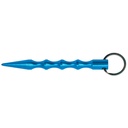
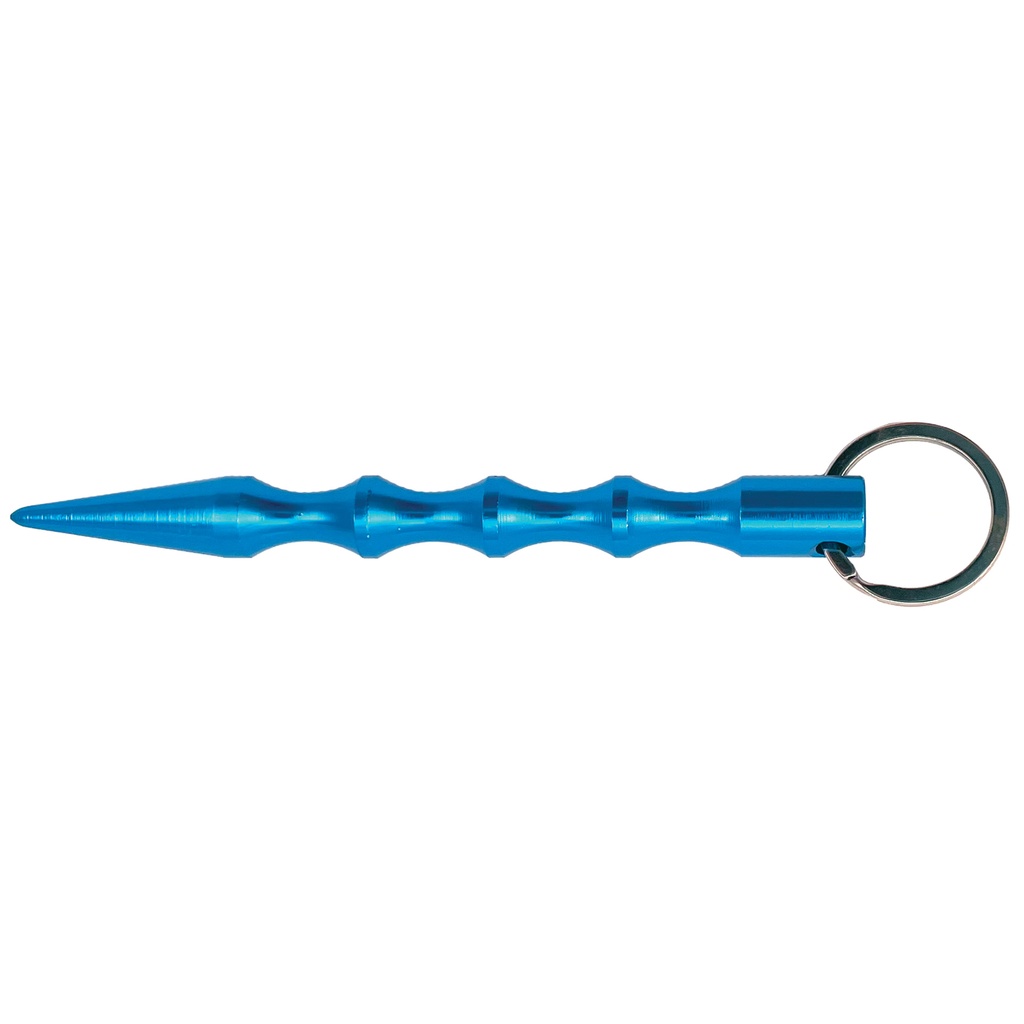

Aqua Sentinel Discreet Kubaton Keychain - Teal Aluminum
You don’t carry a self-defense kubaton keychain because you’re scared. You carry it because you like knowing you’re not empty‑handed if someone misreads you. The teal aluminum sits cool between your fingers, grooves locking your grip, keys jangling like any normal day. Until it isn’t a normal day. In that one sharp, unexpected moment, you’re not fumbling for courage—you’re already holding it.
You’re walking to your car, doing that subtle scan you always do. Not paranoid—just aware. One hand on your bag, the other around your keys. Except tonight, your keys aren’t the only thing in your hand. Your fingers slide naturally into the grooves of your self-defense kubaton keychain, cool teal aluminum resting against your palm like it’s been there your whole life.
You don’t look different. You don’t act different. But you know—if someone crosses that invisible line—you’re not meeting them empty-handed.
How a Self-Defense Kubaton Keychain Changes the Feeling of Walking Alone
Most nights, nothing happens. You cross the lot, step into rideshares, walk across campus, move through parking garages and side streets, and it’s all just background noise. But the tension is always there: What if. That’s the moment a self-defense kubaton keychain is really about—not fantasy fights, but that heartbeat where you decide you’re not going to freeze.
Because here’s what actually happens in those seconds: your fine motor skills go out the window. Trying to dig in your bag or unfold something tiny suddenly feels like trying to thread a needle in an earthquake. But this? A solid 5.5 inches of anodized aluminum sitting right between your fingers, grooves guiding your grip without you thinking about it. You already know exactly how it feels in your hand because you’ve carried it to work, to class, to the grocery store a hundred times before.
The moment your grip starts deciding for you
Those four machined finger grooves aren’t a design flex—they’re a cheat code for stress. Your hand finds them without looking, your thumb settles where it always does, and suddenly you’re anchored. The pointed tip gives every strike focus; the length of the kubaton turns your everyday hand into something that can actually make someone back off.
The Build Story: Why This Self-Defense Kubaton Keychain Can Take a Hit
It’s easy to grab something cheap and plastic and call it a day. But when you picture that one time you might actually have to use force, you know plastic won’t cut it. That’s why this self-defense kubaton keychain is carved from aircraft-grade aluminum and finished with a teal anodized coat that doesn’t just look good—it resists scratches, chips, and daily carry abuse.
Aluminum gives you that sweet spot between strength and weight. It feels present in your hand—solid, reassuring—but it won’t drag down your keys or pull your pocket out of shape. The pointed tip is tapered, not fragile; it’s designed to focus impact without being some over-the-top spike that catches on everything or screams "weapon" every time you set your keys on a counter.
Details that quietly do the work
The subtle machined lines along the body are easy to miss in a photo, but in your hand they matter. They give you tactile feedback, that tiny bit of texture that keeps the kubaton from slipping if your palms are sweaty or it’s raining. The steel split key ring is the kind you’ve trusted since middle school—no gimmicks, just a reliable loop that holds your keys and keeps the kubaton anchored where you need it.
And the color? That teal anodized finish walks a fine line: bright enough to find in the dark corner of a bag, calm enough that it doesn’t set off alarms when someone else notices it. It looks like part of your everyday carry, not a statement piece begging to be explained.
Carrying a Self-Defense Kubaton Keychain Without Feeling Like "That Person"
There’s a reason a self-defense kubaton keychain works so well for everyday carry: it doesn’t change who you look like on the outside, but it changes how steady you feel on the inside. On your key ring, it passes as a simple metal fob. In your hand, it turns into leverage, reach, and intention.
Slip it into your pocket with your keys, clip it to a lanyard, or let it dangle inside your bag so you can grab it on instinct. You don’t have to dress tactical, talk gear, or flash anything to feel prepared. The kubaton just becomes another part of your routine—touching your keys when you step out of an Uber, wrapping your fingers around the grooves when you’re heading down a long hallway, feeling that cool metal calm your nervous system when your brain starts spinning scenarios.
And because it’s compact and smooth, it won’t snag on fabric or jab your leg when you sit. The rounded key-ring end keeps it comfortable to carry and comfortable to grip, even if you’re holding it for several minutes on a long walk.
When a Self-Defense Kubaton Keychain Makes the Difference
Most people buy their first self-defense tool after something small but unsettling happens—someone follows too close, a stranger doesn’t take no, a "harmless" joke goes one step too far. You replay it later and think, I wish I had something in my hand. That’s the gap a self-defense kubaton keychain quietly fills.
In that space between someone making you uncomfortable and someone actually putting hands on you, a kubaton can change the energy of the interaction. You don’t have to flash it. You don’t have to threaten anyone. Just knowing it’s in your grip, tip angled and ready if you need to strike a hand, a forearm, a thigh—that knowledge alone can steady your voice and straighten your spine.
Maybe you never have to use it. Maybe it lives its whole life as the teal accent on your key ring, catching sunlight when you unlock your door. That’s still a win. Because the real shift is internal: you stop narrating yourself as "vulnerable" and start quietly seeing yourself as "prepared." And if the day ever comes when someone really does test that boundary, you’re not scrambling for something to swing—you’re already holding the answer.
Questions People Ask Before Buying a Self-Defense Kubaton Keychain
Is a self-defense kubaton keychain legal to carry?
Legality depends heavily on where you live. In many places, a self-defense kubaton keychain is treated like any other keychain tool, but some regions have restrictions on impact weapons. It’s worth spending five minutes checking your local laws or asking a trusted local source so you can carry with confidence, not uncertainty.
How do you actually use a kubaton in self-defense?
You’re not trying to become a martial artist overnight. A kubaton is about simple, gross-motor movements: gripping it like an ice pick or a hammer and targeting soft spots—hands grabbing you, thighs, forearms, or joints. A short class or a few reputable online videos can show you basic techniques so your self-defense kubaton keychain feels like an intentional tool, not just a metal stick.
Will a kubaton get in the way of my normal daily carry?
If you already carry keys, adding a kubaton doesn’t have to change much. This one is lightweight aluminum, smooth and compact, so it rides easily in your pocket or bag. Most people forget they’re carrying a self-defense kubaton keychain until they deliberately reach for it—and that’s exactly how it should feel.
Is a kubaton better than pepper spray for everyday carry?
It’s less about "better" and more about how you personally respond under stress. Pepper spray relies on aim and distance; a kubaton is for when someone is already too close. Many people carry both. A self-defense kubaton keychain shines in tight spaces—crowded transit, stairwells, doorways—where creating a little pain and space might be all you need to break contact and get away.
Owning the Moment With a Self-Defense Kubaton Keychain
Later tonight, when you lock your front door, your keys will land where they always do—on the counter, in the bowl, on the hook by the wall. But now there’s a slim teal line among them, anodized aluminum catching a hint of light. At first use, you’ll turn it over in your hand, feel the pointed tip, test your grip in those grooves. You’ll practice once or twice in the mirror, just enough to know that if you ever need to move, you can.
And then it becomes background—a quiet part of your everyday carry. Except every time you walk across a dark lot, or cut through the back entrance, or hear footsteps behind you, your hand will find it without thinking. That’s the real story of a self-defense kubaton keychain: not drama, not bravado, just the quiet realization that you don’t have to feel small when the world gets close. You walk a little taller, speak a little steadier, because your grip already knows what to do.