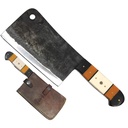
Backwoods Heritage Meat Cleaver Knife - Bone Handle
You know that moment when the fire’s low, the day’s hunt is done, and everyone’s watching how you work the meat? That’s where a meat cleaver knife like this earns its place. Full-tang heft, forged steel, and a polished bone handle give you control that feels old-school and earned. The leather belt sheath rides at your hip, so when it’s time to break down a shoulder or prep camp steaks, you’re not looking for a tool—you’re already holding the one that fits your hands and your story.
| Blade Length (inches) | 6 |
| Overall Length (inches) | 10.75 |
| Weight (oz.) | 32 |
| Blade Color | Silver |
| Blade Finish | Matte |
| Blade Style | Cleaver |
| Blade Edge | Plain |
| Blade Material | Steel |
| Handle Finish | Polished |
| Handle Material | Bovine Bone |
| Theme | None |
| Handle Length (inches) | 4.75 |
| Tang Type | Full |
| Carry Method | Belt Loop |
| Sheath/Holster | Leather Sheath |
The fire’s settled into coals, someone’s laid a quartered shoulder on the board, and every eye drifts to you. Not because you’re loud, but because you’re the one who actually knows what to do next. Your hand drops to your belt, leather familiar under your fingers, and the weight of your meat cleaver knife tells everyone the evening’s about to get serious.
How a Meat Cleaver Knife Changes the Way You Work
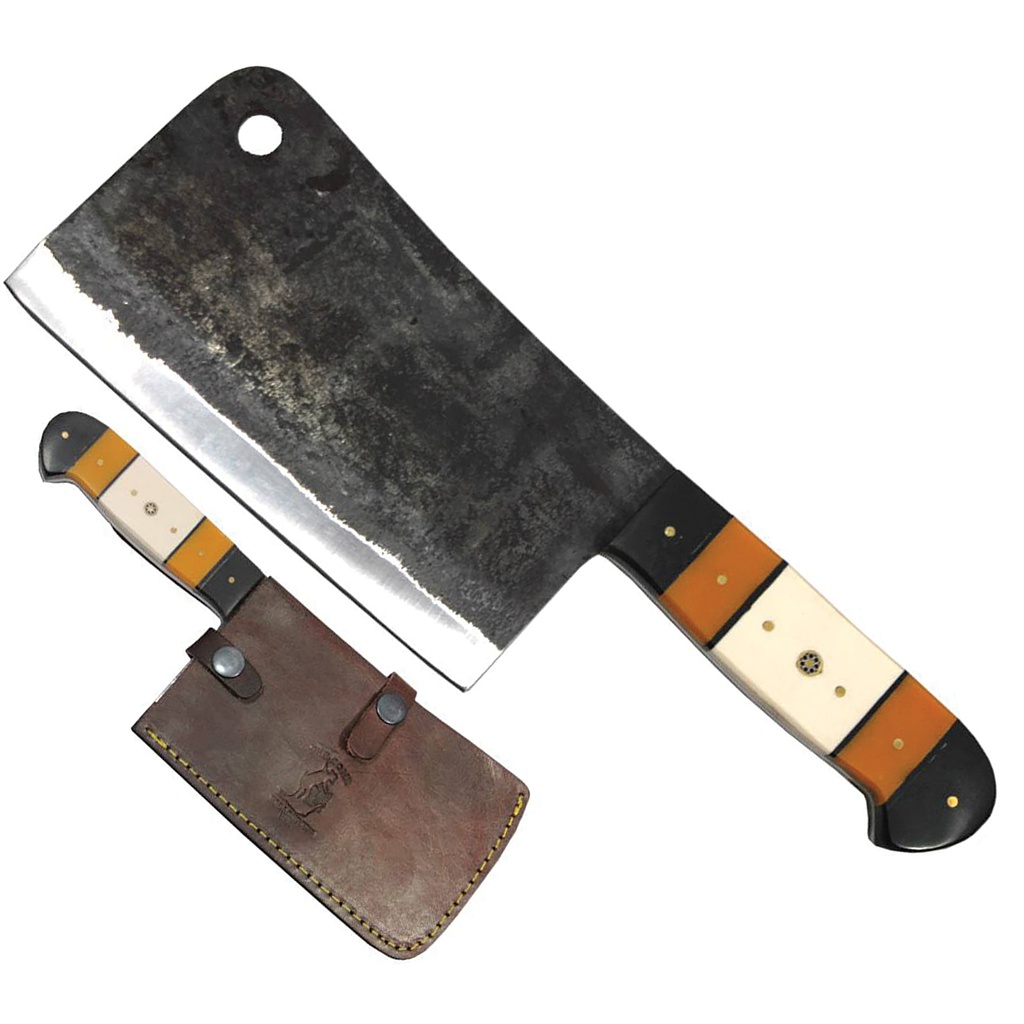
You’ve probably made do before—cheap blades, kitchen knives from home, something that flexed when you needed it to bite. A real meat cleaver knife doesn’t ask you to compensate. At 10.75 inches overall with a 6-inch cleaver blade, this one brings enough mass to split joints cleanly, yet it still feels precise when you’re shaving silver skin or trimming fat.
The forged matte steel face and polished cutting edge mean you’re not babying a pretty toy; you’re swinging a tool built to hit bone, cartilage, and dense muscle without flinching. That squared-off, rectangular blade puts force exactly where you mean it. When you raise your hand, you feel the balance. When you bring it down, you feel the follow-through. You’re no longer guessing whether it will do the job—you’re choosing how you want the job done.
Why This Meat Cleaver Knife Feels Like an Heirloom on Day One
There’s a reason this doesn’t look like something off a supermarket rack. The full-tang construction runs the length of the handle, steel visible along the spine and butt—so when you swing, you’re not trusting glue; you’re trusting steel on bone. The polished bovine bone handle is more than just looks. It warms under your grip, smooth but not slick, with colored segments and a mosaic pin that make it feel like it has a story before you even write your own.
That bone, framed by orange and black scales, hits a specific nerve: it feels like the kind of handle your grandfather would’ve had hanging on a nail in the shed. Not a modern tactical statement piece—just honest, rugged heritage meant to be used hard. Every brass pin you see is one more quiet reassurance that this isn’t a disposable tool. It’s something you’ll clean, oil, and hang, knowing it’ll be ready when you pull it down again next season.
The Texture You Can Feel Before You Cut
Run your thumb along the forged blade face and you’ll catch those subtle ripples. That texture doesn’t just look rustic—it helps with grip when your hands are damp, and it reminds you this isn’t stamped flat stock. Then your fingers slide down to the polished edge, and you can almost hear the first decisive chop into the board.
From Field to Fire: Carrying a Meat Cleaver Knife That Actually Belongs Outdoors
If you’ve ever tried to haul a kitchen cleaver out to camp, you know the problem. No sheath, awkward to pack, and you end up wrapping it in a towel and hoping for the best. This meat cleaver knife comes with a brown leather sheath that doesn’t just protect the blade—it makes carry part of your ritual.
The belt loop lets it ride at your hip while you hike into camp, handle flared just enough that your hand finds it without looking. Snap closures keep it secure when you’re bending, lifting, or climbing into the truck. That embossed animal logo on the leather isn’t some loud branding move; it’s a quiet nod that this belongs closer to a skinning tree or a smoker than in a showroom.
That First Draw at the Cleaning Table
Picture this: the day’s hunt is hanging, the work table is slick with melt and water. You unsnap the sheath, pull the cleaver free, and the cold steel meets the cold air with a dull shimmer. In that tiny pause—right before you make the first cut—you feel oddly calm. You’re not wondering if the blade can take it. You’re already thinking about how clean you can make the work look.
More Than Chops: How You Actually Use This Meat Cleaver Knife
The obvious job is heavy cutting—rib racks, joints, thick bones. But where this meat cleaver knife earns its keep is in the in-between tasks that would destroy a fragile edge. Splitting smaller game, portioning thick steaks, cleaving through poultry, cracking marrow bones for stock—tasks that ask for both confidence and control.
The 4.75-inch handle length gives you enough room to adjust grip. Choke up near the blade for finer trimming or slide back to let the blade weight do the work when you’re coming down on a joint. The circular hole near the top corner of the blade works as a hang point in your shed or kitchen, but it also doubles as a control point if you like to pinch higher on the spine while doing slower, careful cuts.
Because it sits in that sweet spot between kitchen and field gear, this becomes your go-to when you’re the one everyone calls for butchering day or big cookouts. You’re not switching back and forth between some dainty chef’s knife and a clumsy hatchet. One tool stays in your hand, and you find yourself getting faster, cleaner, and more confident with every shoulder you break down.
When a Meat Cleaver Knife Becomes Part of Your Identity
There’s a quiet pride in being the person who owns the right tool and knows how to use it. A meat cleaver knife like this doesn’t scream for attention; it earns respect in the way it moves through the work. Friends notice how easily you slip into the rhythm of cut, crack, trim, stack. They see the bone handle flashing in the firelight, the forged blade catching a glow as you wipe it clean between cuts.
You start to notice the difference too—how much calmer you are when there’s real work to be done. You stop fighting your gear. No more sawing endlessly with a thin blade that wanders. No more worrying about chipping something that was never meant for this kind of abuse. Instead, you carry a meat cleaver knife that feels made for the life you actually live: muddy boots, cold mornings, full freezers, long cooks, and stories told with your hands busy at the board.
Questions People Ask Before Buying a Meat Cleaver Knife
Is a meat cleaver knife practical outside the kitchen?
Absolutely. A solid meat cleaver knife shines at camp, in a hunting cabin, or by the smoker. It handles heavy butchering tasks, bone work, and thick cuts better than a standard blade, and with the leather sheath and belt loop, it actually makes sense as field gear.
Will this meat cleaver knife be too heavy to control?
It has real heft, but that’s the point—you’re letting the weight do the hard work. The full-tang build and flared bone handle give you a secure grip, so instead of fighting the blade, you’re guiding it. Once you get into a rhythm, that weight feels like an advantage, not a burden.
Can I use a meat cleaver knife for everyday cooking at home?
If your “everyday” includes breaking down whole cuts, ribs, poultry, or game, then yes. In a regular kitchen, you’ll reach for it when you want straight, confident chops and don’t want to worry about babying a fragile edge. It moves easily from backyard butchering table to cutting board by the stove.
How do I care for a cleaver with a bone handle and leather sheath?
Treat it like real gear, not decor. Wash and dry the blade by hand, avoid soaking the handle, and give the bone an occasional rub with food-safe oil. Keep the leather sheath dry and conditioned so it stays supple. A little attention goes a long way toward keeping this meat cleaver knife ready for the next season.
Later, when the last cut is wrapped and the board is rinsed, you’ll slide this meat cleaver knife back into its leather sheath and feel that small, satisfying click of the snap. The fire will still be glowing, someone will be talking about the meal to come, and you’ll catch yourself glancing at the bone handle at your hip. Not as a trophy, but as a quiet reminder: you’re the one people trust when it’s time to turn an animal into meals and memories—and now you’ve got the tool that matches that role.