Campfire Legacy Heritage Survival Knife - Brown Wood
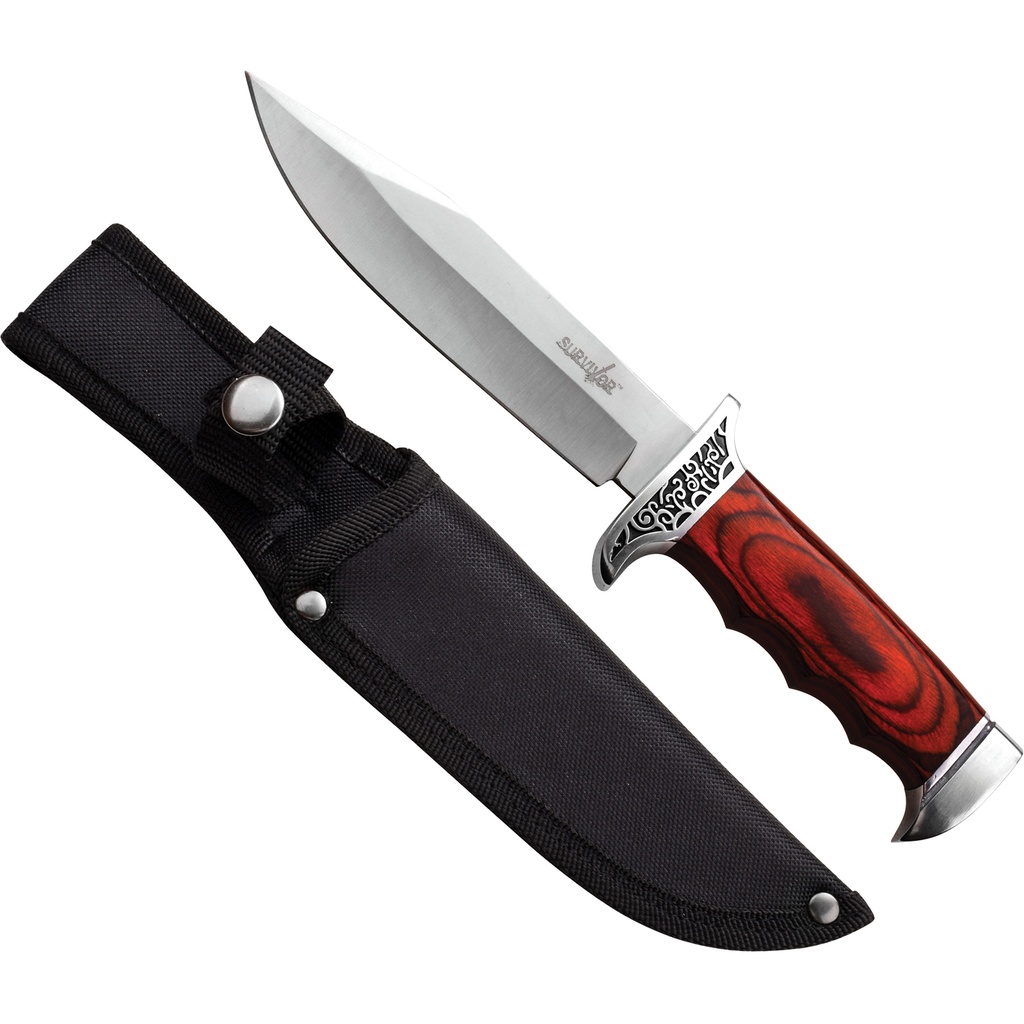
You don’t reach for this survival knife because it’s trendy. You reach for it the way you’d grab the old camp knife your grandfather trusted—without thinking. The satin clip point bites cleanly into kindling, the brown wood handle fits your hand like a story you’ve heard a hundred times, and the full-tang weight settles your nerves as much as it steadies your cut. This is the survival knife that quietly becomes part of how you move through the woods, and who you are when you’re out there.
| Blade Length (inches) | 5.75 |
| Overall Length (inches) | 10.25 |
| Blade Color | Silver |
| Blade Finish | Satin |
| Blade Style | Clip Point |
| Blade Edge | Plain |
| Blade Material | Stainless Steel |
| Handle Material | Wood |
| Theme | None |
| Spine Thickness (inches) | 0.157 |
| Sheath/Holster | Nylon Sheath |
You’re at camp, and the light is dropping faster than you planned. The fire isn’t quite catching, the wind is pushing the smoke sideways, and everyone else is suddenly very interested in whatever they’re doing with their phones. This is the exact moment you find out whether the blade on your hip is just gear—or your calm in the chaos.
When your hand closes around a survival knife that already feels familiar, your heartbeat slows instead of spikes. You’re not wondering if the steel can handle batoning through a stubborn log, or if the handle will twist in your grip when you feather sticks. You just know. Wood, steel, weight, balance—everything lines up with the version of you who gets things done instead of talking about them.
When a Survival Knife Turns You Into the Calm One
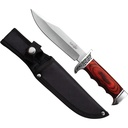
The first thing you notice with this heritage-style survival knife isn’t the blade—it’s the way the brown wood handle settles into your palm. Those three finger grooves aren’t cosmetic; they give you a repeatable, confident grip whether your hands are cold, wet, or working fast. That familiar fullness in your hand is what lets you choke up near the satin clip point to slice food, then shift back for power when you’re breaking down kindling.
The 5.75-inch stainless steel blade hits that sweet spot between long enough to matter and short enough to control. At about 4mm thick, it feels substantial without turning into a pry bar. You feel the spine bite into your thumb when you press down for controlled cuts, and the clip point lets you tip into detail work—sharpening stakes, cutting notches, or cleaning up a feather stick when the wood is fighting you.
What this means for you: in real camp moments—the ones where someone’s cold, the light’s going, or a line just snapped—you’re holding a fixed blade that makes hesitation optional. You see the task, you feel the knife in your hand, and your body already knows how this ends.
Why This Survival Knife Feels Like It’s Always Been Yours
There’s a reason this doesn’t feel like a tactical toy. The full-tang build runs straight through that polished brown wood, giving the survival knife a solid, honest balance. No rattle, no mystery joints, no “hope the pivot holds.” Just a single line of steel from tip to pommel, wrapped in wood that looks like it could have lived in your grandfather’s kit.
The satin finish on the clip point blade isn’t just about looks. That smoother surface helps resist corrosion and cleans up easier after camp chores—you’ll notice it the first time you wipe away sap, fat, or mud with a quick swipe on your pant leg. Stainless steel means less babysitting and more using. Rain on the hike home? You’ll still feel confident pulling this blade from its sheath next time. A quick dry, a quick touch-up, and it’s ready again.
The little details your hand notices first
The decorative guard with its scrollwork cutouts might catch your eye, but what your fingers remember is the way it locks the hand from sliding forward when you push hard. That matching metal pommel at the back adds a sense of completion—both in balance and in the way the knife feels when you draw it from the sheath. It’s not a hollow, echoey weight. It’s solid, like something made to be kept, not just bought.
This is where the design clicks: every curve, from the finger grooves to the guard, works quietly in your favor. You don’t think about it. You simply feel more secure, more precise, more ready.
Carry a Survival Knife That Actually Fits Your Real Life
It’s one thing to love a big fixed blade at home. It’s another to actually carry a survival knife on your belt on the trail or around camp. At 10.25 inches overall, this isn’t pretending to be a tiny neck knife—but it’s not a ridiculous Rambo prop either. On the hip, in its sheath, it feels like part of your kit, not an anchor you regret halfway up the trail.
The 600D nylon sheath is built for that in-between life most knives actually live. Sometimes it’s rubbing against a pack strap, sometimes it’s seeing drizzle all day, sometimes it gets tossed into the back of a truck. The sheath shrugs off the everyday abuse while keeping your blade where your hand expects it—on your belt, vertical, ready.
From backyard to backcountry
This is the kind of daily carry fixed blade you start grabbing for more than you planned. Cutting rope in the yard. Opening bags of mulch. Splitting kindling for a fire pit. Then, when you do head out for a weekend in the woods, it doesn’t feel like a special-occasion tool—it feels like that same trustworthy everyday carry blade you’ve been using all along, just finally in the environment it was born for.
Owning it means your default changes. Instead of asking, “Do I really need to bring a knife?” you just reach for the belt sheath. It becomes as automatic as grabbing your keys.
When a Heritage Survival Knife Beats the Tactical Look
There’s a quiet confidence to a wood-handled survival knife. You’re not broadcasting anything with blacked-out blades or aggressive angles. You’re carrying something that looks like it belongs wherever there’s fire, wood, and work to be done.
That heritage look does something subtle for your identity. Around the campfire, people don’t see a weapon—they see a tool. They see the person who stepped up to carve tent stakes, prep food, and fix the thing that broke when it really couldn’t have picked a worse time. The brown wood, the scrollwork guard, the honest satin steel: it all says you care more about reliability than spectacle.
If you’ve ever wondered whether a tactical folding knife is enough, this is your quiet answer. A full-tang fixed blade doesn’t argue; it just works. You don’t worry about springs, locks, or grit in a pivot—just edge, angle, and how confidently you can put the blade to use.
The moment you feel the difference
You’ll probably notice it the first time you baton through a knotty log. With a folder, you’d hesitate. With this, you line up the spine, tap it through, and feel the steady, predictable progress of solid steel. That’s when the word “survival” stops feeling like marketing and starts feeling like something you can rely on.
Questions People Ask Before Buying a Survival Knife
Will this survival knife hold up to real camp use?
Yes. The full-tang stainless steel blade, 4mm thick spine, and solid brown wood handle are built for actual use—batoning small logs, carving, food prep, and general camp chores. It’s not a showpiece; it’s meant to live in a sheath and see work.
Is a fixed blade survival knife practical for everyday carry?
If your “everyday” includes woods, land, or regular outdoor work, a fixed blade survival knife can be more practical than a pocket knife. The included 600D nylon belt sheath keeps it close, and the 10.25-inch overall size is big enough to matter without feeling absurd on your hip.
What makes this different from a tactical pocket knife?
A tactical pocket knife folds, relies on a lock, and usually leans into a more aggressive look. This heritage-style daily carry blade is a full-tang fixed blade with a wooden handle and decorative guard, built around stability and tradition instead of flash. No moving parts, just straightforward readiness.
Is a survival knife like this hard to maintain?
Not at all. Stainless steel makes rust less of a worry, especially if you dry it after use. The satin finish wipes clean easily, and a simple stone or sharpening tool will keep the edge ready. The wood handle just needs basic care—no special routine required.
Picture this: the fire’s going now. The kindling you split with that satin clip point is catching, the coffee pot is starting to hum, and someone hands you a branch asking, “Can you turn this into a roasting stick?” You draw your survival knife from the nylon sheath without thinking, the brown wood handle nests into your grip like it’s always belonged there, and you start carving. In that small, ordinary moment, you’re no longer the person hoping someone else brought the right gear. You’re the one who did. And this knife is just the quiet proof riding on your belt.