Blue Circuit Recurve Butterfly Knife - Blue Metal
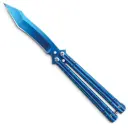
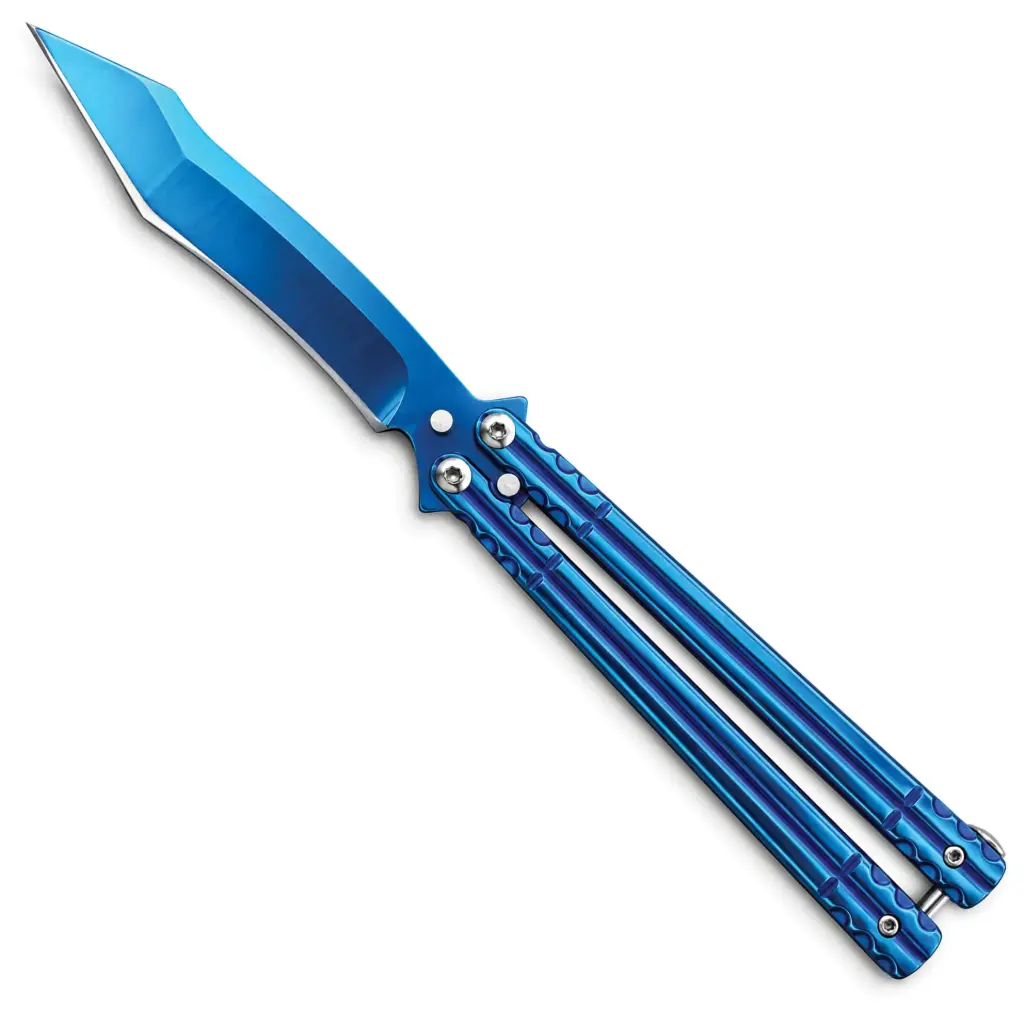
You clear a space beside your watch, then pause: this butterfly knife changes the whole arrangement. Blue runs from the blade into the twin handles, while a silver cutting bevel catches the desk lamp. Your eye follows the recurve into that angular tip, then returns to the long handle channels. Nothing about your collection has to match, but you want each piece to mean something. Here, you get a live blade with a clear visual identity—and the quiet satisfaction of choosing something you can explain without reaching for a slogan.
| Blade Length (inches) | 4.375 |
| Overall Length (inches) | 9.375 |
| Closed Length (inches) | 5.375 |
| Weight (oz.) | 5.42 |
| Blade Color | Blue |
| Blade Finish | Satin |
| Blade Style | American Tanto |
| Blade Edge | Plain |
| Handle Finish | Polished |
| Handle Material | Metal |
| Theme | Tactical |
| Latch Type | Swing |
| Is Trainer | No |
You move yesterday’s receipts off the desk and straighten the watch beside your collection. There’s a gap, but filling it isn’t the point. You want a butterfly knife that gives your eye somewhere to land: blue metal, a silver cutting bevel, and a blade outline you recognize immediately.
With Blue Circuit, you notice how the matching handles continue the blade’s color instead of competing with it. That continuity makes this butterfly knife feel like one considered design, while the recurve and angular tip keep the shape from becoming predictable.
You can already picture this blue balisong beside your quieter pieces. Your butterfly knife doesn’t need a borrowed backstory. The contrast between sweeping lines and hard corners gives you something specific to appreciate every time you look.
When a Butterfly Knife Gives Your Collection a Point of View
You know the difference between adding another object and choosing something that belongs. This butterfly knife earns attention through its coordinated surfaces, not a printed slogan. Your collection knife can stand apart without making everything around it disappear, especially when the silver bevel picks up the same light as your watch case.
Under the desk lamp, the outline changes
When you examine the 4.375-inch blade, you follow a plain cutting edge through a recurve toward an American tanto tip. On this butterfly knife, that meeting of curve and angle is the detail worth slowing down for. You see a blue blade with a satin finish, outlined by the contrasting silver cutting bevel.
You also get a useful distinction: a dramatic outline isn’t a promise of cutting performance. Your butterfly knife has a specific visual character; its edge retention depends on factors beyond appearance. You can appreciate the precision of the silhouette without confusing tactical styling with a durability test.
Getting to Know Your Butterfly Knife Beyond the Blue
When you pick up this butterfly knife, you’re handling 5.42 ounces of knife, not an ultralight accessory. The metal handles give you a concrete material detail, although the exact alloy isn’t specified. If you research before buying, that distinction matters more than an impressive-sounding material claim nobody can substantiate.
The channels beneath your fingertips
You can trace the long handle grooves and notice the scalloped detailing along the edges. This butterfly knife pairs those shaped surfaces with a polished handle finish and exposed silver hardware. Your metal-handled balisong gives you plenty to inspect, but those visible details alone don’t establish grip security, pivot smoothness, or long-term reliability.
You’ll also find twin pivoting handles and a swing latch rather than an assisted-opening mechanism. Your butterfly knife folds through that two-handle arrangement. As you evaluate a live-blade balisong, remember that the mechanism tells you how it operates—not whether it has the balance or tolerances you prefer.
Finding Room Without Pretending It Will Disappear
You measure the space before deciding where a new piece belongs. At 5.375 inches closed, this butterfly knife deserves the same consideration. If you’re comparing a butterfly knife with a smaller pocket folder, start with the actual dimensions rather than assuming every folding design occupies the same amount of room.
Your balisong measures 9.375 inches overall when open. That gives you a better sense of its presence in a display or designated storage space. Before treating this butterfly knife as a daily companion, consider its weight, your usual clothing, lawful transport, and where you can store it securely.
You don’t have to make every collection knife serve the same role. This butterfly knife can be the piece you choose for its coordinated color and unusual blade geometry, rather than the smallest tool in your pocket. Readiness also means recognizing when a different knife suits the task better.
Butterfly Knife or Trainer? Start With What You Actually Want
If you’re shopping for your first butterfly knife, the distinction matters: this is not a trainer. You’re choosing a live blade, with the handling responsibilities that come with it. If your goal is learning manipulations, a purpose-built, unsharpened trainer is the more appropriate starting point.
You may also be comparing a butterfly knife versus a conventional folding knife for routine cutting. Think about your environment, local rules, and preferred opening mechanism before deciding. A familiar pocket folder may fit your daily needs better; a blue balisong may answer a different collecting interest.
For upkeep, you’ll want to follow any supplied care instructions and store your butterfly knife dry and securely. The steel grade and coating specifications aren’t provided, so you shouldn’t assume corrosion resistance or sharpening requirements. A recurved edge also deserves suitable sharpening equipment and an approach matched to its shape.
Questions People Ask Before Buying a Butterfly Knife
Is this butterfly knife a trainer or a real blade?
This butterfly knife is a live-blade model, not a trainer, with a plain cutting edge and a recurved tanto profile. If you want to learn handling movements, choose an unsharpened trainer instead and keep this live blade for uses consistent with your experience and local law.
Is a butterfly knife legal to carry where I live?
Whether you may own, carry, or transport a butterfly knife depends on your jurisdiction, and those permissions may differ. Check current official rules for your country, state or province, and locality before purchasing or carrying; blade length, mechanism, and concealed-carry restrictions may all matter.
Will this butterfly knife hold an edge with everyday use?
You can’t reliably predict this butterfly knife’s edge retention because its steel grade and heat treatment aren’t specified. If cutting durability is your deciding factor, seek those details before buying; blade color and a satin finish don’t establish how long a collection knife stays sharp.
Back at your desk, you examine your butterfly knife in a clear space, then return it to secure storage beside the pieces you chose just as carefully. The blue catches the lamp; the silver bevel draws that familiar line toward the tip. You know why this butterfly knife belongs—not because it promises to make you someone else, but because you noticed the details, asked the practical questions, and chose with your own point of view.