Dojo Shadow Discipline Training Bokken - Black Wood
You don’t pick up this wooden bokken to look dangerous—you pick it up to get honest. The first time you feel this black wood training sword in your hands, the smooth one-piece balance tells you exactly where your stance is lying and where your timing is late. As your kata tighten and partner drills get sharper, the bokken disappears and your awareness takes over. This is the practice blade you reach for when you’re done playing at swords and ready to train like it matters.
You remember the first time a senior student watched you run kata and said nothing. No praise. No corrections. Just that small nod that meant, “You’re starting to get it.” That’s the space this wooden bokken lives in—the quiet, honest middle between clumsy beginner and effortless flow, where every swing tells you exactly who you are in the dojo right now.
This isn’t about owning a cool sword. It’s about having a training partner that won’t flatter you, won’t scare your partner, and won’t get in the way of the work. A simple, black wood bokken that feels like it should have been hanging on your dojo wall since before you walked in the door.
How a Wooden Bokken Changes Your Training Before You Notice
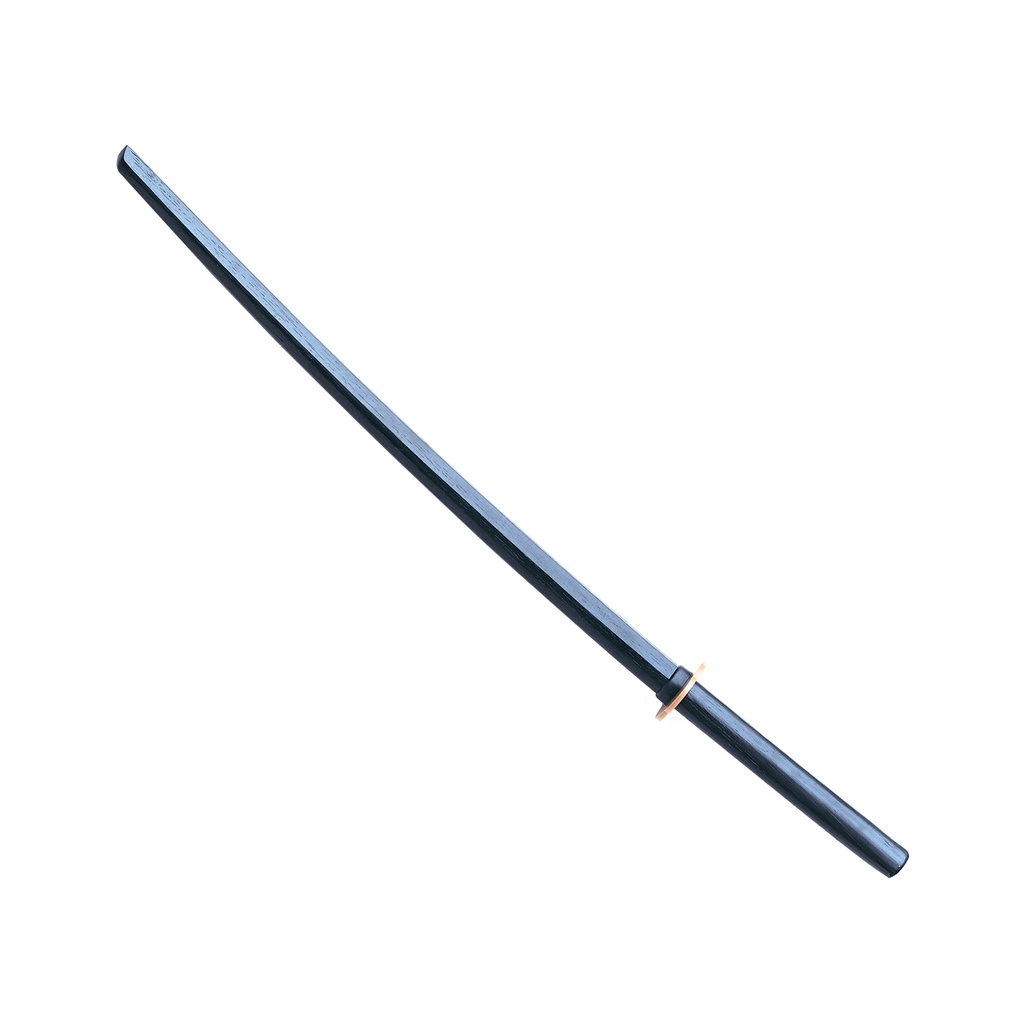
The first surprise with a wooden bokken like this isn’t the look—it’s the way your body responds. At around 40 inches, with a katana-style curve and one-piece black wood construction, it forces you to commit to clean lines. There’s no flex to hide sloppy form, no rattling fittings to distract your mind. Just a smooth, balanced arc that makes every cut either honest… or obviously wrong.
In solo kata, that matters. You feel right away when your grip is too tight, when your shoulder is doing the work your hips should be doing. The bokken gives instant feedback through weight and angle, without punishing you with steel. In partner practice, that same honesty turns into trust. You can move faster, closer, more accurately—knowing a wooden practice sword will bruise your ego before it breaks your partner.
If you’ve only swung foam or borrowed swords, this is the moment you quietly step into the next tier: training with a tool that expects you to mean it.
Why This Wooden Bokken Feels Invisible in Your Hands
The longer you train, the less you want your gear to shout. This wooden bokken is cut from a single piece of black wood, with a smooth, untextured surface that feels clean in the hand but won’t grab at your gi. There’s a subtle ridge along the blade spine—just enough for your thumb to register orientation without you needing to look.
The handle is a simple cylindrical section, no exaggerated shaping, no carved dragons, nothing to interfere with correct hand placement. That round, light-colored tsuba is the only visual break in the line—a quiet reminder of where your lead hand should anchor and where the edge line begins. Once you start moving, it all disappears into muscle memory.
You’re not fighting the tool. You’re not adjusting your grip every three swings. You’re just there: feet on the mat, breath in the lungs, wooden bokken sliding through the same tracks your instructor has run a thousand times before you.
Everyday Dojo Reality: How This Wooden Bokken Lives in Your Routine
Think about your actual week, not the fantasy version. You rush from work, change fast, bow onto the mat with your day still buzzing in your head. When you reach for a bokken, you don’t want to think about whether it’s too fancy for contact drills or too flimsy for serious suburi. You want something you can grab every class without a second thought.
This wooden bokken is built for that rhythm. One-piece construction means no fittings to loosen over time. The smooth black finish shrugs off scuffs and sweaty grip marks, blending back into the weapons rack instead of looking beat after a month. At full length, it tracks close to a live katana’s feel without the edge or fear, which means your spacing, timing, and body mechanics translate cleanly when you eventually touch steel.
For instructors, that consistency is gold. You can line up a row of students with matching black wood bokken and see errors instantly: the one drifting low, the one over-committing, the one turning the hips late. The training sword is neutral enough that the only variable is the person holding it—you.
When a Simple Wooden Bokken Becomes the Line Between Play and Practice
There’s a moment in every martial artist’s path where you stop just “doing the moves” and start owning them. Often, that moment shows up in your choice of training tools. Foam swords are forgiving. Steel can be intimidating. A solid wooden bokken sits right in the middle, quietly asking: “Are you ready to take this seriously?”
In bunkai or aikido weapons work, a wooden bokken like this draws a clear line. The weight is real enough that mistakes have consequences—sore forearms, a bruised knuckle, a wake-up call about distance. But it’s still a training sword, meant to keep you and your partner safe as you learn. That balance builds confidence: you move like the weapon matters without hesitating like it’s going to cut.
Over time, this particular wooden bokken may start to feel like a record of your training. The slightly smoother patch where your right hand rests. The faint impact marks near the tip from countless paired drills. It won’t look pristine forever, and that’s the point. It will look like you’ve been showing up.
Questions People Ask Before Buying a Wooden Bokken
Is a wooden bokken safe for partner training?
A wooden bokken is designed exactly for that purpose: to bring realism to partner work without the danger of a live blade. You’ll still respect distance and control—contact will sting—but that bite is what keeps your focus sharp and your partner standing.
How long will a wooden bokken like this last with regular dojo use?
With normal dojo training—kata, suburi, and controlled contact drills—a solid one-piece wooden bokken will hold up for years. You’ll see surface marks and character over time, but unless you’re abusing it on hard surfaces, the structure remains sound and reliable.
What arts can I use this wooden bokken for?
This style of wooden bokken fits naturally into aikido, kendo kata, iaido weapons practice, kenjutsu, and general Japanese sword arts. The katana-style curve and full length feel familiar across all of them, so your body mechanics transfer cleanly from class to class.
Is a wooden bokken a good choice for beginners?
For a committed beginner, yes. A wooden bokken demands attention to control and respect for your partner from day one, but it also builds good habits that foam trainers never will. You’ll feel your progress in the weight, the line, and the way your cuts start landing where you meant them to.
The Moment This Wooden Bokken Starts to Feel Like Yours
Picture walking into class a few months from now. The nerves you used to feel are gone. You bow in, step to the rack, and your hand goes straight to the same black wood bokken every time. The balance is familiar. The smooth handle sits exactly where your grip expects it. You don’t think about it at all—you’re already seeing the first cut, the first step, the first breath.
That’s when you’ll know this wooden bokken has done its work. It has stopped being an object and become part of your practice—quiet, reliable, a simple line of dark wood carrying the weight of every repetition you’ve put into it. Not dramatic. Not decorative. Just the honest training sword you reach for when you’re ready to get better, again.