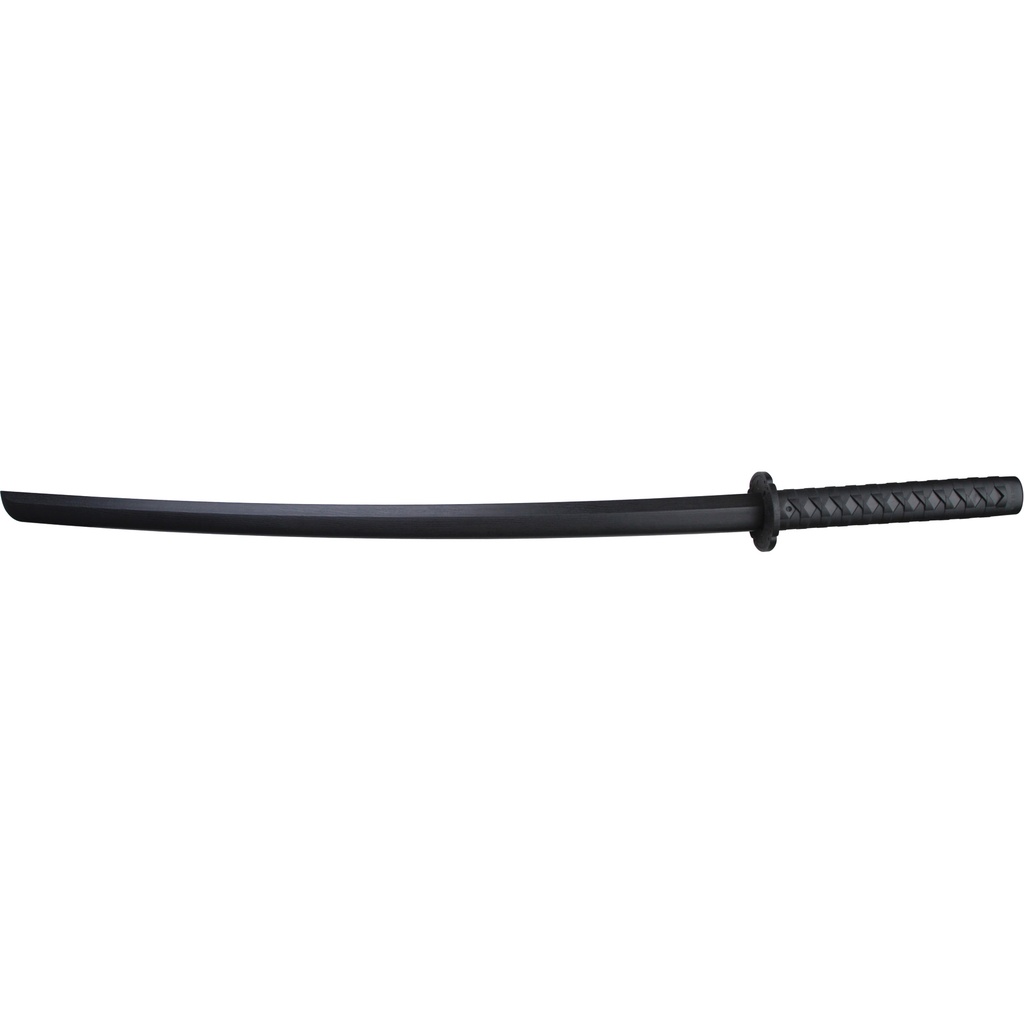
Dojo-True Impact Training Katana - Black Polypropylene
You step onto the mat knowing this training katana will take the hits you’re not ready to. The weight, the curve, the grip—your hands read it as a real blade, even though it’s safely unsharpened. Each clean impact, each kata run full speed, carves better timing into your body. With this dojo training katana in your hands, you’re not just practicing moves—you’re building a version of yourself that doesn’t flinch when it’s time to move.
You feel it the moment you bow onto the mat—today isn’t a walk-through day. Today is the day you stop “going easy” because you’re afraid of splintered wood, bent blades, or someone getting cut. You wrap your fingers around the black grip of your training katana, feel the curve match your stance, and realize: this tool is built to take the hits so you can finally train the way you’ve always pictured in your head.
When a Training Katana Lets You Go Full Speed
There’s a quiet fear that lives in every partner drill. You don’t say it out loud, but it’s there—what happens if someone mis-times a block, if a thrust lands harder than planned, if the wooden bokken catches a wrist instead of a blade? With a polypropylene training katana, that fear doesn’t lead the drill anymore.
This sword runs just over 39 inches, echoing the length and curve of a real katana, so your distance, angles, and cuts translate directly. But the edge is completely blunt and the tip safely rounded, molded from heavy-grade, lead- and phthalate-free polymer. That means you can throw committed strikes in partner work, pressure-test your timing, and feel the thud of impact without flinching for blood or checking for gouges afterward.
The design clicks when you realize how it changes your body language. You stop pulling shots. You stop pretending to cut. You start committing. And that’s when your kata, your drills, and your reactions start to feel like something you can trust outside the dojo, too.
How a Polypropylene Training Katana Changes the Way You Practice
If you’ve ever watched a favorite wooden sword slowly chip, crack, and warp, you already know why this training katana makes sense. One-piece molded polypropylene doesn’t care how many times it hits a partner’s blade, a padded target, or a heavy bag. It flexes just enough to absorb impact, then snaps back to true, so your lines stay honest.
The blade has a smooth, matte finish that glides against other trainers without that jarring, toothy catch you get from rough wood. The balance is tuned along the length of the 39.25-inch profile to feel like a live blade in motion, not a clumsy plastic toy. You’re not swinging a stick; you’re working with something that respects your technique enough to mimic the real thing—minus the danger.
Because the entire sword is one continuous piece, there’s no loose fittings to rattle, no tsuba to slide, no wrap to unravel mid-class. What you get instead is consistency: the same feel in your hands on day one as day one hundred. That reliability turns your repetition work—kata, suburi, partner drills—into something you can stack, session after session, without worrying about the sword failing before you do.
The Feel of the Grip When You’re Dripping Sweat
The handle is where this really starts to feel like your sword. The molded crisscross texture recreates the sense of a traditional wrap without being precious about it. When your palms get slick halfway through class, that pattern bites just enough into your skin to anchor your hands, without hot spots or harsh edges.
You’re not babying a polished showpiece—you’re working with a tool meant to get scuffed, slammed, and driven hard. The all-black color hides the inevitable wear, so it still looks sharp lined up in a rack, even after weeks of impact training.
Daily Reps, Dojo Floors, and Where Your Training Katana Fits In
Think about the little frustrations you’ve learned to accept. The student who’s always nervous of contact. The hesitation before doing a full-speed cut in kata because the wooden blade bounces weirdly. The way you mentally dial down intensity when you’re rotating through partners of different sizes and experience.
Owning a durable training katana made for impact shifts that entire atmosphere. You can assign it as your go-to for partner work, flow drills, and conditioning. You can push cardio rounds on the heavy bag with cutting patterns, trusting the polymer to strike solidly without cracking. You can let newer students explore range and intent while knowing the blade in their hand won’t turn a mistake into an injury.
For you personally, it means this: no more deciding which sword to “risk” today. This one becomes the default—out of your bag, onto the floor, into every drill that asks for honesty instead of careful pretending. The more you forget about the sword and focus on the work, the faster your timing and confidence catch up to the image you’ve been carrying in your head.
From Solo Kata to Contact Conditioning
On solo days, the balance of this training katana makes your cuts feel clean instead of clumsy. The curve guides your wrists into the right line; the weight tells your shoulders when you’re muscling instead of slicing. On contact days, every clash and thud writes new information into your body—how solid a block really needs to be, how much follow-through you can safely own.
Instead of treating conditioning and technique as separate worlds, you start to blend them. Full-speed kata bleeds into partner flow, which bleeds into impact drills, all with the same tool in your hands. That continuity is where real readiness comes from.
When a Training Katana Matters More Than a Display Sword
There’s a point in your journey where you realize the sword hanging on the wall isn’t what’s making you better. It looks good, sure. Maybe it even inspires you. But it’s the blade you grab three times a week, the one that sees your worst form and your best nights, that actually shapes who you’re becoming.
This polypropylene training katana is that blade. It’s not fragile, it’s not precious, and it’s not trying to impress anyone across the room. It’s meant to live in your gear bag, roll across the mats, get dropped, get slammed, and still feel exactly the same when you reset your stance and start another round.
If you’ve ever wondered which is better for your growth—a fancy replica or a reliable practice sword—the answer shows up in your calendar, not your shelf. The one you can trust to take impact, to share with students, to use in real contact drills without fear, is the one that quietly changes everything about how you train.
Questions People Ask Before Buying a Training Katana
Is a polypropylene training katana realistic enough for serious practice?
For distance, grip, and movement patterns, yes. This training katana matches the length and curve of a live blade closely enough that your footwork, angles, and cuts transfer directly. You’re trading sharpness and steel weight for safety and durability, which pays off in full-speed partner work.
Will this training katana hold up to full-contact drills?
That’s exactly what it’s built for. The one-piece polypropylene construction shrugs off repeated impact with other trainers, pads, and bags. Unlike wood, it doesn’t chip, splinter, or slowly loosen at the fittings, so you can focus on pressure and timing instead of damage control.
Is this training katana good for beginners as well as advanced students?
It works well across the board. Beginners get a safe tool that still feels like a real sword in their hands, while advanced students finally have something they can hit, block, and move with at realistic speed. The same trainer can follow you from your first day in the dojo through serious contact training.
Does an all-black training katana get slippery during long sessions?
The molded crisscross handle texture is designed for sweaty hands. As you work through longer classes or conditioning rounds, that pattern keeps your grip stable without tearing up your palms, so the sword feels locked in even when you’re tired.
End of class, the dojo is quieter. Sweat is drying on your forearms, your breathing’s finally slowing, and your training katana rests across your legs as you kneel. You slide your fingers along the matte-black blade, feeling the same solid curve that met you at the start of the night. No cracks, no splinters, no damage—just evidence of the work you put in. In that moment you realize this isn’t just a practice sword; it’s the silent witness to every rep between who you were when you walked in…and the calmer, sharper version of you who walks back out.