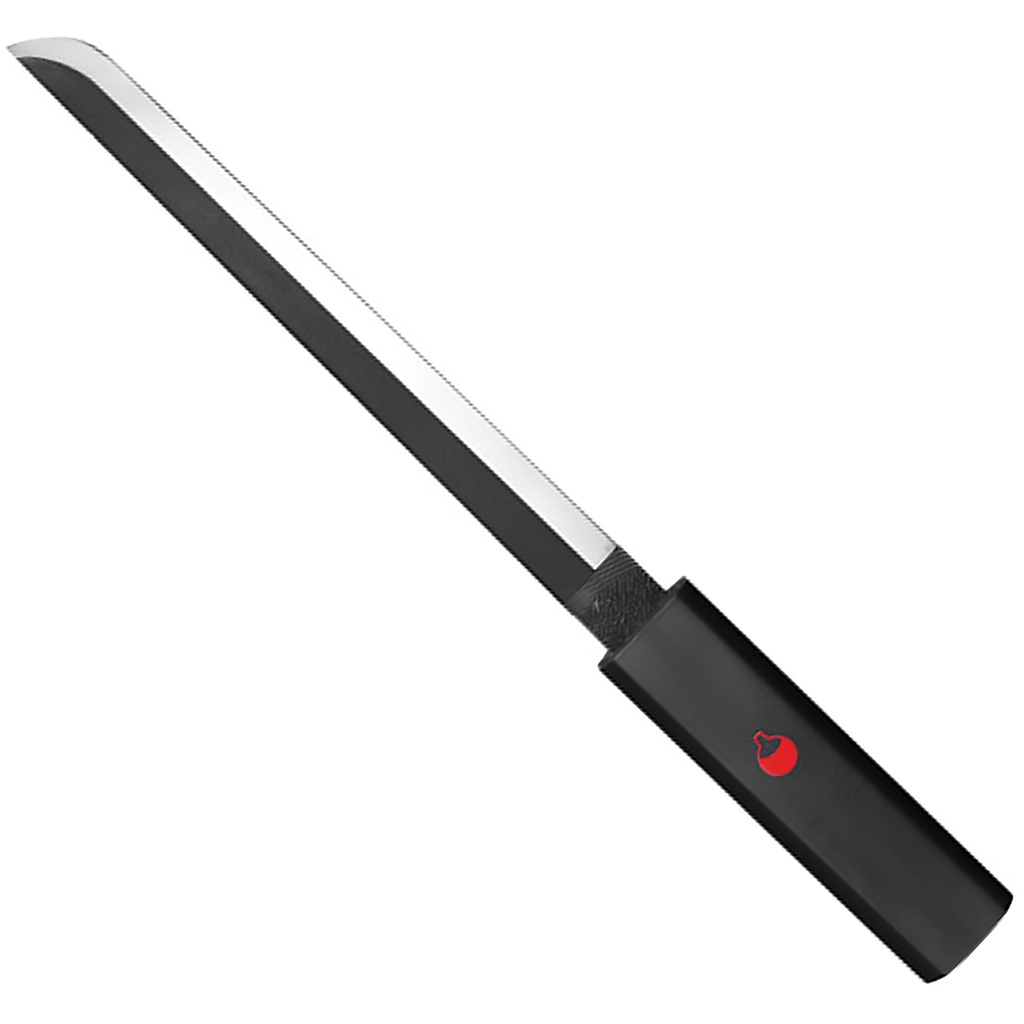
Eclipse Crest Shirasaya Wakizashi Sword - Black Wood
You don’t reach for this shirasaya wakizashi sword to show off. You reach for it when you’re done pretending. The black wood in your hand feels calm, the two-tone blade catching just enough light to remind you it’s real steel, not fantasy. That single red crest? It stops being decoration and starts feeling like a promise you made to yourself—to train, to collect with intention, to only keep pieces that actually mean something.
You don’t buy a wakizashi because you need another thing on the wall. You buy one for the quiet moment when the room goes still, your hand closes around black wood, and the blade slides free with that soft, unmistakable whisper. For a heartbeat, it’s just you, the steel, and the question: Who am I when I hold this?
Why This Shirasaya Wakizashi Sword Feels Different in Your Hands
The first time you draw this shirasaya wakizashi sword, you notice what isn’t there. No ornate tsuba. No wrapped handle shouting for attention. Just a smooth, matte black wood mount that disappears into your grip and a blade that arrives in a single clean line. It feels less like a prop and more like a decision.
At 17.5 inches overall with an 11.25-inch stainless wakizashi blade, the balance lands naturally between your wrist and fingertips. You don’t have to fight it into place—your body just understands where it wants to be. The two-tone finish—bright polished edge, black-coated spine—gives you a visual cue every time light slides down the steel: this side cuts, that side stays in shadow.
And then there’s the crest. One small red inlay on the black wood. Not a busy pattern, not a fake family emblem—just a single mark that feels more like a seal of intent than decoration. Once you’ve held it a few times, you stop seeing a logo and start seeing a line you’ve crossed: you’re no longer the person who “likes swords.” You’re the person who chooses them.
The Build Story Behind This Stealth Wakizashi Sword
There’s a reason Japanese-inspired blades pull you in: the lines don’t lie. This wakizashi sword leans into that honesty. The stainless steel blade is straight, single-bevel ground, and unapologetically functional. You feel the flat of the blade settle against your palm when you test the edge, the polished portion cold and smooth, the black spine slightly more matte under your thumb.
That shirasaya mount—simple black wood, rectangular, unwrapped—exists for one job: to protect the blade and stay out of the way. No bulky fittings, no loose wrap to shift over time, nothing that needs fussing with. Just clean, stealth wood that lets the sword disappear on a rack, shelf, or stand until you decide it’s time.
The design clicks when you notice how the geometry works with your grip. The straight handle makes it easy to adjust your hand position—choked up for close control, a bit lower for extra reach. There’s no guard to lock you into one style, which is exactly what makes this shirasaya wakizashi such a good training and display companion. You’re free to explore your own way of moving without the sword arguing back.
How This Wakizashi Sword Fits Into Your Everyday Space
Owning a wakizashi sword like this isn’t just about swinging it—it’s about how it lives with you when you’re not using it. On a minimalist stand, the black wood mount reads almost like a piece of modern furniture: matte, clean, unbothered. The only hint of what waits inside is that red crest, a tiny dot of color that quietly draws the eye.
In a dojo setting, the sword’s understated shirasaya style slips into the rack without clashing with more traditional mounts. You’re not trying to outshine anyone. You’re the person who brought the blacked-out blade that looks simple from across the room and reveals its two-tone steel only when drawn. It’s a collector’s piece that doesn’t need to brag to be noticed.
Even if your “dojo” is just a cleared-out space in your living room, the experience is the same. You slide the blade free, feel the slight resistance of wood giving way to steel, and hear that soft, controlled release. The stainless edge catches a stripe of light; the black spine keeps the rest of the blade from feeling flashy or loud. You’re not waving something theatrical—you’re holding something that matches the way you actually move through the world: quiet, deliberate, intentional.
When a Shirasaya Wakizashi Sword Says More Than a Wall-Hanger
You already know the difference between a wall-hanger and a wakizashi sword that you actually respect. Wall-hangers look the part until you get close: sloppy fittings, awkward balance, steel that feels like it’s there for show. This one hits differently because it doesn’t try so hard. The stainless blade has weight without being clumsy. The edge line is clean, the grind consistent. When you practice cuts in the air, the tip tracks where you send it instead of drifting or dragging.
Maybe you’re building a Japanese sword collection and want a piece that breaks up the visual noise—something that doesn’t have bright gold fittings or layered color wraps. Maybe you’re starting your first serious display and you want a wakizashi that won’t look childish in a few years. Either way, the stealth-black shirasaya mount and two-tone blade give you that modern samurai, minimalist look that still feels grounded in tradition.
This is the blade you point to when someone asks, “Okay, but which sword here feels most like you?” It’s not the most ornate. It’s not the loudest. It’s the one that looks like it belongs in the hands of someone who takes their choices—and their training—seriously.
Questions People Ask Before Buying a Shirasaya Wakizashi Sword
Is a shirasaya wakizashi sword only for display, or can I actually train with it?
You can absolutely work basic forms and cutting drills with a wakizashi sword like this, as long as you respect its construction and local safety rules. The stainless blade and simple shirasaya mount make it better suited to controlled practice and kata than full-contact clashing. Think of it as a serious training and display piece, not a backyard beater.
How does a shirasaya wakizashi feel compared to a traditional wrapped handle?
A shirasaya wakizashi sword gives you a cleaner, more neutral grip. The rectangular black wood handle doesn’t lock your hand into a single position the way a wrapped tsuka can. You’ll notice a smoother surface, a more minimalist feel, and a bit more freedom to experiment with hand placement as you refine your technique.
What makes this wakizashi sword a good choice for a first Japanese-style blade?
If you’re stepping into Japanese-inspired blades, this wakizashi sword lets you start with something honest and understated. The stainless steel blade is easy to live with, the shirasaya mount keeps the look clean, and the single red crest gives you a subtle focal point. You get a piece that feels intentional from day one instead of something you’ll want to hide later.
Is this the kind of wakizashi I’d be proud to display long-term?
If your taste leans toward stealth and simplicity, yes. The black wood mount, two-tone blade, and restrained crest age well visually. As your collection grows, this shirasaya wakizashi sword becomes the grounding piece—the one that reminds you why you started collecting in the first place: not to impress anyone, but to own blades that actually mean something to you.
Picture your space a month from now. The room is dim, just enough light slipping through to trace the edge of the black wood mount. You reach out, feel the smooth grain under your fingertips, and draw the shirasaya wakizashi sword free. Silver edge, black spine, red crest catching a pinprick of light. In that moment, you’re not just someone who likes swords—you’re someone whose choices are deliberate, whose tools match their intent. This wakizashi sword doesn’t change who you are; it reveals the part of you that was already this focused, this quiet, this ready.