GridLock Field-Ready First Responder Backpack - Green/Tan
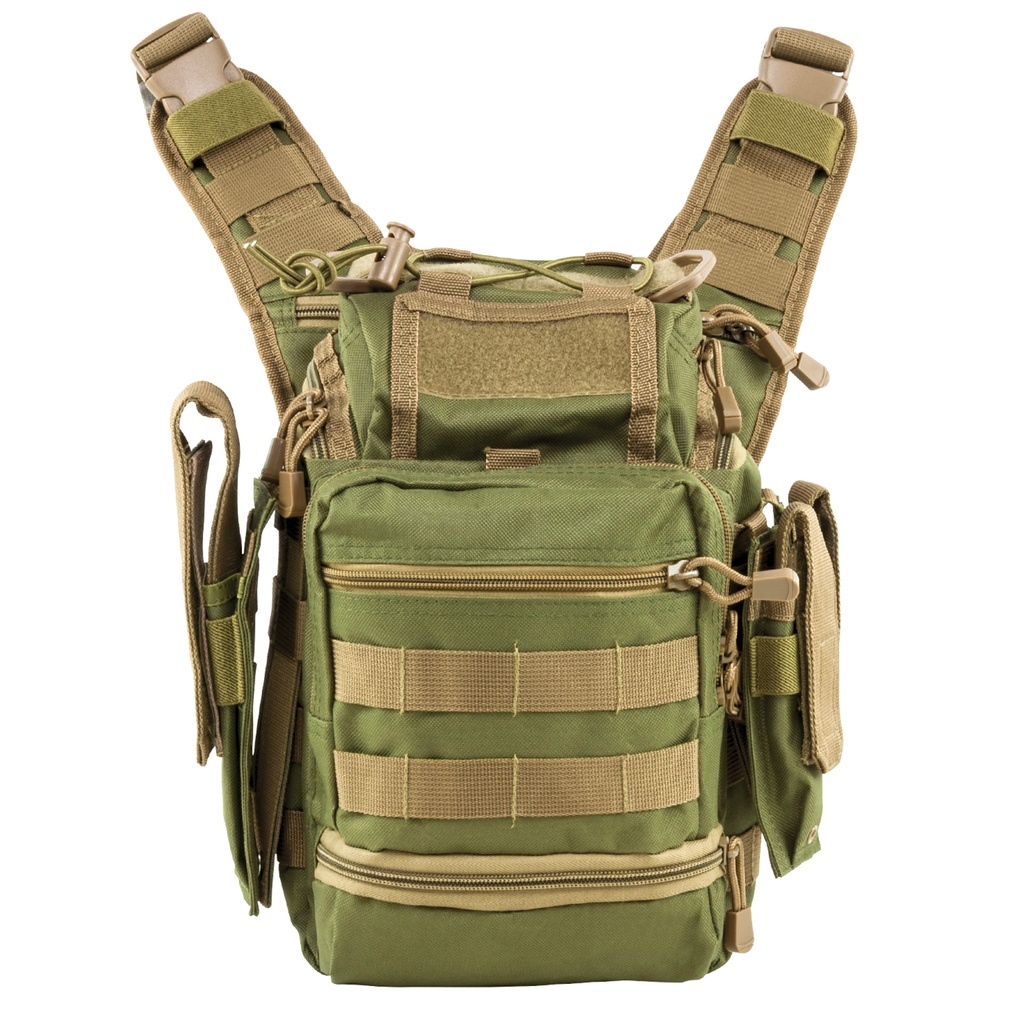
You know that moment when everyone looks around, waiting for someone to take control? With a first responder backpack that already has a mental map built in, that someone is you. Seven compartments, PALS webbing on all sides, and a calm green/tan profile turn chaos into a layout you can run by feel. Your med kit, mags, tools, and backup all live exactly where your hands expect them. You don’t fumble. You don’t search. You just move.
You’ve been here before—the call comes in, the air changes, and suddenly every second feels louder. People look toward the door, toward the hallway, toward you. You’re not thinking about gear; you’re thinking about what needs to happen first. Airway. Bleeding. Security. But as your hand drops to your side, you feel something steady: the familiar shape of your first responder backpack, already organized the way your brain works when time shrinks.
How a First Responder Backpack Turns Panic into a Plan
In those first thirty seconds, you don’t have time to dig. A true first responder backpack doesn’t just carry your gear; it carries your mental checklist. With a GridLock field layout and seven defined compartments, you build a repeatable map: top pocket for gloves and eye pro, front panel for meds, side pouches for tools, concealed rear pocket for what stays out of sight. After a few runs, your hands know the path before your eyes do.
This is where the design clicks. Every block of PALS webbing, every zipper line, every tan trim against the green body helps you distinguish zones without looking. You’re not staring into a black hole of gear. You’re reaching into a structure that mirrors how you think under pressure—one move at a time, no wasted motion.
Why This First Responder Backpack Feels Like a System, Not Just a Bag
When you pick up a random pack, everything feels the same—one big cavity, a couple of pockets, and the promise that “you’ll figure it out.” A dedicated first responder backpack is different. The PALS webbing wrapping the front, sides, and even the strap zones means you don’t just accept the layout—you build it. Dual rifle and pistol mag pouches ride exactly where you want them. Med pouches, trauma shears, tourniquets, and tools find their permanent homes, locked in visually and physically.
The olive green body with tan webbing isn’t just about looking tactical. That muted contrast is how you recognize compartments in low light, in a dim hallway, or under a streetlamp at 2 a.m. Reinforced stitching at the stress points and stout buckles aren’t specs for a checklist; they’re the quiet promise that the shoulder strap won’t fail when you’re sprinting up stairs or hauling through brush.
The Texture of Readiness You Can Feel
Run your hand over the PALS webbing and you can feel the rhythm—row after row, each one a mounting point for something that matters. Zipper pulls have enough bite to grab with gloved hands. The padded shoulder strap settles into place instead of biting into your collarbone. You feel the weight, but you don’t fight it. You’re carrying a plan, not a burden.
Carrying a First Responder Backpack in Real Life, Not Just on Paper
Most days, no one will see what this bag really is. To everyone else, it’s a compact tactical pack in calm green and tan, blending into your truck, your office, or the backseat. To you, it’s your everyday field-ready anchor. The grab handle lets you snatch it on the way out the door without a second thought, and the padded shoulder strap tucks away when you need it out of the way for vehicle work or tight spaces.
On a normal Tuesday, it rides with you as a daily mission bag—admin gear up top, basic med in the front pockets, tools and backup in the sides. On training days, it becomes your loadout platform, first responder backpack on the bench while you build out med, mags, restraints, and comms across the PALS grid. At an accident scene, it becomes your mobile workspace, each compartment telling you what to do next by what you feel inside.
From Street to Field Without Repacking
Because the layout is modular, you don’t have to maintain two different rigs for urban calls and outdoor work. You build modules—med, trauma, tools, security—and move them where you want along the PALS webbing. The rear concealed pocket adds one more layer: a place for what needs to stay discreet until the second you truly need it.
When a First Responder Backpack Becomes the Difference Between Fumbling and Flow
You already know gear doesn’t make you competent—training does. But the wrong pack can drag your training down, forcing you to fight zippers, dig through clutter, and remember which improvised pocket you stuffed something into last time. A purpose-built first responder backpack quietly removes that friction. Seven compartments give you enough separation to assign each one a job, while the PALS webbing turns the outside into extension space rather than an afterthought.
This is where identity shows up. When you carry a bag like this, you stop thinking, “Do I have my stuff?” and start thinking, “How fast can I deploy it?” You walk into scenes with the calm of someone who knows exactly where everything lives. That confidence isn’t bravado; it’s muscle memory built into the fabric and webbing pattern you see every time you kit up.
Questions People Ask Before Buying a First Responder Backpack
Is this first responder backpack only for professionals?
No. A first responder backpack like this is built to professional standards, but it serves anyone serious about organized readiness—medically trained or not. If you want your gear laid out in a way you can run half-asleep or under stress, the structure will make sense to you immediately.
Can a first responder backpack work as an everyday carry or range bag?
Yes. The compartment layout and PALS webbing make this an easy crossover between daily carry, range work, and response. You can keep med and essentials staged while using other compartments for notebooks, gloves, snacks, or tools, without losing the logic of your emergency setup.
How do I set up my first responder backpack so I remember where everything is?
Start by assigning each compartment a role—airway/respiratory, bleeding, tools, admin, security—and stick to it. Use the PALS webbing on the outside of the first responder backpack to mount pouches in that same sequence, so your hands follow the same path every time you deploy it.
Is a tactical first responder backpack comfortable for long carry?
The padded shoulder strap, adjustable hardware, and compact profile are designed to spread weight and reduce hot spots. Because the first responder backpack is more boxy than bulky, it rides close to your body instead of swinging or sagging during longer carries.
Owning the Moment, One Zip at a Time
Picture the next time something goes sideways. You swing out of your vehicle, hand on the grab handle of your first responder backpack. The green and tan pack rides clean against your side, webbing catching the light just enough to guide your fingers. You drop it, pop the exact zipper you were reaching for, and the right gear is in your hand before anyone finishes asking for it.
In that moment, you’re not the person digging through a random bag, apologizing while seconds bleed away. You’re the steady voice, the calm presence, the one whose kit is as squared away as their head. Owning a first responder backpack like this doesn’t change who you are—it lets the prepared version of you show up faster, every single time.