Heritage Bloodline Field Hunting Knife - Red Bone Damascus
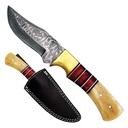
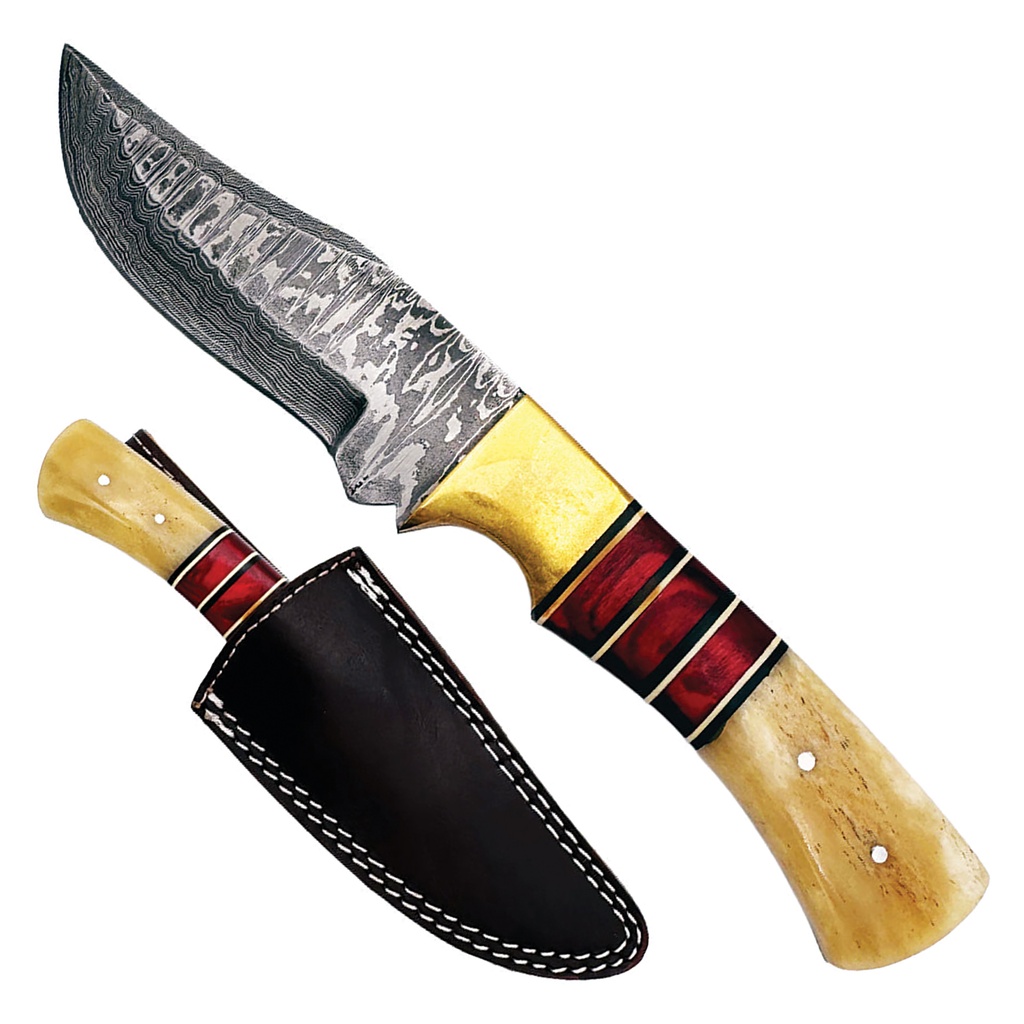
You don’t buy a Damascus hunting knife like this just to hang on a wall. You buy it because you like knowing your field knife will outlast the season—and maybe you. The 4.5-inch Damascus clip point, full-tang build, and red bone handle with brass accents feel like something handed down, not ordered online. Slide it into real leather, feel the weight at your hip, and you know: this one’s staying in the family.
| Blade Length (inches) | 4.5 |
| Overall Length (inches) | 9 |
| Weight (oz.) | 14 |
| Blade Color | Silver |
| Blade Finish | Patterned |
| Blade Style | Clip Point |
| Blade Edge | Plain |
| Blade Material | Damascus Steel |
| Handle Finish | Polished |
| Handle Material | Wood, Bone, Brass |
| Theme | Damascus |
| Handle Length (inches) | 4.5 |
| Tang Type | Full |
| Carry Method | Leather |
| Sheath/Holster | Leather |
You remember the first time a knife really meant something to you. Not the cheap beater that rattled in a drawer—the one an older hunter handed you without ceremony and said, “Don’t lose this.” When you pick up a Damascus hunting knife like this, that memory comes back fast. The weight sits right in your palm. The leather smells like campfire nights. You haven’t even cut a thing yet, but you already know where it rides on your belt.
Where a Damascus Hunting Knife Fits Into Your Story
A lot of blades will open a box or slice cord. A true Damascus hunting knife quietly changes how you show up in the field. At 9 inches overall with a 4.5-inch clip-point blade, this one rides full tang from tip to pommel, so when you sink into a cut—rib cage, joint, stubborn hide—it doesn’t twist, chatter, or surprise you. It just follows your hand.
You feel the spine bite into your thumb as you choke up, the red bone and wood filling your grip instead of fighting it. The patterned Damascus isn’t there to show off; it’s doing the work of layered steel, taking an edge that feels almost unfair when you start field dressing. One clean opening stroke, hide parts, and you realize you’re not fighting your knife anymore. It’s finally working with you.
How This Damascus Hunting Knife Earns Its Place
You’ve probably handled blades that looked good online, then felt dead in the hand. This one earns its keep the second you wrap your fingers around that curved handle. The red wood and natural bone are broken into banded segments by brass spacers and bolsters, not for decoration alone, but to lock your hand into a natural resting place. Each contour guides a finger; you don’t have to think about grip when things get slick.
The Damascus steel blade carries those swirling wave and pool patterns that tell you it’s pattern-welded, not laser-etched nonsense. Layered steel means toughness and bite—so when you’re breaking down a deer on cold ground, you spend more time cutting and less time wishing you’d brought a sharpener. And because it’s full tang, the steel runs end to end through the handle, so the energy of every push, twist, and pry goes straight through the knife, not into a weak joint.
The Small Details You Notice in the Field
The polished brass bolster catches the light when you draw from the sheath, but it also acts as a guard, keeping your hand from sliding forward during deep, greasy cuts. The twin pins set into the rear bone section don’t just look traditional; they anchor the scales to the tang so the handle doesn’t loosen after a season of cold mornings and wet leather. These are the little things you only appreciate after a knife hasn’t failed you when it easily could have.
Carrying a Damascus Hunting Knife Day After Day
Owning a blade is one thing. Living with it is another. This Damascus hunting knife comes housed in a dark brown leather sheath, stitched in contrasting white so you can see the craftsmanship every time you thread it onto your belt. The sheath doesn’t flop or rattle; it hugs the blade close, so when you crouch, climb into a truck, or sit on a tailgate under layered jackets, it stays where it should.
On the trail, the 14-ounce weight disappears into your hip until you need it. Your hand finds the handle without looking—bone smooth but not slick, wood warm against your palm even when the air burns your lungs. Around camp, you stop reaching for a multi-tool and start reaching for this: shaving kindling curls, slicing thick rope, portioning meat, even making that one clean cut on a cigar because you can.
From Opening Day to Quiet Off-Season Nights
Once the tags are filled and the season goes quiet, this knife doesn’t vanish into storage. It lives on the workbench when you’re oiling leather, gets wiped down at the table when you’re cleaning guns, sits on the counter when you’re trimming meat. It becomes that fixed blade hunting knife you grab without thinking any time something needs doing—and the one visitors always pick up first when they see the Damascus pattern catching the light.
When a Fixed Blade Hunting Knife Becomes an Heirloom
You can buy a fixed blade hunting knife a dozen different ways, but only a few will ever feel like they have a story before you write your own. This one leans hard into that heritage. The red bone handle looks like it belongs in old photos—lean hunters in flannel, that same shape on their belts. The brass has that warm, almost old-world glow that will dull and patinate with use, taking on the marks of your seasons.
Because the blade is Damascus, every single pattern is unique. No two sets of waves and pools will ever match exactly. When you look down at this knife after a long day in the field—blade cleaned, leather wiped, your hands still faintly smelling of earth and game—you’re looking at something that exists in only one version: yours.
And when you hand it to someone younger and say, without drama, “Here, take this one,” the full-tang steel, the bone, the leather will still be telling that same quiet story of use over perfection, of work over display.
Questions People Ask Before Buying a Damascus Hunting Knife
Is a Damascus hunting knife actually better for real field use?
If you hunt, camp, or dress game, a Damascus hunting knife gives you a tough, layered steel blade that holds a keen edge while staying resilient. It’s not just about looks—the pattern-welded construction balances sharpness with durability so you aren’t babying your knife when you should be focused on the work.
Will this fixed blade hunting knife be comfortable to carry all day?
Yes. At about 9 inches overall and paired with a leather sheath, this fixed blade hunting knife rides close to your side without digging or swinging. The curved handle and balanced weight make it easy to forget you’re wearing it—right up until you need it in a hurry.
How does a Damascus blade hold up compared to regular stainless?
A Damascus hunting knife like this uses layered steel, which is designed to combine edge-holding with toughness. You’ll still want to wipe it dry and give it a light coat of oil after wet or bloody use, but if you treat it like a real tool instead of a shelf piece, it will give you seasons of reliable cutting performance.
Is this more of a collector piece or a working field knife?
It can sit in a display, but it’s built to live on a belt. The full tang, clip-point design, and leather sheath all point to a working fixed blade hunting knife you can rely on for field dressing, camp chores, and general use. The fact that it looks good doing it is just a bonus.
Picture this: you step out into that thin, cold morning light, breath hanging in the air, pack settled on your shoulders. Your hand brushes the leather at your hip, finds the familiar curve of bone and wood, and you draw that Damascus hunting knife just to feel the weight of it. The patterned steel flashes once in the dawn, then slides back home. You’re not thinking about specs or brands. You’re thinking about the work ahead, the clean cuts, the quiet moments by the fire later. And in all of that, this knife isn’t the hero—you are. It just happens to be the one tool that feels like it’s been waiting for you all along.