Heritage Grip Short Skinning Knife - Carved Wood & Bone
You’re at the edge of daylight, deer on the ground, and this is where your hunting knife choice starts to matter. A compact skinning knife gives you control when hands are cold, meat is close, and one slip costs you more than time. The carved wood and bone handle locks into your palm, the short clip point blade does the quiet, precise work. Carry it on your belt, forget it’s there—right up until the moment you’re glad you didn’t trust the job to anything else.
| Blade Length (inches) | 3 |
| Overall Length (inches) | 5 |
| Weight (oz.) | 7 |
| Blade Color | Silver |
| Blade Finish | Satin |
| Blade Style | Clip Point |
| Blade Edge | Plain |
| Blade Material | Stainless Steel |
| Handle Finish | Polished |
| Theme | Hunting |
| Handle Length (inches) | 2 |
| Tang Type | Full |
| Carry Method | Sheath Carry |
| Sheath/Holster | Leather Sheath |
The first time you dress an animal with a skinning knife that actually fits your hand, it feels less like a chore and more like a ritual. There’s no fumbling, no white-knuckle grip, no silent prayer that you won’t slip. Just you, the animal, and a compact blade that seems to know exactly what you’re trying to do.
How a Compact Skinning Knife Changes That First Cut
Picture it: the woods are quiet, the work is ahead of you, and you reach for your belt. Instead of wrestling a long hunting blade around joints and tight angles, your hand closes around a small, solid handle. That short 3-inch clip point slides in, controlled and deliberate, not swinging wild. A skinning knife in this size doesn’t ask you to manhandle the task; it lets you guide it.
This one is only 5 inches overall, full tang, with a stainless steel blade that holds up to fat, hide, and bone without feeling fragile. Because the blade is short and the handle fills your palm like a T-shaped anchor, you’re not choking up and guessing. You’re using natural pressure, close to the work, keeping your knuckles clear and your cuts clean. If you’ve ever had to pause, wipe your hand, and regrip a too-long blade, you already know why a compact, dedicated skinning knife just makes more sense.
Why This Skinning Knife Handle Feels Like It Was Carved for You
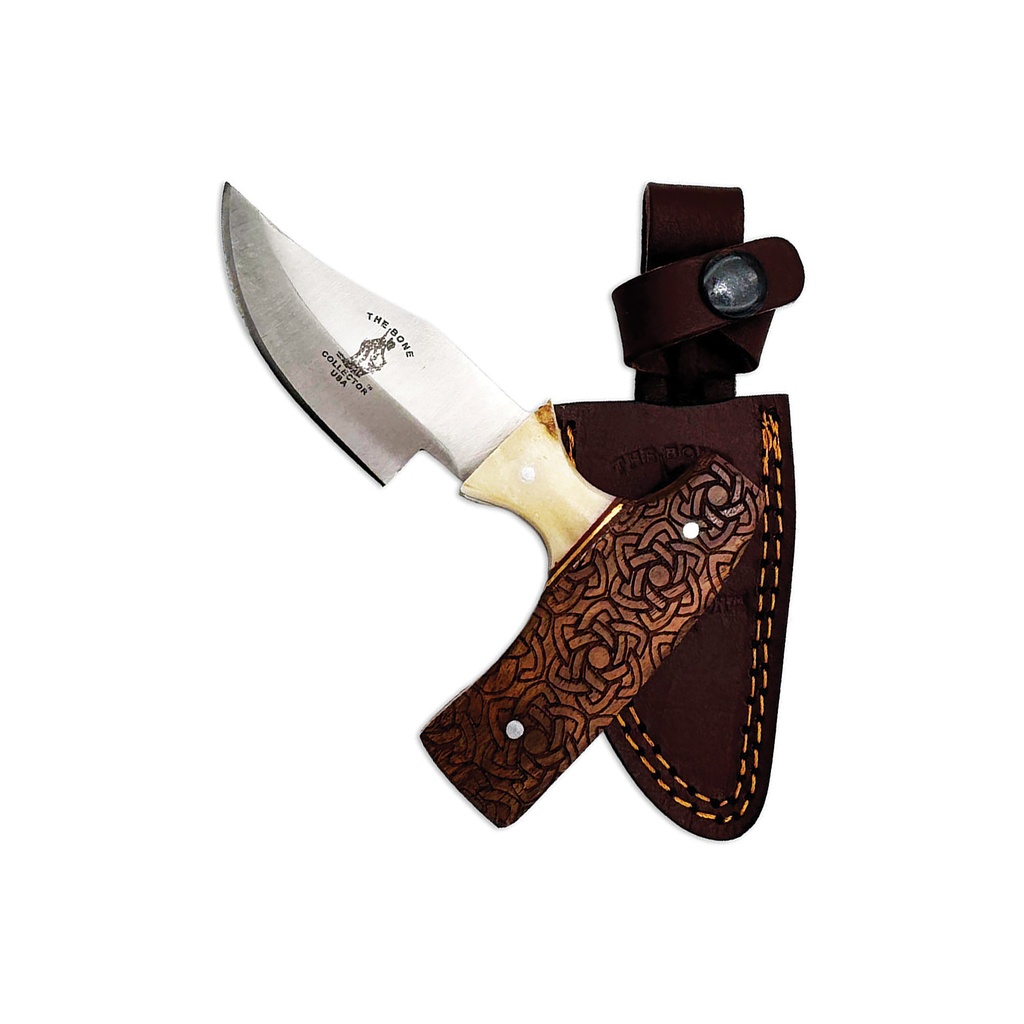
Most hunters talk about steel, but you know the truth: the handle is where confidence lives. A blade can be sharp; a grip has to be sure. Here, the first thing you notice is the contrast—the pale bone against the darker carved wood, shaped into a palm-filling T-handle that naturally stops your hand from sliding forward.
The carved pattern in the wood isn’t just there to look good under campfire light. Those grooves give your fingers something to bite into when things get slick. The bone section brings that cold, solid feel of natural material, while the carved wood warms in your palm. Together, they turn this skinning knife into something you can pinch, push, or pull without ever wondering if it’s about to twist out of your grip.
Because the tang runs full through the handle, the weight feels honest—about 7 ounces of solid presence, not a hollow showpiece. When you bear down to free a joint or trace along the rib cage, you feel the knife as one piece, not a blade screwed to a handle. That matters when you’re tired, cold, and just want to get it done right the first time.
The Leather-Sheathed Skinning Knife That Actually Rides the Belt
There’s a quiet kind of satisfaction in threading a leather sheath onto your belt before dawn. This one sits snug and vertical, stitched in contrasting thread that you’ll barely notice after a season—but you will notice how it behaves when you crouch, climb, or sit on an ATV. The snap-closure strap keeps the knife from bouncing free when you duck under branches or step over deadfall.
Because this is a compact fixed blade, the sheath doesn’t thump against your leg or hang awkwardly. You’re not constantly adjusting it or shifting it around your waistband. You just know that when it’s time to work, the skinning knife is right there at the same angle, the same depth, every time. That consistency becomes muscle memory, and muscle memory is what keeps you calm when your hands are already full.
When a Short Skinning Knife Beats a Big Hunting Blade
If you’ve ever tried to do careful skinning with a long hunting knife, you know the dance: awkward angles, shallow cuts, and the nagging thought that you’re one slip away from ruining meat. A compact skinning knife flips that script. Instead of fighting the length, you work close and controlled—ideal for caping, joint work, and all the tight spots where precision matters more than reach.
The 3-inch clip point on this daily-use hunting companion gives you a fine tip for detailed cuts and enough belly for longer pulls along the hide. Stainless steel shrugs off moisture and the mess of field dressing, while the full tang adds the security you’d expect in a bigger blade. You get the utility of a hunting knife in a package that behaves more like a specialized tool than a generic camp blade.
Out in the field, that difference shows up in small wins: fewer nicks in the hide, less wasted meat, cleaner lines around the legs and neck. You’re not just carrying another belt knife; you’re carrying a purpose-built skinning tool that matches how you actually work on the ground.
Questions People Ask Before Buying a Skinning Knife
How big should a skinning knife be for real field use?
Most hunters find that a compact skinning knife in the 3-inch blade range gives the best control. It’s short enough to work around joints and tight spots without overreaching, but long enough to make confident, sweeping cuts along the hide. The 5-inch overall size keeps it easy to carry on your belt all day.
Is a stainless steel skinning knife good for repeated field dressing?
Yes. A stainless steel skinning knife handles moisture, fat, and blood with less maintenance in camp. You’ll still want to touch it up with a stone or field sharpener now and then, but you’re not fighting rust spots if it goes back into the sheath before you can clean it properly.
Is a short fixed blade better than a folding knife for skinning?
For most hunters, a compact fixed-blade skinning knife feels safer and more dependable. There’s no joint to clog with fat or hair, no lock to fail when you’re twisting the blade. A full tang and solid T-style handle let you use awkward angles and pressure without worrying about the knife folding on your fingers.
Can I use this as a general hunting knife, or only for skinning?
While it shines as a dedicated skinning knife, a compact fixed blade like this handles plenty of general hunting chores—light camp cutting, processing small game, opening bags or rope. You’ll likely still keep a larger blade in your kit, but this one becomes the go-to for any close, careful work.
Later, when the day is done and the cooler is latched, you’ll wipe the handle clean and notice how the carved wood has picked up a bit of your story—small darkened grooves, a nick in the sheath, the familiar feel of bone against your palm. That’s when you realize this isn’t just another tool you toss in a bin; it’s the skinning knife you reach for without thinking, season after season, because it matches the way you hunt and the way you work. In your hand, under fading light, it feels less like gear and more like part of your kit’s identity—quiet, capable, and already broken in to you.