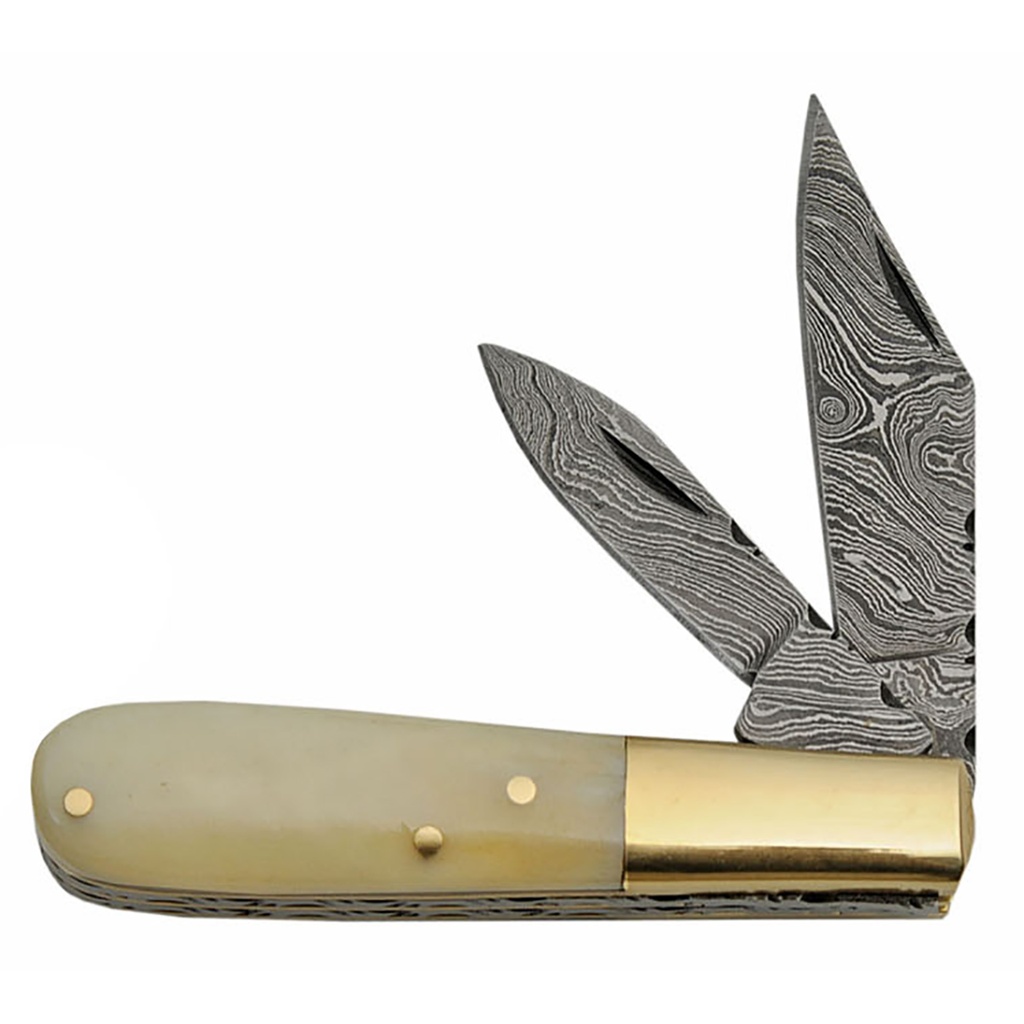
Heritage Twin-Blade Gentleman’s Pocket Knife - White Bone Damascus
You don’t pull this Damascus pocket knife just to cut something—you bring it out because you like who you are with it in your hand. The twin blades, the white bone, the brass… it feels like something your grandfather would’ve carried, but you get to break it in yourself. It disappears in your pocket until the moment you need a clean slice, a quiet flex, or a story to tell. This isn’t just a knife; it’s a little piece of heritage you actually use.
You don’t reach for your phone in that moment—you reach for your pocket. The conversation has drifted from weather and work to stories that actually matter, and someone mentions how their grandfather never went anywhere without a small, worn knife. You feel the smooth white bone against your fingers, the familiar weight of brass and Damascus, and you realize: that’s you now. You’re the one who came prepared, not because you like gadgets, but because you like things with history baked into them.
Why a Damascus Pocket Knife Changes How You Show Up
Owning a Damascus pocket knife isn’t about collecting steel; it’s about how you move through your day. When you carry a traditional twin-blade in your pocket, you’re not just ready to cut twine, open mail, or slice an apple—you’re quietly telling yourself you live with intention. At 3.5 inches closed and about 6 inches overall with a blade open, this is the kind of everyday carry blade that fits your life instead of demanding a new one.
You feel it when you pinch the nail nick, roll that first Damascus blade out, and feel the slipjoint snap into place. There’s no drama, no tactical posturing—just a calm, confident motion you could repeat in the dark. And each time the light catches that layered Damascus pattern, it reminds you you’re carrying something made to be noticed up close, not from across the room.
The Damascus Pocket Knife That Feels Like It Already Has a Story
Most tools feel new for too long—like strangers in your hand. Damascus changes that. Those two blades, each with its own swirling pattern, look like they’ve already lived a lifetime by the time you open them the first time. The larger clip point blade handles your daily carry tasks—packages, cord, quick food prep. The smaller pen-style blade steps in for the finer work, the precise cuts that reward a steady hand.
Both blades sit inside brass liners that have been fileworked along the spine—little decorative cuts you don’t need, but you’ll appreciate every time your thumb traces them while you think. The brass bolster anchors the knife visually and physically, giving you that warm, solid front end that balances the cool, smooth white bone. Put together, this isn’t just a pocket knife for daily use; it’s a piece that looks like it belongs in a display case but lives best in your jeans.
Carrying a Damascus Pocket Knife Without Making It a Big Deal
If you’ve ever hesitated to carry a knife because you didn’t want to look like you were trying too hard, this is your answer. A traditional slipjoint Damascus pocket knife reads as classic, not aggressive. It’s the same basic shape people have been carrying for generations—rounded handle, no pocket clip, no oversized hardware. It nestles into the corner of your pocket, smooth white bone against denim or slacks, disappearing until you call it up.
The manual nail-nick opening slows you down just enough to stay intentional. There’s no spring-assisted snap, no automatic jump—just a controlled, quiet open that feels polite even in a crowded room. The slipjoint mechanism holds the blades open with enough tension for everyday tasks while reminding you to respect the edge. It’s the kind of everyday carry pocket knife that feels welcome at a family barbecue, an office desk, or your friend’s new kitchen island.
The Small Details You Notice When It’s Really Yours
The first thing you’ll notice after a week is how the white bone handle starts to pick up tiny stories—faint marks from keys, the subtle shine where your thumb always lands. The brass bolster and liners warm under your touch, darkening slightly over time as they mix with your life. The Damascus blades take on your sharpening style, each pass on the stone deepening that quiet bond between you and the tool you maintain.
Those brass pins? You’ll forget about them until one night, under a warm lamp, you catch yourself just looking at the knife laid open on the table, following the line from Damascus edge to bone to brass, realizing you prefer gear that doesn’t need a logo to prove its worth.
When a Damascus Pocket Knife Becomes Your Everyday Ritual
There’s a moment—usually around week two or three—when carrying this twin-blade Damascus pocket knife stops feeling new and starts feeling like ritual. You slip it into your pocket with your keys and wallet and realize it would feel wrong to leave without it. Not out of fear, not out of paranoia, but because you’ve gotten used to the small satisfaction of handling real materials every day.
You open a package and notice the way the blade glides cleanly through tape and cardboard. You’re at a campsite or a park bench, slicing an apple, and the white bone catches the late-afternoon light. A friend asks to borrow a knife, and you hand this over knowing it’ll start a small conversation—about Damascus, about the twin blades, about how it feels like something you inherit instead of impulse-buy.
Moments This Knife Quietly Improves
Trimming a loose thread before walking into a meeting. Cutting paracord in the garage when you’re fixing something you could’ve paid someone else to do. Opening a handwritten letter without tearing the envelope. Each time, your hand goes to the same place, finds the same familiar form, and you’re reminded you chose to carry something with character, not just convenience.
When a Damascus Pocket Knife Beats a Modern Folder
You’ve probably looked at modern tactical blades, flippers, maybe even autos. They’re impressive, but they change the tone. A traditional Damascus pocket knife like this one offers a different lane: capability without aggression. No oversized pocket clip printing through your pants, no blacked-out intimidation factor—just bone, brass, and patterned steel that feel welcome in more places.
For most people, a daily carry blade lives in that in-between space: opening boxes, food prep on the go, small fixes. The twin-blade design quietly expands what your everyday carry can handle. Use the primary clip point for the rougher jobs, keep the smaller pen blade keen for cleaner cuts. It’s like having two precision carry tools in the footprint of one slim traditional knife.
Questions People Ask Before Buying a Damascus Pocket Knife
Is a Damascus pocket knife good for everyday carry?
Yes—if you like your EDC to have some soul. A small Damascus pocket knife rides easily in the pocket, handles normal daily tasks, and adds that extra layer of satisfaction every time you see the patterning in the blade. It feels less like a gadget and more like part of your daily ritual.
Will the Damascus blades hold up to regular use?
Carried as an everyday Damascus pocket knife, these blades are built for real work: opening packages, cutting cord, trimming, light food prep. Damascus is more than looks—it’s layered steel that takes a fine edge and rewards simple, regular sharpening. Treat it like a respected tool and it’ll age alongside you.
Is this style of pocket knife legal to carry most places?
Traditional slipjoint Damascus pocket knives like this one are generally more acceptable than aggressive-looking tactical folders. That said, knife laws vary a lot by city and country. It’s wise to check local regulations for blade length and type so you can carry with confidence instead of guesswork.
How big is it in the pocket compared to other everyday carry knives?
At about 3.5 inches closed, this Damascus pocket knife feels similar to a classic gentleman’s folder. It’s compact enough to disappear in your pocket but substantial enough that you never have to hunt for it. No clip, no bulk—just a smooth, rounded profile that rides comfortably all day.
Imagine this: you’re standing around a fire, on a porch, in a garage with the door half-open. Someone needs a cut—a rope, a tag, an apple—and without making a show of it, you pull out your Damascus pocket knife. The white bone catches the light, the brass flashes warm, and the patterned blade unfolds with that familiar slipjoint snap. In that small, quiet moment, you recognize yourself as the person who carries something worth handing down, even if you’re only just starting its story.