High Country Heritage Fixed Hunting Knife - Brass & Stag
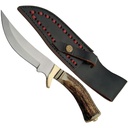
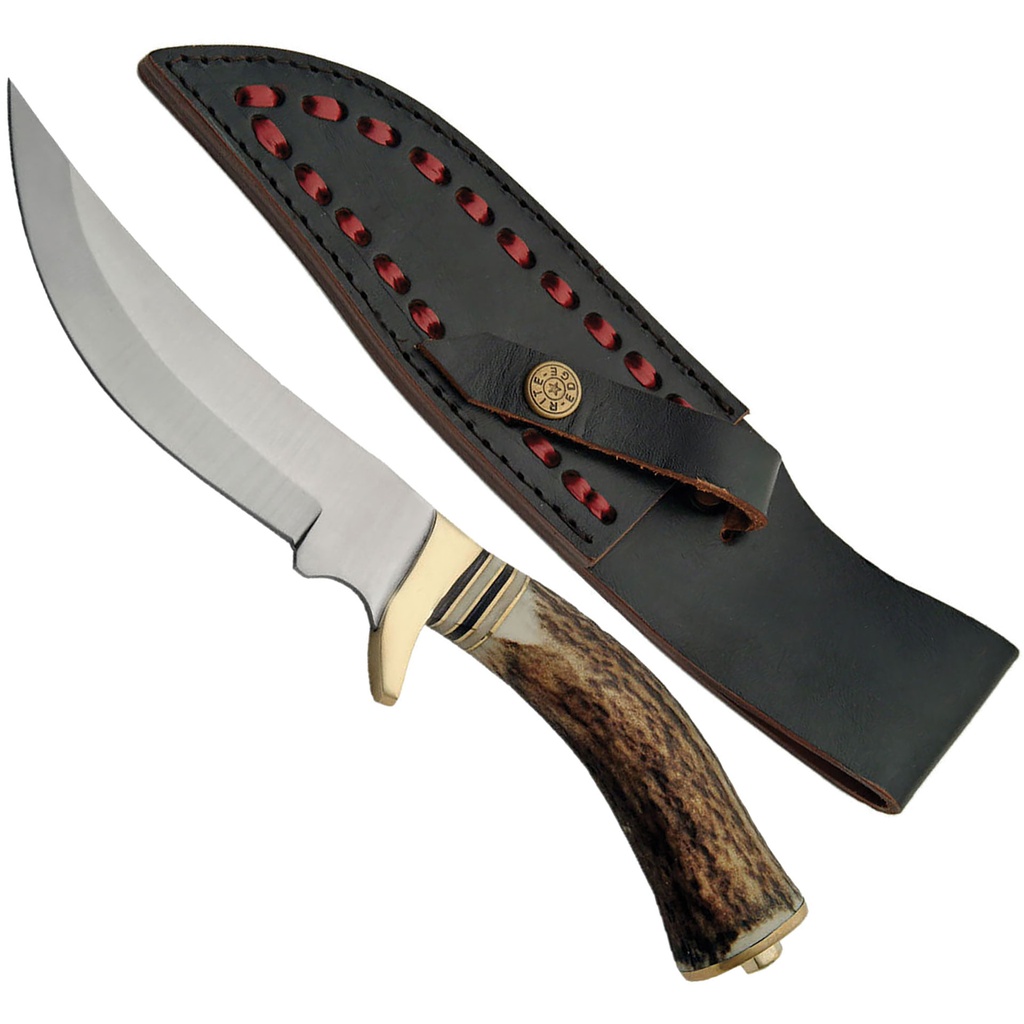
There’s a chill in the air, a deer on the pole, and now the real work starts. This fixed hunting knife feels like it’s already been in the family—stag warm in your palm, brass guard locking your grip, satin trailing point gliding through hide. The leather belt sheath rides quiet all day, then suddenly it’s in your hand, doing exactly what you need without drama. You don’t just carry a hunting knife now—you carry history that’s finally yours.
| Blade Length (inches) | 5.5 |
| Overall Length (inches) | 10 |
| Blade Color | Silver |
| Blade Finish | Satin |
| Blade Style | Trailing Point |
| Blade Edge | Plain |
| Blade Material | Steel |
| Handle Material | Stag |
| Theme | Hunting |
| Handle Length (inches) | 4.5 |
| Tang Type | Hidden tang |
| Pommel/Butt Cap | Brass |
| Carry Method | Belt |
| Sheath/Holster | Leather Sheath |
You know the moment. The woods have gone quiet again, the shot’s already told its story, and it’s just you, the animal, and the work that proves you meant what you came here to do. Your gloves come off. Cold air bites your fingers. And your hand goes to your belt for the one thing that has to feel right the second you touch it: your fixed hunting knife.
This isn’t the time to discover your blade is too short, too slick, too modern-plastic and not enough real. This is the moment you know, in your gut, whether you chose a knife you can trust for the next decade—or just bought something that looked sharp online.
Where a Fixed Hunting Knife Changes the Story
Out here, a fixed hunting knife isn’t an accessory. It’s the tool that stands between a good shot and a wasted opportunity. When you kneel beside a deer or elk and slide steel into hide, you feel every design choice in your hand.
The sweeping trailing point of this blade is built for that first cut—the one that needs to glide, not fight. At 5.5 inches, it gives you enough reach to open an animal smoothly without feeling clumsy or oversized. The satin-finished steel bites when you set the angle, then follows through like it knows where you’re going before you do. You’re not sawing. You’re guiding.
Because it’s a true fixed hunting knife, there’s no hinge to flex, no folder to wrestle open with cold or bloody hands. You draw, you work, you finish. No hesitation. No moving parts. Just a solid hidden tang running into stag and brass, turning your grip into leverage and control.
Why This Fixed Hunting Knife Feels Like It’s Already Been Yours
You notice it before you ever cut anything: the way the stag handle sits in your palm like it’s already mapped to your fingers. Real antler has that subtle, uneven texture that your skin reads instantly—grip without grit, character without gimmicks. When your hand is wet or slick, that natural texture quietly keeps you in command.
The brass guard isn’t there for show. The first time you lean into a cut and feel your front finger run up against that warm metal, you understand exactly why it’s there. It’s the little moment you don’t talk about but always remember: the time your old knife let you slide up onto the edge. With this one, that doesn’t happen. The brass says, "Stop here." Your hand listens.
At around 10 inches overall, this fixed hunting knife hits that sweet spot between camp tool and field scalpel. Big enough to break down game, small enough to choke up on for careful work. The hidden tang keeps it strong without turning the handle into a bulky club. Brass at the butt adds just enough balance that when you roll it in your hand to change angles, the knife follows without fighting you.
The quiet confidence of real materials
There’s a reason stag, brass, and leather have been riding on hunters’ belts for generations. They don’t just look traditional—they behave the way you wish more modern gear still did. The satin steel cleans easily. The stag warms with use. The brass picks up marks that don’t feel like damage; they feel like chapters.
Carrying a Fixed Hunting Knife That Actually Belongs on Your Belt
Most days, your hunting knife spends more time on your belt than in your hand. That’s where the leather sheath steps in and quietly makes your life easier. Dark leather, tight stitching, and that red accent lacing—at a glance it just looks good. But once you’ve worn it hiking up a ridge or sliding through brush, you start noticing the practical details.
The belt loop rides high enough that the fixed hunting knife doesn’t swing wildly or bang into your thigh every step. The retention strap snaps over the brass guard with a soft, reassuring click, the kind of closure you can undo by feel without taking your eyes off the trail or the animal. That little brass snap head becomes a familiar touchpoint: thumb here, pop, draw, work.
When you kneel in snow, mud, or tall grass, the sheath’s shape makes it easy to re-sheath without fumbling. The mouth stays open; the leather has enough structure that you’re not fighting it. Blade goes home, guard seats, strap swings back and snaps in. Done. You’re moving again.
How it fits into your hunting rhythm
Think about your last season. Walking in before first light. Adjusting layers. Checking rifle or bow. Sitting still for hours. A fixed hunting knife like this becomes part of that quiet pre-dawn checklist. You feel the weight on your belt when you climb into the stand. You touch the handle once, just to know it’s there. When the moment finally comes, you’re not wondering where your knife is—you’re already reaching for it.
When a Classic Fixed Hunting Knife Beats the Tactical Trend
If you’ve ever compared a traditional fixed hunting knife to a tactical knife with aggressive styling, you already know: looks don’t keep an edge, and black coating doesn’t make field dressing easier. Out in the high country, you need a blade shape and handle that respect the job.
The trailing point profile here isn’t about intimidation; it’s about precision. That fine, upturned tip slips into tight places when you’re caping around antlers or working the brisket. The longer belly of the blade gives you a wide, controllable cutting surface when you’re peeling hide or quartering. It’s the difference between fighting your knife and letting the steel do its job.
And while a modern synthetic handle can be useful, the stag and brass combination brings something else to the table: a sense that this fixed hunting knife will still look right on your belt ten, fifteen years from now. You’re not chasing a trend. You’re starting a tradition.
Questions People Ask Before Buying a Fixed Hunting Knife
How long will this fixed hunting knife hold up with real hunting use?
With a solid steel blade, hidden tang construction, and stag and brass handle components, this fixed hunting knife is built for repeated seasons in the field. Regular cleaning and sharpening after each hunt will keep it working smoothly for years, not months.
Is a fixed hunting knife better than a folding knife for field dressing?
For most hunters, yes. A fixed hunting knife is ready the second you draw it—no opening step, no lock to fail, no hinge to trap grime. When you’re dealing with cold fingers, blood, and tight spaces, that simplicity and strength usually makes the fixed blade the safer, more reliable choice.
Can I comfortably carry this fixed hunting knife all day?
At about 10 inches overall with a leather belt sheath, this fixed hunting knife is sized for all-day carry without feeling like a machete. The sheath rides close to the body, so you can hike, climb into stands, or sit in blinds without it digging in or swinging loosely.
What knife is best for traditional deer hunting and field dressing?
Many hunters prefer a fixed hunting knife with a trailing point blade like this one. The curved edge and fine tip give you the control you need for clean, efficient field dressing while still being tough enough to handle camp chores and light bone work.
By the time you answer those questions for yourself, you’re not just choosing a tool—you’re choosing what kind of hunter you see when you look down at your own belt.
So picture that first cold morning next season. You step out of the truck or the cabin, breath hanging in the air, pack settled on your shoulders. Your hand drops to your side and finds stag and brass, familiar and solid. You know that when the shot lands and the woods go quiet again, this fixed hunting knife will be there—warm in your palm, steel bright in the late light, turning a moment into meat, and a hunt into a story worth telling. And this time, the knife in that story is yours.