Highway Rhythm Grooved Tire Thumper Baton - Onyx Maple
You know the sound. That solid thump as your tire thumper baton walks the line down your rig, just you, your instincts, and the rubber. This onyx maple tire thumper sits warm and sure in your hand, grooved grip locked in, leather strap brushing your wrist. One pass around the truck and you’re not guessing—you feel ready, settled, dialed in. This isn’t about looking tough. It’s about that quiet moment where you decide the highway gets your best, every single run.
You step out into the cool air, yard lights buzzing overhead, and it’s just you, your rig, and that familiar line of rubber waiting. Your hand closes around the smooth wood, grooved just where your fingers expect it. One swing, one clean thump against the first tire, and the sound tells you everything you need to know. This is where your day really starts—with a tire thumper baton and a rhythm only drivers understand.
Where a Tire Thumper Baton Becomes Part of Your Routine
If you’ve ever walked a pre-trip by feel instead of faith in a screen, you already know why a tire thumper baton matters. It’s not about the stick. It’s about having a simple, solid tool that lets your ears and your instincts do their job.
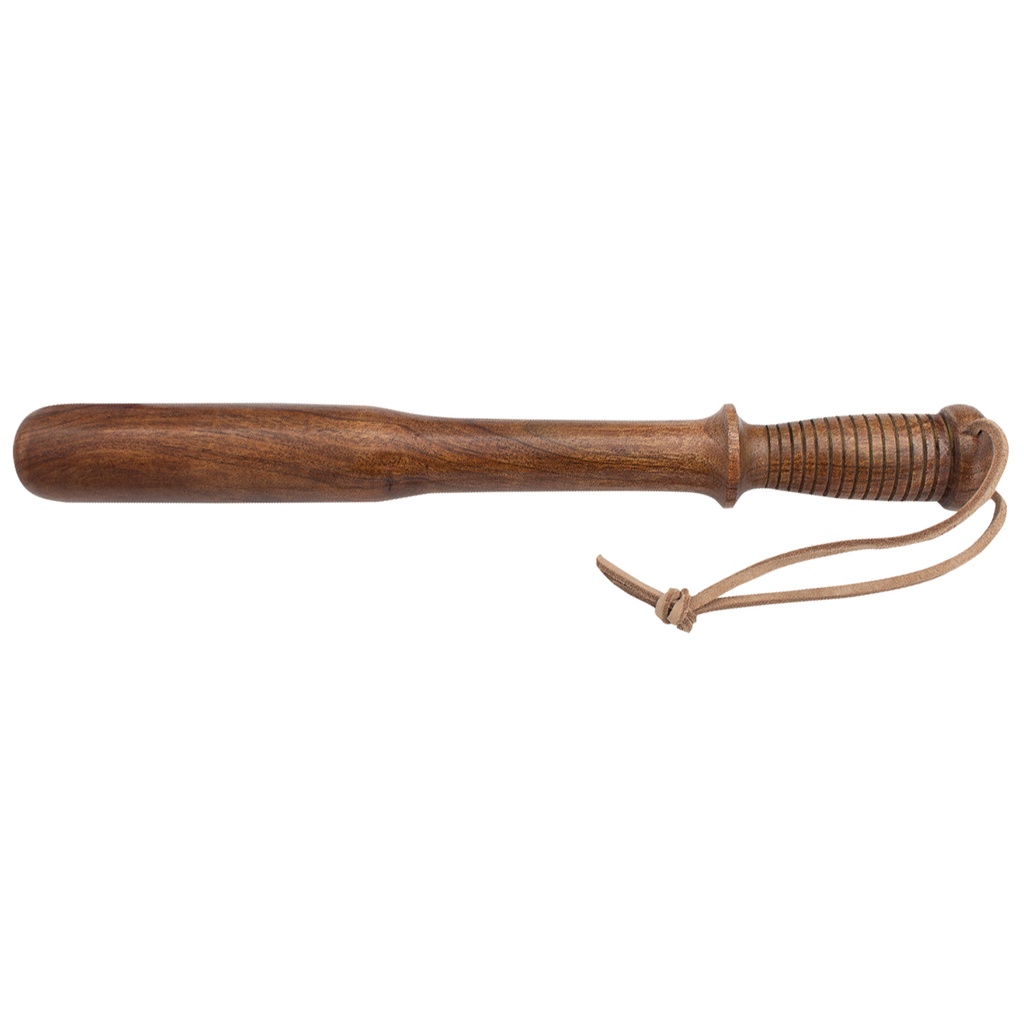
This one is 18.5 inches of solid maple—turned smooth along the shaft, then carved into a grooved handle that feels like someone actually thought about your grip. You’re not fumbling with cold metal or some tactical toy. You’re holding warm wood that balances right in the hand, heavy enough to speak through the tire, light enough to keep your swing easy and repeatable down the whole line.
The first time you use it, you notice how naturally it finds its place: thumb resting near the flared collar, fingers wrapped into those grooves, wrist strap brushing your skin so you’re not worried about drops on slick mornings. It doesn’t try to impress you. It just works its way quietly into your routine—tap, listen, move on.
The Build That Makes This Tire Thumper Baton Feel Trustworthy
When you pick up a tire thumper baton and it feels right immediately, there’s usually a reason. Here, it’s the combination of solid maple and smart shaping. Maple is one of those woods that’s been trusted in tool handles and bats for decades—tough, dense, and able to take repeated impacts without feeling dead in the hand.
The onyx maple finish gives the baton a deep, classic tone—dark enough to look serious, light enough that you still see the grain running under your fingers. That visible grain isn’t just pretty; it’s a quiet reminder that this is real wood, not hollow plastic or cheap laminate. Every thump carries through the shaft with a clean, honest vibration you can read.
The tip is rounded and smooth, so when you strike a tire, you’re hitting with a broad, consistent surface instead of a sharp point. That means less chance of damage, more reliable feedback. The turn between shaft and handle creates a subtle collar—just enough to tell your hand where to settle without you ever looking down. After a few runs, muscle memory takes over. You just grab it the same way every time.
And then there’s the leather wrist strap. Simple, tan, threaded cleanly through the end of the handle. It’s the small, human detail that makes sense on a cold, wet morning or a dark fuel island. You can loop it over your wrist and not worry about losing your tire checker between duals or in gravel. The strap isn’t there to look cool—it’s there so you don’t have to think about it.
How a Tire Thumper Baton Fits Into Your Real-World Walkaround
In real life, your tire thumper baton isn’t a piece of gear you admire on a shelf. It lives where you do your best thinking—maybe in your side box, maybe in the door pocket, maybe leaned where you always grab it before every pull-out. It becomes part of the rhythm of a day that starts earlier than most people are even awake.
You step out, loop the strap over your wrist, and start your walk. Right side, front to back. Each strike is the same: quick swing, solid contact, sound in your ears, feel in your hand. Full tire rings. Soft tire dulls. You don’t have to stare at gauges or guess by sight; you can hear what’s ready and what needs attention.
The grooved handle earns its keep on long nights and long weeks. Sweat, rain, cold—your hand stays planted. No twisting, no slipping. You’re not fighting the tool; you’re working with it. The baton’s length gives you reach without strain, so bending and stooping feel less like a chore and more like a practiced motion.
The Quiet Confidence of a Simple Wooden Tool
There’s a calm that comes from using a simple wooden tire checker instead of something loud and complicated. No batteries, no screens, no calibration. Just wood, leather, and your own experience. You finish the circle, tuck it back where it belongs, and when you climb into the cab, you’re not wondering. You’ve already listened to your tires. You know.
When a Tire Thumper Baton Is Better Than Guessing
You’ve probably seen drivers kick a tire and call it good. Maybe you used to be that driver. But at highway speeds with weight behind you, guessing isn’t much of a plan. A tire thumper baton gives you something better than a boot and faster than dragging out a gauge for every single tire.
It doesn’t replace checking pressure when needed—it helps you quickly find the ones that actually need checking. On a tight clock at a shipper, when you’re squeezed for time but still want to know your rig is ready, this is the middle ground that keeps you moving without cutting corners.
Compared to metal impact tools or more aggressive batons, this maple wood build also keeps the vibe low-key. In a truck stop lot, scale house, or yard, it reads as what it is: a traditional tire checker, not a weapon. You’re carrying a work tool, not trying to look tactical. That matters more than most people admit.
The Difference You Hear, Not Just See
The real value here isn’t the look; it’s the sound you start to trust. After a week of using this tire checker, you’ll notice your ear picking up tiny differences. A tire that felt fine yesterday suddenly sounds a little flat; you catch it before it becomes a bigger problem. That’s how a simple wooden baton ends up saving you time, tread, and frustration.
Questions People Ask Before Buying a Tire Thumper Baton
Is a wooden tire thumper baton actually effective for checking tires?
Yes. A solid maple tire thumper baton gives a clear, sharp sound on properly inflated tires and a duller thud on soft ones. It’s not a pressure gauge, but it’s a fast, reliable way to spot problems before you roll.
How long will a wooden tire checker like this hold up?
With solid maple construction and a smooth, rounded striking tip, this tire checker is built to handle repeated daily use. As long as you don’t leave it soaking in water or baking on a dash, it will stay straight, solid, and ready for your walkarounds.
Can I keep this tire thumper baton in my truck without issues?
Most drivers carry a tire thumper baton openly as a practical tool for pre-trip inspections. Laws vary by location, so if you’re worried, check local regulations—but as a simple wooden tire checker, it’s clearly designed as work gear, not a weapon.
Is there any maintenance needed for a wooden tire checker?
Very little. Wipe it down when it gets dirty, keep the leather wrist strap from staying soaked, and if you want, rub a little wood oil on it once in a while. The idea is simple: less fuss, more use.
The Moment This Tire Thumper Baton Becomes Yours
Picture your next pre-trip in the dark—yard lights behind you, your breath in the air, the hum of distant engines. Your hand finds that onyx maple handle without looking, fingers slipping into the grooves like they’ve been doing it for years. The leather strap brushes your wrist, you swing, and the first tire answers with a clean, confident ring.
By the time you’ve finished your walk, the tire thumper baton isn’t some new tool you’re trying out. It’s part of your ritual. It’s the few extra minutes that let you pull onto the highway with your shoulders a little looser and your mind a little clearer. Not because a gadget told you everything is fine—but because you checked, you listened, and you know.