Himalayan Legacy Gurkha Kukri Knife - Brass & Leather
You don’t pick up a Himalayan Gurkha kukri knife for show. You reach for it the moment you want a blade that hits harder than you do. The forward curve, the brass in your palm, the weight tipping into the cut—you feel it before you swing. Leather creaks, carbon steel flashes, and suddenly you’re not just carrying a knife. You’re carrying a story people recognize on sight.
| Blade Length (inches) | 12 |
| Overall Length (inches) | 17 |
| Blade Color | Silver |
| Blade Finish | Polished |
| Blade Style | Kukri |
| Blade Edge | Plain |
| Blade Material | Carbon Steel |
| Handle Finish | Polished |
| Handle Material | Brass |
| Theme | Gurkha |
| Handle Length (inches) | 5 |
| Pommel/Butt Cap | Brass pommel |
| Carry Method | Belt sheath |
| Sheath/Holster | Leather |
The first time you draw this from its leather sheath, you don’t feel like you’re holding “a knife.” You feel like you’ve just stepped into a line of people who took their blades seriously. The weight tips forward. The 12-inch kukri edge hangs in the air, and you realize: this isn’t made to look mean on a shelf. It’s made to do work.
Where a Gurkha kukri knife changes what you can handle
If you’ve ever swung a straight blade at a stubborn branch, you know the sting in your wrist when it bites and stops dead. A Gurkha kukri knife doesn’t hit like that. The forward-curved carbon steel pulls the cut through for you. Instead of forcing the blade, you guide it—gravity and geometry do the rest.
In camp, that means you split kindling without feeling every strike in your joints. You carve tent stakes and clear brush with a tool that wants to chop. The belly of the kukri blade finds wood and bites deep; the taper near the handle lets you choke up for finer cuts. You stop thinking about “is this too big?” and start thinking “what else can I make easier with this?”
This is why people search for a Gurkha kukri knife instead of a generic fixed blade. You’re not just getting length; you’re getting a design that’s been battle-tested on real terrain, then handed down into everyday use—fields, forests, and backyards where things need to be cut, cleared, or broken down now, not eventually.
How this Gurkha kukri knife earns its weight in your pack
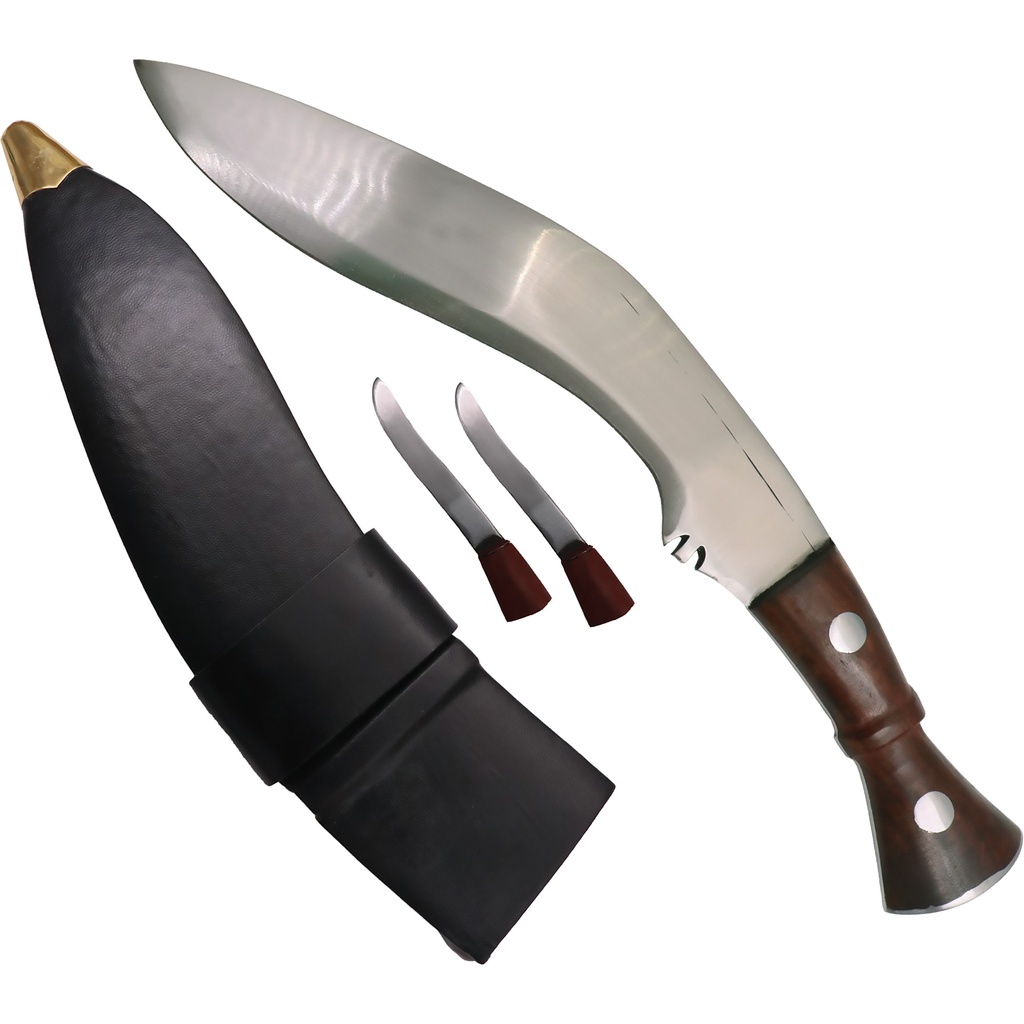
There’s a moment when you first wrap your hand around the polished wood and brass: you expect it to feel clumsy. It doesn’t. The flared, bell-shaped pommel catches your palm and tells your grip, “You’re not going anywhere.” That’s the design detail that makes this click—the way the handle locks in when you swing, so the heavy end of the blade can do its job without you second-guessing every strike.
The 12-inch carbon steel blade comes polished, but not precious. This isn’t a mirror queen that lives in a case. Carbon steel means you get an edge that bites hard and sharp, and a patina that slowly tells the story of how you actually use it. Wipe it down, oil it when you remember, and it will keep coming back for more.
The brass guard and pommel aren’t just there to shine. They add just enough counterweight to balance that long kukri profile. You feel it when you bring the blade up chest-high: the tip dips, ready to drop into the cut, but your wrist doesn’t scream for mercy. The steel, wood, and brass work together so you can swing longer, chop straighter, and control the edge when things get rough or slick.
Carrying a Gurkha kukri knife when you’re not on a battlefield
Out in the woods or on the property, you don’t want to think about where your blade is. You just want it there when your hand reaches for it. The leather belt sheath rides on your hip, not in your way. The creak of leather as you move, the slight tug of weight at your side—that quiet reminder that you’re actually prepared, not just hoping you brought the right gear.
The sheath is built to match the story: black leather hugging the curve of the kukri, brass tip guarding the point, and pockets for the karda and chakmak tucked alongside. When you kneel to work at ground level, the sheath stays put instead of swinging like a pendulum. When you stand, the blade tracks with you, easy to draw in a single, practiced motion.
The feel of brass, leather, and steel in motion
There’s a particular sound this setup makes when you draw: leather sliding, a brief resistance, then the soft scrape of polished carbon steel clearing the mouth of the sheath. The brass pommel brushes your palm as you roll your grip into place. In that small second, you’re not just an owner—you’re the person everyone turns to when something needs cutting, clearing, or fixing.
More than one blade: living with the full kukri kit
On paper, “two small companion knives” sound like extras. In your hand, they become the tools you don’t want to dig in your pack for. The karda, a small utility blade, steps in when carving, slicing cord, or cleaning up a cut on wood would feel clumsy with the main Gurkha kukri knife. You keep the big blade sheathed and let the small one dance.
The chakmak rides beside it as a traditional blunt tool, ready to straighten or touch up the edge when you notice a bit of fatigue in the steel. Around the fire, you find yourself reaching for these more than you expected—sharpening, scraping, detailing. They make the entire set feel like a working kit instead of a single big statement blade.
From display wall to real-world use
Yes, you can hang this on a wall and it will look right at home—curved blade catching the light, brass and leather framing it like a piece of history. But the real satisfaction comes the first time you pull it down and actually use it. Chopping through that first stubborn limb, splitting that first log, or making a rough campsite feel controlled because you’ve got a blade that doesn’t hesitate.
When a Gurkha kukri knife beats a regular fixed blade
You might already own a straight fixed blade knife. You know what it can do. But there’s a reason people keep asking which is better: a kukri or a regular survival knife. The answer shows up the first time you have to do both chopping and fine work on the same day.
The Gurkha kukri knife gives you a forward-weighted chopper and a controlled inner edge in one profile. Instead of carrying a machete and a smaller knife, you run this on your belt and let the side blades handle the tiny tasks. For brush clearing, limb removal, rough shelter-building, and even butchering larger game, that curve gives you more power with less effort.
And there’s the unspoken part: identity. When someone spots a kukri on your hip, they don’t see “just another camping knife.” They see someone who put thought into their gear. Someone who knows what this shape is and why it mattered long before it ended up in your hand.
Questions people ask before buying a Gurkha kukri knife
Is a Gurkha kukri knife actually practical, or just a collector piece?
It’s both, depending on how you treat it. This Gurkha kukri knife is built with carbon steel, a full 12-inch blade, and a leather belt sheath so you can chop, split, and clear brush for real. If you choose to keep it on display, that’s your call—but it’s absolutely ready to work.
Is a kukri knife legal to carry?
Knife laws vary a lot by state and country, especially with larger fixed blades like a kukri. Before carrying this Gurkha kukri knife outside your property or camp, check your local regulations on blade length and open carry. Around home, land, or private campsites, most owners use it as a working tool without issue.
How heavy does a 12-inch kukri feel on the belt?
You’ll notice it, but in a good way. The leather belt sheath spreads the weight, and the brass and wood handle sit close to your side. Once you’ve worn this kukri knife for a bit, it becomes background—there when you need it, quiet when you don’t.
Can I maintain the edge myself, or do I need special tools?
You can absolutely handle it yourself. Carbon steel sharpens easily with a basic stone or rod, and the included chakmak is a traditional companion for quick touch-ups. Regular light maintenance keeps this Gurkha kukri knife ready without turning upkeep into a project.
Later, when the light’s dropping and the fire’s throwing shadows, you slide the blade back into its leather sheath and feel the click of brass against brass. Your hands are a little sore, the work is done, and the steel carries a few new marks. That’s when it hits you: this isn’t just a cool shape from a history book. This Gurkha kukri knife is now part of your own story—hanging by the door, riding on your belt, waiting quietly for the next time you decide you’re not going to wrestle with the world empty-handed.