Knight’s Lineage One-Hand Medieval Sword - Black Steel
You don’t hang this one-hand medieval sword on the wall and forget it—you feel the weight of a knight’s choice every time you grip the black hilt. The polished carbon steel edge catches the light, the gold‑touched guard sits just right in your palm, and suddenly every movie, game, and history book you love feels closer. This becomes the sword you reach for when you want your collection to say, “I didn’t just buy a prop. I chose a blade with a story.”
You remember the first time a sword ever meant something to you. Maybe it was a movie knight standing alone on a rain‑soaked field, or a game where your starter blade finally got replaced by the one that just felt right. Not the biggest, not the flashiest—just the sword that made you think, “Yeah. That one’s mine.” That’s the moment a one-hand medieval sword stops being décor and starts being part of who you are.
When a One-Hand Medieval Sword Feels Like It Was Made For Your Grip
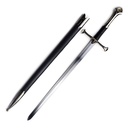
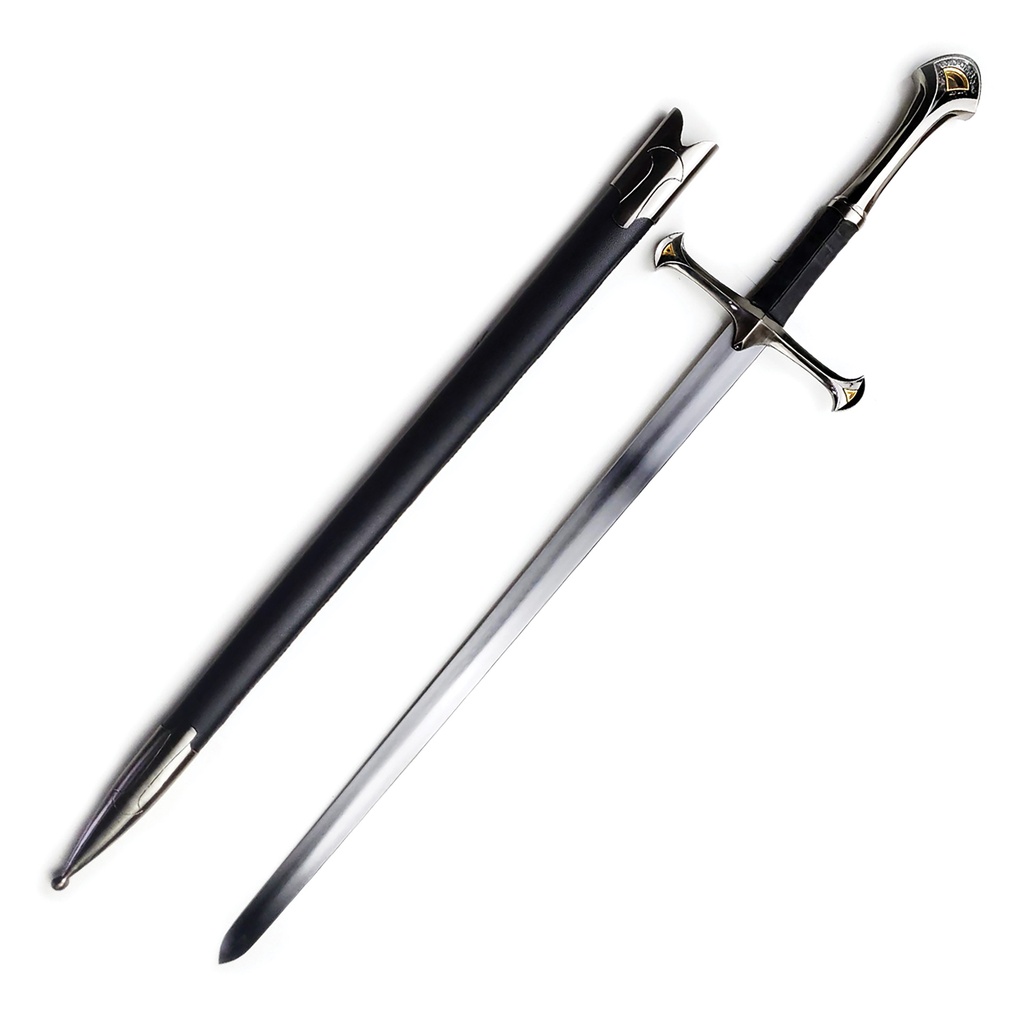
Pick this up and the first thing you notice isn’t the length—it’s the balance. At just over 42 inches overall with a carbon steel blade, the weight settles naturally into your hand instead of dragging your wrist down. You’re not wrestling a fantasy greatsword; you’re holding the kind of one-hand medieval sword that a knight would actually wear at his side, day after day.
Your fingers close around the black grip and there’s that quiet, satisfying resistance—enough texture that you feel locked in, not sliding. The straight crossguard sits between you and the blade, simple and honest. No spikes, no gimmicks, just a clean line of polished metal with subtle gold‑tone inlays that catch light when you move. It’s the kind of detail you notice when you’re up close, the way only an owner gets to see it.
This is where the specs start to matter to your story. Carbon steel gives the blade its backbone: real weight, real presence, a sense that this isn’t just for show. The long, straight edge, the rounded point, the mirror‑like polish—everything about this medieval sword says, “This could have been worn to war, but it’s chosen to live in your world.”
The Build Story Behind a One-Hand Medieval Sword You’re Not Afraid to Handle
If you’ve ever picked up a cheap replica, you know that hollow feeling—blade rattling in the hilt, fittings that feel like thin costume jewelry. This one-hand medieval sword tells a different story the second you give it a gentle swing. There’s no wobble at the guard, no loose rattle from the pommel. Just a clean, solid line of motion from your wrist through the length of the carbon steel blade.
The polished finish doesn’t just look good under display lights; it also lets you read the steel. You can see how the light runs straight down the surface without waves or warps. The guard and pommel match in a bright silver tone with gold triangular inlays—understated, almost restrained. It’s decorative without crossing into gaudy fantasy territory, which means this medieval sword feels at home in a serious collection as much as in a themed room.
The black scabbard continues that grounded feel. No overdone carvings, just a clean black body with silver throat and tip. You slide the blade home and hear that quiet final click of metal on metal as the guard meets the throat. It’s a small sound, but it’s the kind of detail your hands and ears remember. This is why people talk about "real sword" energy—you start to understand it the first time you sheath and draw this piece.
The Sound, Weight, and Presence You Can’t Fake
Give it a careful draw and listen. That soft whisper of steel leaving the scabbard, that shift in weight as the one-hand medieval sword comes free—that’s the sensory detail that makes this part of your daily environment, not just a thing on the wall. When friends visit, you’re not just showing them an object; you’re handing them an experience they’ll remember.
Living With a One-Hand Medieval Sword in Your Space
Owning a sword isn’t just about the moment you unbox it—it’s about how it fits into your life afterward. This one-hand medieval sword has a clean, almost minimalist profile that plays well with modern spaces. The black and silver color scheme doesn’t fight your room; it anchors it. On a stand, across a mantle, or hanging beside your desk, it reads as intentional, not as clutter.
But here’s the truth: you won’t just leave it alone. You’ll find yourself taking it down, feeling the weight again, practicing a few careful cuts in the air. The one-handed design means you’re not committing to a workout every time you touch it. You can hold it, move it, sheath it, and go back to your day without breaking the spell of the moment.
If you’re into medieval reenactment, fantasy costuming, or just want a centerpiece for your collection that looks like a knight’s actual sidearm, this medieval sword hits that "authentic but accessible" sweet spot. It looks right in the hand, it photographs beautifully, and it gives your kit or display a blade that doesn’t look like it came from a toy aisle.
From Screen and Page to Your Wall and Hand
There’s a specific moment that happens when you first see your own one-hand medieval sword in a mirror—on your hip, in your hand, or just hanging behind you. For a second, all the stories you’ve loved collapse into that reflection. You’re no longer just someone who watches knights; you’re someone who owns the kind of sword they would have trusted.
Why Choose a One-Hand Medieval Sword Instead of a Giant Fantasy Blade?
It’s tempting to go big—oversized blades, wild shapes, exaggerated edges. But you already know what those feel like in person: heavy to the point of clumsy, hard to display without dominating a room, more costume prop than carryable weapon. A one-hand medieval sword like this one makes a quieter, more confident statement.
You’re choosing something closer to historical reality: a usable length, a balanced weight, a hilt you can actually wrap your fingers around without strain. That choice says something about you. It says you care about how a medieval sword moves, not just how it looks in a thumbnail.
When someone asks, “Why this one?” you won’t have to reach for marketing phrases. You’ll just hand it to them. They’ll feel the carbon steel blade, the grip, the way the guard rests against their knuckles. They’ll understand right away why you went with a one-hand design over anything exaggerated. This is the kind of one-hand medieval sword that feels like an answer to a question you’ve had for years: “What would it be like to hold the real thing?”
Questions People Ask Before Buying a One-Hand Medieval Sword
Is a one-hand medieval sword like this just decorative, or can I actually handle it?
You can absolutely handle it. The carbon steel blade, solid hilt construction, and one-handed balance mean this one-hand medieval sword feels real in motion. It’s not a foam prop—it has presence, weight, and a grip that lets you practice careful cuts or poses without feeling like it’s going to fall apart.
How big is this medieval sword, and will it be hard to display?
At about 42 1/4 inches overall, it’s long enough to feel like a true medieval sword without overwhelming a standard room. On a wall, above a desk, or on a stand, it reads as a centerpiece, not an obstacle. The slim blade and black scabbard help it sit visually "flat" against a wall, so your space still feels open.
Is a one-hand medieval sword legal to own where I live?
In many places, owning a one-hand medieval sword for home display or collection is legal, but carry and local regulations can vary a lot. It’s always smart to check your local laws about owning and displaying swords. Think of this as a display and collection piece first, not something you’d walk around with in public.
What makes this sword feel different from cheaper replicas?
The difference shows up in the small moments: the solid feel of the carbon steel blade, the absence of rattle at the guard, the way the polished metal and gold inlays on the hilt look up close. When you sheath and draw this medieval sword, it sounds and feels like a single, solid piece—not a costume accessory.
Picture this: it’s late, the room is quiet, and you decide to take your one-hand medieval sword down from its place. You draw it in one slow motion, watch the polished carbon steel catch the lamplight, feel the familiar weight settle into your hand. In that moment, you’re not just a fan, a gamer, or a history buff. You’re the person in the story who already chose their blade—and this is the sword that chose you back.