Rebel Banner Assisted EDC Knife - Confederate Flag
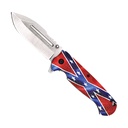
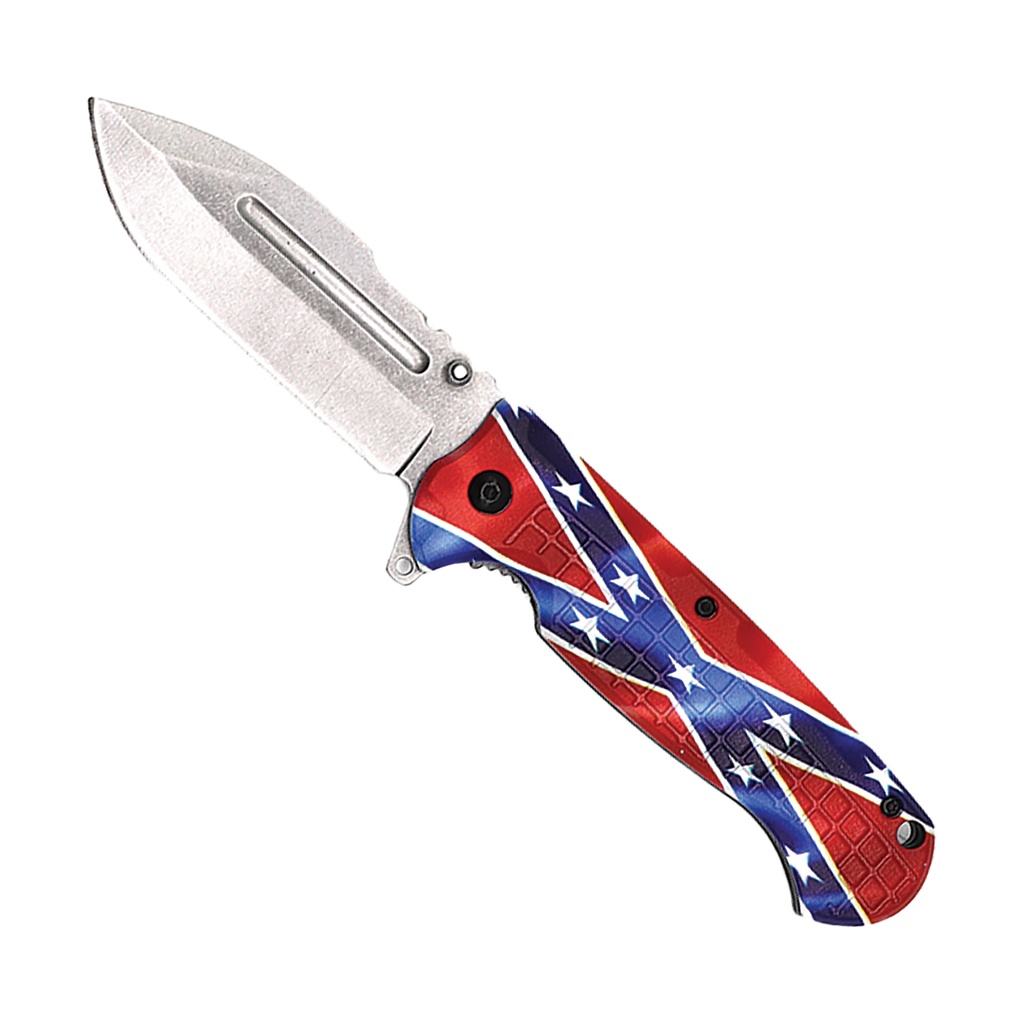
You don’t carry an assisted opening knife just to cut boxes. You carry it because it quietly says what you won’t waste breath arguing about. This rebel banner rides in your pocket until the moment you flick the flipper and that stonewashed clip point snaps to attention. The flag in your hand, the weight in your palm, the simple fact that you don’t apologize for what you carry or what you believe—that’s the everyday story this knife tells.
| Blade Length (inches) | 3.75 |
| Overall Length (inches) | 8.375 |
| Closed Length (inches) | 4.75 |
| Weight (oz.) | 4.69 |
| Blade Color | Silver |
| Blade Finish | Stonewashed |
| Blade Style | Clip Point |
| Blade Edge | Plain |
| Blade Material | Steel |
| Handle Finish | Glossy |
| Handle Material | ABS |
| Theme | Confederate Flag |
| Pocket Clip | Yes |
| Deployment Method | Flipper tab |
| Lock Type | Liner lock |
You’re standing at the tailgate, sun dropping low, someone hands you a knot of paracord that needs cutting. A couple of heads turn when they see what you pull from your pocket. Not because it’s just another assisted opening knife, but because the moment that blade snaps open, a worn stonewash edge and a full Confederate flag handle say more about you than any small talk ever could.
If you’re honest, you don’t carry a knife just to get through chores. You carry it because it’s part of how you show up in the world—ready, steady, and unafraid to be seen exactly as you are.
How an Assisted Opening Knife Becomes Part of Your Story
When you think about adding an assisted opening knife to your everyday carry, you’re not picturing a spec sheet. You’re picturing that exact second when you need a blade and don’t want to fumble. Here, a quick push on the flipper tab and the 3.75-inch clip point blade snaps out with that clean, mechanical certainty you can feel in your fingers.
You’re not wrestling with two hands or digging for a nail nick; you’re moving smoothly, almost on instinct. The liner lock slides in behind the stonewashed steel, and suddenly you’re not the person asking for a knife—you’re the one people turn to when something needs to get done. That’s what this assisted opening knife really offers you: the shift from “I hope someone has a blade” to “I’ve got it covered.”
The Assisted Opening Knife That Looks Like What You Believe
Most people will just see a bold Confederate flag handle. You’ll feel more than that. The glossy ABS handle is contoured into your grip, the flag pattern stretched over curves that were clearly shaped for a human hand, not a catalog photo. Under that red and blue, subtle texture gives you extra hold so the knife doesn’t twist when you lean into a cut.
The stonewashed blade finish does its quiet work too. That subtle, worn-in look hides the tiny scuffs that come from real use—cardboard, rope, plastic, wood—so your assisted opening knife doesn’t look beat up after a few weeks of riding in your pocket. Instead, it develops that honest, used look that only shows up on gear you actually rely on, not just show off.
The Feel of Ready Steel in Your Hand
Those numbers the manufacturer lists—8.375 inches overall, 4.75 inches closed, 4.69 ounces in your pocket—translate into something simple: when you wrap your fingers around this handle, it fills your hand without feeling clumsy. It’s long enough to give you real leverage, light enough that you forget it’s clipped to your jeans until you need it.
Living with an Assisted Opening Knife in Your Daily Carry
Picture your regular week: work, errands, time in the garage, maybe a trip out into the woods or a backroad drive. A good everyday carry blade fades into the background until the moment you need a cut to be clean, quick, and under control. That’s where this assisted opening knife fits in.
The pocket clip rides along the spine side of the handle, so you can slip it onto your pocket or belt and know it’s going to sit in one predictable place. No digging around, no shifting from pocket to pocket. The lanyard hole at the end gives you options too—add a short fob if you like a little extra grab when you’re drawing your knife from deep pockets or gloves.
The Small Motions That Become Habit
After a week or two, you won’t be thinking about how the flipper tab works. Your thumb finds it automatically. The assisted mechanism does the rest, finishing the motion with a satisfying, confident snap. The liner lock moves over with a soft click you can feel more than hear, and you fold the blade closed with the same casual muscle memory you use to turn a key.
This is how an assisted opening knife quietly becomes part of your daily rhythm—little motions that tell your hands you’re ready long before your head even names the task.
When Choosing an Assisted Opening Knife Actually Matters
There are moments when the knife in your pocket isn’t just about convenience. Cutting a stubborn zip-tie in the rain, stripping wire in a cramped engine bay, opening feed bags with gloves on, or even walking to your truck after dark—you feel better when your everyday carry blade feels solid, predictable, and fast to deploy.
The clip point profile on this stonewashed blade pulls its weight here. The fine tip gives you control for precise cuts, while the curved belly of the edge lets you draw-slice without binding or tearing. It’s not some strange shape built for photos; it’s the proven, straightforward geometry you reach for when you actually need a cut to land exactly where you aim it.
And then there’s the flag itself. You already know how people read that Confederate banner. Some nod. Some bristle. What matters is how you feel when you flip that assisted opening knife open—like you’re carrying a piece of the story you claim as your own, not the one someone else wrote for you.
Questions People Ask Before Buying an Assisted Opening Knife
Is an assisted opening knife legal to carry where I live?
Laws around an assisted opening knife change depending on your state, city, and even how you carry it. Many places treat an assisted opening knife differently from a true automatic, but you’ll want to check your local knife laws and, if needed, look up “is an assisted opening knife legal to carry in [your state]” before you decide how and where to carry it.
Is this a good everyday carry blade or just a display piece?
Despite the loud Confederate flag design, this isn’t just a shelf knife. The stonewashed clip point blade, solid liner lock, and assisted opening mechanism all point toward real everyday carry use. If you like your EDC to actually do work and say something about who you are, this assisted opening knife is built to ride in your pocket, not just in a display case.
Will the assisted opening mechanism hold up over regular use?
An assisted opening knife lives or dies by its pivot and spring. This folder uses a flipper-style deployment, with the assist handling the last part of the motion. With normal use—opening packaging, cutting cord, light outdoor tasks—the mechanism should stay snappy as long as you don’t abuse it and occasionally keep the pivot clean and lightly oiled.
Is this knife too big or heavy for daily carry?
At 4.75 inches closed and about 4.69 ounces, this assisted opening knife lives in that solid, mid-size EDC range. In jeans or work pants, it feels substantial but not bulky. If you’re used to tiny keychain blades, this will feel like a step up in presence; if you already carry a working pocket knife, it’ll feel right at home.
Owning the Moment You Snap Your Assisted Opening Knife to Life
Picture this: end of a long day, you’re leaning against your truck, someone fighting with torn plastic and dull tools. You reach for your pocket without a second thought, fingers finding the clip, thumb brushing the flipper. The assisted opening knife snaps open, stonewashed steel catching the last light, Confederate flag resting across your knuckles.
In that small, ordinary moment, you’re not just the person who “likes knives.” You’re the one who came prepared, who isn’t afraid of a little weight in their pocket or a loud flag on their handle. You fold the blade shut, slip it back into place, and it disappears against your hip—until the next time you need your knife to say, without a word, that you know exactly who you are.