Ridge-Line Heritage Fixed Blade Hunting Knife - Bone & Rosewood
You don’t baby this fixed blade hunting knife—you trust it. First light on the ridge, cold air in your lungs, your hand drops to bone and rosewood that already feels like it’s been yours for years. The polished clip-point blade slides from the leather sheath without drama, just quiet readiness. Camp chores, clean field work, one steady tool. Before long, this isn’t just another knife on your belt. It’s the one your stories keep circling back to.
| Blade Length (inches) | 4 |
| Overall Length (inches) | 8 |
| Weight (oz.) | 8 |
| Blade Color | Silver |
| Blade Finish | Polished |
| Blade Style | Clip Point |
| Blade Edge | Plain |
| Blade Material | Stainless Steel |
| Handle Finish | Polished |
| Handle Material | Bovine Bone & Rosewood |
| Theme | None |
| Handle Length (inches) | 4 |
| Tang Type | Full |
| Carry Method | Leather Sheath |
| Sheath/Holster | Leather |
The first time you step off the trail before sunrise with your own fixed blade hunting knife on your belt, something shifts. You’re not just along for the hunt anymore—you’re responsible for what happens when the shot lands, when camp needs tending, when everyone else looks around for the person who’s prepared. Your fingers find the leather sheath at your hip, feel the solid weight of bone and rosewood, and you know: this time, you came ready.
How a Fixed Blade Hunting Knife Quietly Changes Your Hunt
There’s a moment after a clean shot when the noise drops out. No one cares what brand of camo you’re wearing. What matters is whether you have a fixed blade hunting knife you can trust with the work that follows. A full-tang, four-inch clip-point blade in polished stainless steel waits in your hand—not a folding maybe, not a fragile showpiece, but a solid, one-piece tool that doesn’t hesitate when it meets hide, rope, or wood.
That length hits a sweet spot: long enough for confident field dressing and camp chores, compact enough that you stay in control, even when your hands are cold or slick. The clip-point tip gives you the precision to make careful, deliberate cuts instead of fighting your blade. You’re not thinking about edge geometry or steel composition in that moment—you’re just realizing how much easier it is when your hunting knife does exactly what you ask of it.
Why This Fixed Blade Hunting Knife Feels Like It Was Always Yours
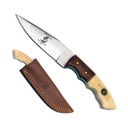
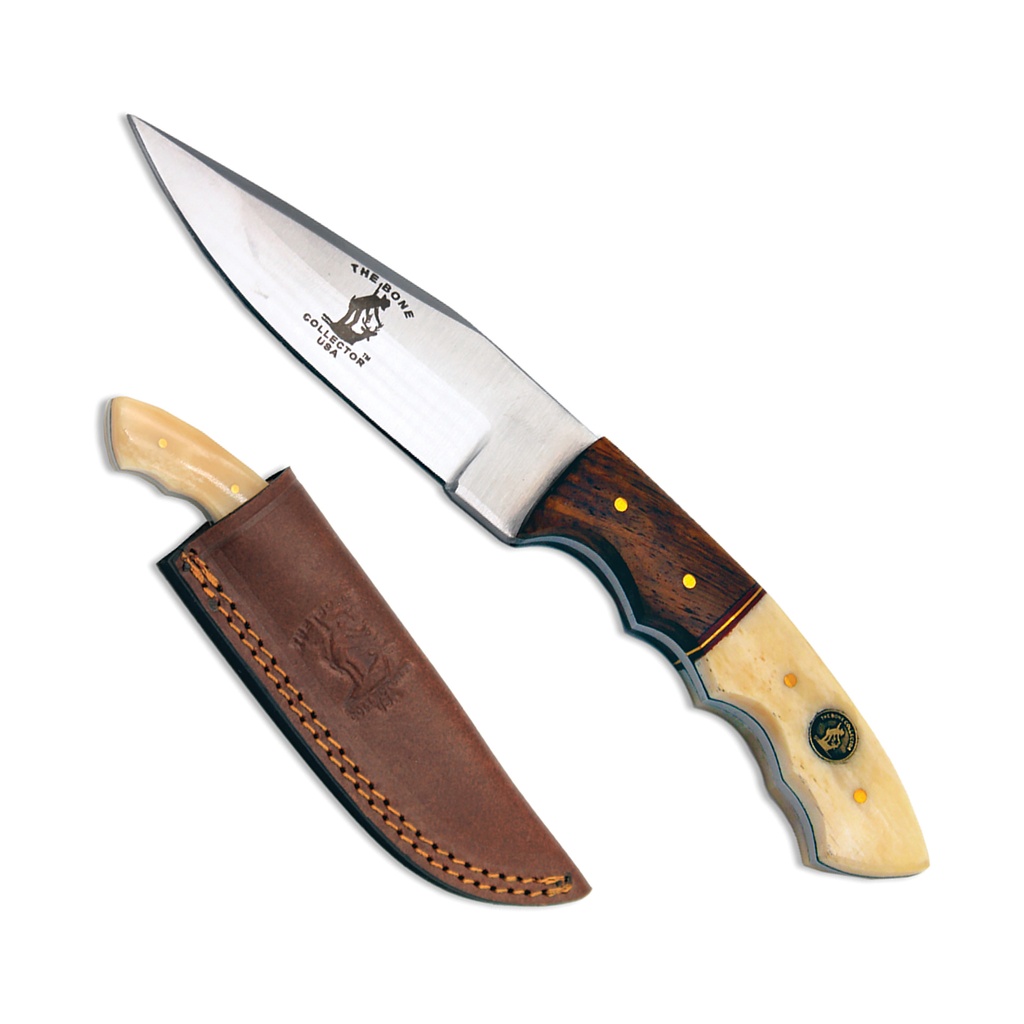
Some knives feel like tools. This one feels like it’s been waiting for your hand. The handle blends warm rosewood in the center with a pale bone section near the guard, pinned with brass and finished smooth so it settles into your palm instead of perching on top of it. Those subtle finger grooves along the handle aren’t flashy, but you feel them every time you draw—the way they guide your grip into the same secure position, even in the dark.
The full-tang construction runs the entire eight-inch length, blade to butt, so the weight is honest. About eight ounces ride against your side—not so light you forget it’s there, not so heavy it drags on your belt. That balance is what lets you choke up on the spine for close work or bear down near the handle for tougher cuts without feeling like the knife is fighting you. The polished stainless steel blade catches the first light of morning, but it’s the way the bone and rosewood warm under your fingers that reminds you this isn’t plastic and paint. It’s natural material that picks up the marks of your seasons.
The Feel of Real Materials in Your Hand
Cold metal gives you information; bone and rosewood give you connection. On a frosty November morning, the leather sheath is stiff when you slide the knife free, but the handle softens as your grip lingers. The smooth bone at the front meets the grain of the rosewood behind it, a tactile reminder that this hunting knife wasn’t designed on a screen alone—it was made to live outdoors, in your stories, not just in product photos.
Carrying a Fixed Blade Hunting Knife Day After Day
Anyone can buy a fixed blade hunting knife. The difference shows up on the third, tenth, or thirtieth day you carry it. You thread the brown leather sheath through your belt almost without thinking now. It rides snug against your hip, close enough that your jacket doesn’t snag, far enough back that you can sit on a log, in a truck seat, or on a stand without it digging into your side.
The sheath’s embossed graphic and contrast stitching aren’t there to impress Instagram—they’re there so you can feel your way to the opening by touch alone. When camp gets busy and you’re cutting paracord, trimming kindling, or prepping food, you start to appreciate how simple a fixed blade makes your life. No flipping, no locking, no wondering if springs will fail. Just a clean draw, a steady cut, and a smooth return to leather.
From Belt to Task Without Thinking
Real readiness is quiet. When a line needs cutting, a package needs opening, or a branch needs trimming, your hand moves before the conversation catches up. The knife clears the sheath in one motion, does its job, and disappears again. That’s what happens when your carry knife isn’t an afterthought, but a natural part of how you move through the woods and through your day.
When a Fixed Blade Hunting Knife Becomes Part of Your Story
You might start out comparing options—folding vs fixed, stainless vs high carbon, tactical vs traditional. But what you actually remember are the moments: the first deer you dressed cleanly without fumbling, the campfire you built faster because your kindling was just right, the time a buddy said, “Here, use yours, it’s better.” That’s when a fixed blade hunting knife stops being a purchase and becomes a piece of personal history.
This design leans into that heritage. The polished clip-point blade looks like something your grandfather might have carried, while the full-tang construction and stainless steel edge stand up to modern use. The bone and rosewood handle doesn’t scream for attention; it invites that quiet double-take from another hunter who recognizes a classic field knife when they see one. You’re not chasing trends—you’re building a kit that will still make sense ten seasons from now.
Questions People Ask Before Buying a Fixed Blade Hunting Knife
Is a four-inch fixed blade hunting knife big enough for real field work?
For most whitetail and similar game, a four-inch fixed blade hunting knife is a sweet spot. You get enough length for confident cuts and gutting without sacrificing control. In the field, control matters more than sheer size, and this blade gives you both reach and precision.
Can I use this as an everyday carry blade, or is it only for hunting?
While it’s built as a fixed blade hunting knife, the balanced size and leather belt sheath make it a practical daily carry in rural or outdoor lifestyles. Cutting rope, opening feed bags, trimming branches—if you’re outside more than in, this can absolutely be your daily carry blade.
Will the stainless steel blade hold an edge with regular use?
The polished stainless steel is chosen to balance edge retention with easy maintenance. You won’t need a full workshop to keep it sharp—a simple stone or field sharpener brings the edge back quickly, even after steady hunting or camp use.
Is it comfortable to carry a fixed blade like this all day?
At roughly eight ounces and eight inches overall, this hunting knife is substantial without being bulky. The leather sheath keeps it tight to your belt, so it rides close to the body. After a day or two, it starts to feel less like extra gear and more like part of how you get things done.
Picture the end of a long day on the ridge. Last light is bleeding out of the sky, the air smells like cold earth and woodsmoke, and camp is settling into that quiet, satisfied hush. You slide your fixed blade hunting knife back into its leather sheath, bone and rosewood catching the glow from the fire. It’s got a few new scuffs now, maybe a faint mark on the handle where it knocked against a rock, but it feels more yours than it did that morning. That’s the real payoff—not just owning a knife, but carrying one that fits your hand, your hunt, and the kind of hunter you’re becoming.