Ridgeback Rescue Full-Tang Survival Knife - Matte Steel
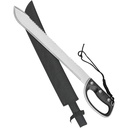
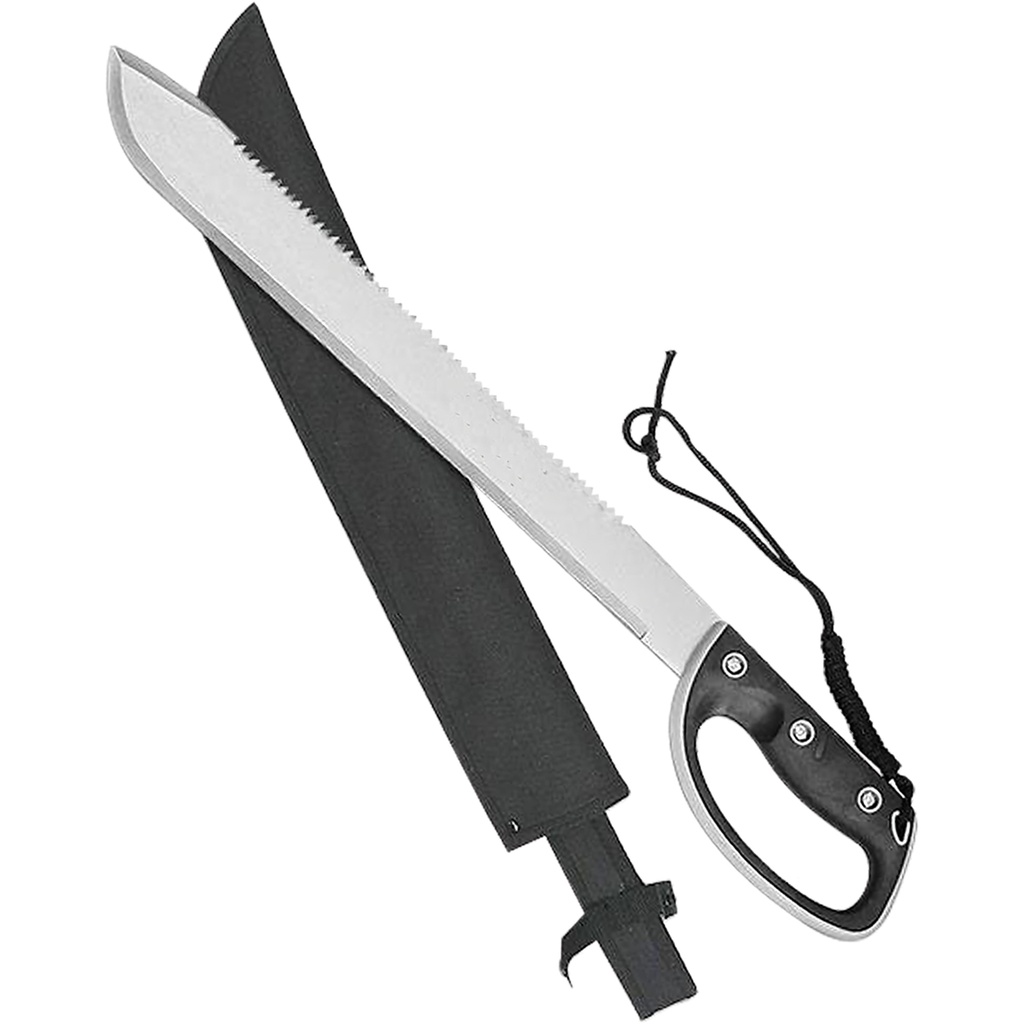
The first time the woods go quiet and your phone’s a dead brick, a survival knife stops being gear and becomes backup plan. This full-tang survival knife gives you reach like a small machete, bite from a partially serrated edge, and control from a knuckle-guard grip that locks into your hand. You feel the matte steel, see the belt sheath waiting on your hip, and know that if something goes sideways out there, you didn’t come unprepared.
| Blade Color | Silver |
| Blade Finish | Matte |
| Blade Style | Clip Point |
| Blade Edge | Partial-Serrated |
| Blade Material | Steel |
| Handle Finish | Matte |
| Handle Material | Plastic |
| Theme | None |
| Tang Type | Full Tang |
| Carry Method | Belt Carry |
| Sheath/Holster | Sheath |
The light leaves faster than you thought it would. The trail you meant to follow has turned into brush and shadow, and your phone is showing you a useless bar of service. That’s when your hand goes, almost without thinking, to the survival knife riding your belt. Not a folder. Not a novelty blade. A full-tang survival knife that feels like an answer instead of another problem.
Why a Full-Tang Survival Knife Changes How You Walk Into the Wild
When you carry a full-tang survival knife, you stop thinking in terms of “What if this breaks?” and start thinking, “What can I do with this?” The steel runs from tip to lanyard hole in one unbroken line, wrapped in a black handle that gives you something solid to grab when your hands are wet, numb, or shaking.
This isn’t a delicate camp accessory. The long, machete-like blade gives you reach to clear branches, baton wood, or carve out space when the undergrowth closes in. The clip point lets you pierce and control finer cuts, while the partially serrated lower edge chews through rope, webbing, and stubborn material that laughs at a smooth blade.
And with a survival knife riding on your belt instead of in a pack, the question shifts from, “Did I pack a tool?” to “How fast can I get to it?”
How This Survival Knife Handles Real Trouble, Not Instagram Trips
There’s a quiet kind of confidence that comes from knowing your gear isn’t fragile. Matte steel doesn’t flash or glare when you’re signaling with a headlamp or moving low in the trees. It just works. The blade has the length of a compact machete but the control of a fixed survival knife, which means you can choke up near the guard for carving or slide back for power and reach.
Run your thumb along the spine and you’ll feel those saw-like serrations. They’re not decoration. Out in the field, they give you the option to notch, scrape, or saw when you don’t want to burn edge life on the main cutting surface. When you’re breaking down kindling, cutting a shelter pole, or trying to free something snagged in tough material, those teeth start to feel like a second tool living on the same piece of steel.
This is where design matters: full tang for strength, clip point for control, partial serrations for bite, and a knuckle-guard handle to keep your hand where it belongs when things get messy. A survival knife like this earns respect the first time you push it hard and it doesn’t flinch.
Carry a Survival Knife You Can Actually Reach When It Counts
Plenty of blades ride in packs and never get touched until someone dumps everything out to find them. A belt-carry survival knife lives where your hand naturally goes. The sheath hugs your hip, the retention strap keeps the blade locked in when you’re climbing, running, or crawling, and when you finally need steel in your hand, there’s no zipper to fight or flap to unclip on your backpack.
The handle is where this survival knife quietly shows you it was built for use, not for a display case. A guard-forward design and knuckle-bow shape let your fingers hook in and stay put. If your grip is slick with sweat, rain, or worse, that guard stops your hand from sliding up onto the blade when you bear down. The matte black scales don’t scream for attention; they just give you a grip that feels like it was made for work gloves and bare hands alike.
That First Draw in the Dark
Picture waking up at 3 a.m. to the sound of wind ripping at your tent. You slide out, barefoot in the dirt, and reach down. Your fingers close around the handle where they always do. One snap of the retention strap, one smooth draw, and your survival knife is out, familiar, balanced, already an extension of your intention to fix what’s wrong.
When a Survival Knife Becomes Your Plan B (and C)
There are moments a survival knife isn’t about camping, it’s about getting home. A stuck vehicle that needs brush cleared. A seatbelt or strap that has to be cut quickly. A limb hanging low enough to destroy your line of sight on a trail. In those moments, you don’t want to be wondering if your blade is strong enough or if the handle is going to twist in your grip.
This full-tang design turns your whole arm into leverage. You can baton through smaller logs, chop vines, or jab into compacted dirt without babying it. The lanyard cord at the butt gives you a failsafe—loop it around your wrist when you’re working over water, a ravine, or in thick brush where dropping a knife would mean losing it.
The Quiet Math of Preparedness
Most days, you’ll use a survival knife for simple, almost boring tasks: cutting cord, shaping stakes, opening stubborn packaging at camp. But the reason you carry a serious fixed blade isn’t those small jobs. It’s the one big problem that someday appears without warning. When that day comes, you’ll be very aware of whether you brought a toy or a tool.
Survival Knife vs. Folding Blade: When Strength and Reach Matter More
You might already own a good pocket knife. It’s there for mail, meals, and minor fixes. But a survival knife stands in a different category. No moving parts. No hinge to fail. No lock to misjudge. Just a solid bar of steel shaped for cutting, prying, chopping, and digging when finesse stops being enough.
Out on the trail or at a roadside emergency, a folding knife feels like something you protect from hard use. A survival knife like this invites it. Full-tang construction, a guarded handle, and long blade length mean you can take on jobs that would destroy a dainty EDC: pounding through frozen ground to anchor a line, cutting thick saplings, or levering something stuck without that sickening flex at the pivot.
Owning both isn’t redundancy; it’s layering. The pocket blade handles your day. The survival knife covers your worst day.
Questions People Ask Before Buying a Survival Knife
Is a full-tang survival knife really stronger than a folding knife?
Yes. A full-tang survival knife is one continuous piece of steel from tip to handle end, so there’s no hinge or joint to become a weak point. That extra strength shows up when you chop, baton, or pry—situations where folders often flex or fail.
Can I use this survival knife for camping and everyday chores, or is it overkill?
You can absolutely use it for regular camp tasks—food prep, cord cutting, light chopping—but it will feel bigger than a typical pocket knife. Think of it as your primary outdoor blade: a survival knife you’ll reach for when you want more reach, more power, and more security in your grip.
Is a knife like this legal to carry on my belt?
Legality depends on where you live. Many places allow a survival knife on your belt, but blade length and intended use can change the rules. It’s smart to check your local knife laws so you know exactly how and where you can carry a fixed-blade survival knife like this.
Later, when you’re back at the trailhead or standing beside your truck in the last wash of daylight, you’ll slide this survival knife back into its sheath with the kind of satisfaction that doesn’t need an audience. You’ll remember the branches you cleared, the wood you split, the small problem you solved before it grew teeth. And as the weight of that full-tang steel settles against your hip, you’re not just someone who went out with gear—you’re someone who came back with stories, because you carried a survival knife built to handle the parts of the day you can’t script.