Ridgeguard Full-Tang Survival Knife - Matte Steel
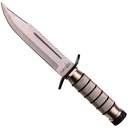
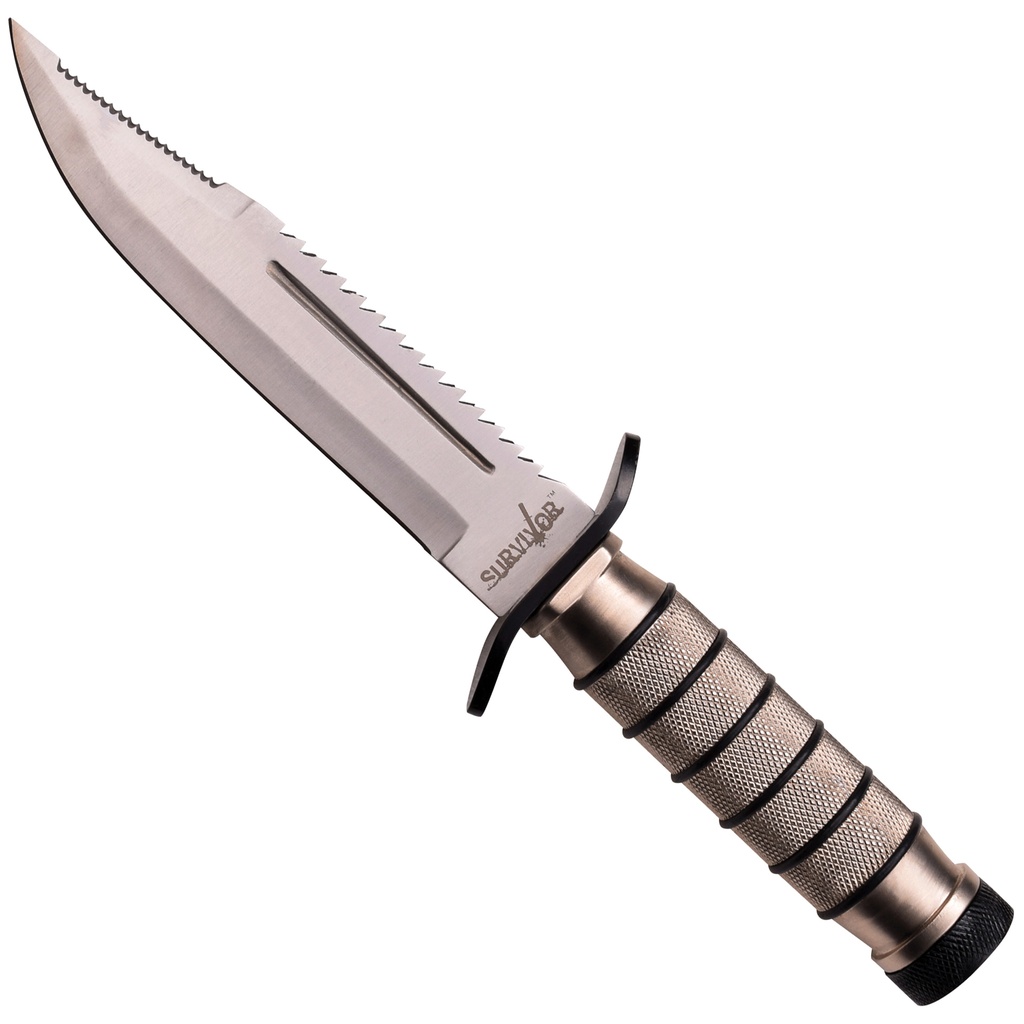
You feel the shift the moment you slide this survival knife from its sheath. The full-tang weight settles into your hand, the knurled metal grip catching just enough skin to say, "I won’t slip when things get weird." The sawback bites into branches, the partial serrated edge chews through stubborn cord, and that hidden field kit in the sheath—matches, needle, fishing line, compass—turns a simple blade into a quiet kind of confidence you can clip to your belt and forget… until you’re glad you didn’t.
| Blade Length (inches) | 5 |
| Overall Length (inches) | 9.5 |
| Weight (oz.) | 10.56 |
| Blade Color | Silver |
| Blade Finish | Matte |
| Blade Style | Clip Point |
| Blade Edge | Partial-Serrated |
| Blade Material | Steel |
| Handle Finish | Matte |
| Handle Material | Metal |
| Theme | Survival |
| Handle Length (inches) | 4.5 |
| Tang Type | Full Tang |
| Pommel/Butt Cap | Flat |
| Carry Method | Belt Carry |
| Sheath/Holster | Nylon Sheath |
The first time plans fall apart on the trail, it happens fast. Weather rolls in sooner than the forecast promised. The light drops behind the ridge. That easy two-hour loop suddenly feels a lot longer. In that moment, a survival knife isn’t about looking tactical—it’s about knowing you didn’t bet your safety on a pocket folder and wishful thinking.
This is where carrying a survival knife with its own field kit stops being hypothetical and starts feeling like a very real kind of backup. Not dramatic. Not doomsday. Just you, a ridge line, fading light, and a tool that quietly says, “We’re okay. We’ve got options.”
How a Survival Knife Changes the Story in the Field
When you actually need a survival knife, you’re rarely in a movie moment. You’re more likely standing over a stubborn branch that needs to become shelter, or a length of cord that suddenly matters more than it did in the garage. A 5-inch clip point blade in matte steel gives you reach and control—long enough to baton through small logs, precise enough to feather sticks for fire-starting without feeling clumsy.
The partial serrated edge on the lower portion of the blade pulls its weight the first time you’re cutting wet rope, paracord, or even stubborn plastic. You don’t saw and swear—you lean in, feel the teeth bite, and you’re through. The sawback along the spine turns dead branches into manageable pieces; you’re not pretending it’s a chainsaw, but you’re also not stuck breaking wood across your knee and hoping it splits the way you want.
The feel of control when things get rough
Because this is a fixed blade with a full tang, there’s no hinge, no lock, no moving part waiting to fail. The steel runs all the way through the handle, so when you twist, pry, or drive the point into tough material, you feel a single solid piece, not a joint you’re nervously watching. That’s the quiet difference: when your hand and the knife move as one, you stop handling it like glass.
Built Like a Survival Knife You Don’t Have to Baby
There’s something honest about matte steel. No mirror polish to protect, no high-gloss finish you’re afraid to scratch. This blade comes ready to be scraped, dinged, and used hard. At 9.5 inches overall and about 10.5 ounces, it sits in that sweet spot between "big enough to be serious" and "small enough to carry"—enough mass to chop and baton, not so much that it drags you down.
The handle is knurled metal with segmented grip rings, and that detail matters more than it looks in photos. In real life, sweaty palms, rain, or cold fingers make smooth handles a problem. Here, the texture bites just enough to lock in without chewing up your hand. You don’t find yourself choking up awkwardly, searching for a safe spot to hold; every part of the handle feels like it’s inviting your grip.
Why full-tang steel matters when you push it
Full-tang construction on a survival knife means the steel is the backbone, not an insert. Levering under a knot in dead wood, tapping the spine with another piece of wood to split kindling, or driving the tip into hard-packed earth—you’re not wondering if the blade will loosen in the handle over time. If you’ve ever felt a cheap knife twist under pressure, you know exactly why this matters.
Carrying a Survival Knife That Brings Its Own Field Kit
What turns this from "just another big fixed blade" into something you actually trust is the quiet redundancy packed into the sheath. On your belt, it rides in a simple nylon sheath—nothing flashy, just secure and easy to reach. But tucked into that kit are the pieces you forget until you really miss them: matches, a needle and thread, a fishing hook with line, and a small compass.
Picture a sudden chill on a cloudy evening. Wood’s damp, your hands are tired, and the lighter you loaned a buddy never made it back. Those matches are no longer "extras"—they’re the reason you’re warming your hands instead of tucking them into your armpits and cursing the dark. Or a torn pack strap halfway through the day; instead of nursing it the last miles, you stitch it enough to get home without a failure becoming a full-blown problem.
That’s what owning this survival knife really means: fewer small problems turning into big ones. Not because you’re a survival expert, but because you quietly decided to carry a blade with its own backup plan.
When a Survival Knife Beats a Folding Blade in Real Life
If you already carry an EDC folder, you might wonder where a fixed-blade survival knife actually fits. The answer shows up the moment you step off pavement. Your pocket knife is great for opening boxes, slicing food, light camp chores. But when you’re batoning wood, scraping bark for tinder, or driving the tip into a log to pry something free, it’s hard not to picture that pivot pin and lock mechanism giving up at the worst time.
A fixed blade rides differently in your life. It becomes the tool you reach for when you don’t want to negotiate with a mechanism. No flicking, no thumb studs—just a clean draw from the sheath and a knife that’s already ready. For hiking, camping, or tossing a kit in the back of your truck “just in case,” that simplicity becomes part of your mindset: fewer steps between you and action.
And if you’re thinking about this as a truck, cabin, or bug-out bag knife, the full-tang build and metal handle mean it can sit for months, even years, and still be ready with minimal fuss. Wipe it down, keep a basic edge on it, and it doesn’t complain.
Questions People Ask Before Buying a Survival Knife
Is a survival knife like this too big for everyday carry?
On a belt, this survival knife feels more like a trail or camp companion than a downtown carry piece. It’s intentionally sized for outdoor use—hiking, camping, truck kits—rather than slipping into office life. If your "everyday" includes woods, back roads, or land you work on, it fits right in. If your day is more desk than dirt, this becomes your weekend and adventure blade.
Will this survival knife hold up to real outdoor abuse?
Yes—this is built for hard use. The full-tang steel blade, matte finish, and knurled metal handle are made to handle batoning, light chopping, cord cutting, and prying without babying it. Keep the edge touched up and wipe it down after wet use, and it will take the kind of punishment normal pocket knives complain about.
Is a fixed-blade survival knife legal to carry where I live?
Knife laws change by state, city, and even park system. A fixed-blade survival knife with a 5-inch blade is usually treated differently than a small pocket knife. Before you carry it daily, check your local regulations—especially if you plan to keep it on your belt in town. For private land, camping trips, and wilderness areas, it’s typically accepted as standard outdoor gear, but always confirm.
How does this compare to a multitool for emergencies?
A multitool gives you options; a dedicated survival knife gives you capability. You can absolutely pair them, but when it comes to cutting wood, processing kindling, or handling bigger camp tasks, a solid fixed blade wins. The built-in field kit in the sheath closes the gap by adding those small emergency items multitools sometimes try to cover.
Imagine this: end of the day, temperature dropping, you’re standing in a patch of clearing light beside your camp. The nylon sheath is right where you clipped it that morning. One pull, and the knife slides free, matte steel catching the last of the sun. You set to work—splitting kindling, shaving tinder, trimming cord—and nothing about it feels delicate. The handle locks into your palm, the serrations eat through what needs cutting, and the sawback earns its keep.
By the time your fire catches and the first curl of smoke rises, you’re not thinking about the knife at all. You’re thinking about how it felt not to hesitate. Owning a survival knife like this isn’t about collecting gear—it’s about that exact moment when you realize you didn’t just bring a blade. You brought the version of yourself who’s ready.