Ridgelight Traverse Full-Tang Skinning Knife - Gold Damascus
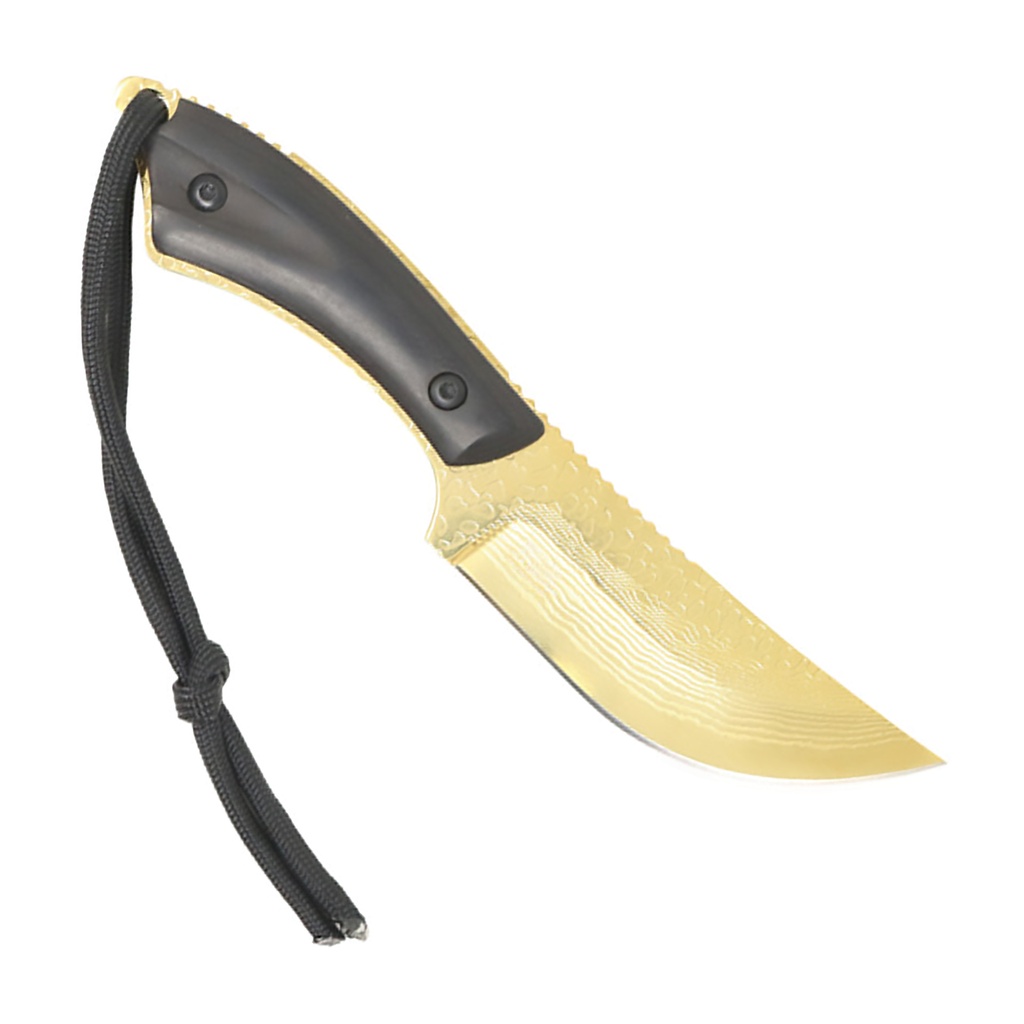
You know that first breath on the ridge, when the light finally shows you what the night left behind? That’s the moment this hunting skinning knife steps in. The gold Damascus-style blade catches just enough dawn to guide your cut, while the full-tang spine and contoured wood handle stay honest in cold, slick hands. You move from first incision to clean hide with quiet confidence—and you start to feel like someone whose field work matches the respect you feel for the animal.
| Blade Length (inches) | 4 |
| Overall Length (inches) | 7.5 |
| Blade Color | Gold |
| Blade Finish | Textured |
| Blade Style | Trailing Point |
| Blade Edge | Plain |
| Blade Material | Steel |
| Handle Finish | Smooth |
| Handle Material | Wood |
| Theme | Gold Damascus |
| Handle Length (inches) | 3.875 |
| Tang Type | Full Tang |
| Carry Method | Nylon Sheath |
| Sheath/Holster | Nylon |
You’re on the ridge before the sun really commits. Breath hanging in the air, fingers waking up inside worn-in gloves, that same familiar weight riding at your hip. The shot was clean. Now comes the part that shows whether you respect the animal or just wanted the antlers. This is where your hunting skinning knife stops being gear and starts being proof of who you are.
When a Hunting Skinning Knife Becomes Part of Your Ritual
The first cut is always a quiet conversation with yourself: don’t rush, don’t waste, don’t slip. A good hunting skinning knife doesn’t distract you with drama; it disappears into your hand and lets muscle memory take over. That’s what happens with a 4-inch trailing point that naturally wants to slide under hide and follow the curve you’re already seeing in your head.
You feel that long, rising tip catch just enough light from the gold Damascus-style finish to show where the edge is tracking, without throwing a blinding flash across the work. The full-tang spine runs straight through the handle into your palm, giving you that solid, single-piece confidence when you pull instead of push. Every small adjustment—angle, pressure, wrist rotation—translates cleanly, like the knife is simply extending your fingertips.
Why This Hunting Skinning Knife Holds Up When Conditions Don’t
Field-dressing never seems to happen on flat ground with perfect lighting and dry hands. You end up kneeling in snowmelt, crouched over wet leaves, or bent sideways on a slope that doesn’t care how careful you’re trying to be. That’s where the full-tang build and contoured wood handle start to matter more than any catalog spec line.
The steel blade runs the full 7.5 inches of the knife, from tip to the lanyard hole at the end, so there’s no mystery joint hidden inside the handle waiting to flex. That full-tang construction means when you twist to free a stubborn joint or pull through thick hide, the force runs straight through one solid piece. The smooth wood scales aren’t just pretty; they’re shaped into a natural palm swell that locks into your grip when your hands are cold, wet, or slick with fat.
And that gold Damascus-style texture isn’t just there to look good in photos. The subtle pattern diffuses glare when the sun finally crests the treeline. Instead of a harsh flash off a polished blade, you get a muted glow that lets you stay focused on the cut. On long days in the field, small details like that are what keep you working instead of fighting your own gear.
Carrying a Hunting Skinning Knife You Don’t Have to Think About
The knives that stay in your kit aren’t always the flashiest; they’re the ones you forget you’re wearing until you need them. A fixed-blade hunting skinning knife with a 4-inch trailing point sounds substantial on paper, but on your belt it should feel like part of your usual loadout, not an extra chore to haul around.
The included nylon sheath rides light and low-profile, hugging close so it doesn’t snag on brush when you’re side-hilling through timber or ducking under blowdowns. The overall 7.5-inch length gives you real working leverage without printing awkwardly under a jacket or beating your leg raw on the hike in. When you reach for it, the handle shape tells you everything before the blade clears the sheath—where the edge is facing, how your wrist should turn, how much room you have to work.
The lanyard running through the handle’s end is one of those small field details you don’t think about until you drop a knife in snow or loose leaves. Wrap it around your wrist for tricky angles inside the cavity, or hang it from a peg by the tailgate while you switch from skinning to quartering. A carry knife that respects your routine instead of rewriting it is the one you’ll actually trust when it matters.
When the Right Hunting Skinning Knife Changes the Whole Hunt
Most people talk about groups at 200 yards or how flat a round shoots. But if you’ve been doing this a while, you know the real test of a hunt happens after the echo dies. That’s when a dedicated hunting skinning knife quietly decides whether you end the day proud of your work or annoyed at yourself.
Picture this: you’ve hiked farther than you planned, the animal’s down in a pocket you’re not thrilled about, and weather’s starting to turn. With a sloppy edge or awkward blade shape, every cut feels like a gamble. With a properly shaped trailing point and a solid full-tang spine, you can move with intention—clean rings around legs, a smooth line along the belly, hide peeling away instead of tearing in patches.
If you’re the one in camp everyone looks to when it’s time to break down an animal, you already know how much your knife says about you. A distinctive gold Damascus-style blade isn’t just about looks; it’s a visible promise that you take the hard, quiet work seriously. It becomes the daily carry blade of your hunting life—the one the newer guys notice, the one the old-timers ask to feel in the hand, the one your own kids will remember watching you use.
Questions People Ask Before Buying a Hunting Skinning Knife
“Is a 4-inch blade enough for a hunting skinning knife?”
For most deer-sized game, a 4-inch hunting skinning knife hits the sweet spot. It’s long enough to make confident sweeping cuts and trace the line under the hide, but short enough to stay maneuverable in tight spots around joints and the neck. You get control without feeling under-equipped.
“Can I use this as my only hunting knife for field dressing?”
You can handle a full field dress and skin with a single, well-shaped hunting skinning knife, especially one with a strong full-tang build and trailing point profile. Some hunters like a separate boning or gutting blade, but if you prefer to travel light, a dependable fixed blade like this can absolutely be your main carry knife in the field.
“How comfortable is it to use bare-handed when it’s cold or wet?”
The contoured wood handle on this hunting skinning knife is built for exactly that reality—cold mornings, wet gloves, and slick conditions. The palm swell and gentle curves give your fingers something to lock into, and the full-tang spine keeps everything feeling solid when you’re pulling through tough spots instead of just slicing.
“Does the gold Damascus-style finish affect real-world use?”
The gold Damascus-style pattern is primarily visual, but it does one practical thing well: it breaks up harsh reflections. In the field, that means a soft, warm glow instead of a sharp flash in your eyes. You still get a reliable working edge, just with a blade that looks as good laid out by the tailgate as it feels in your hand.
Later, back at the truck, the day’s work laid out on the cooler, you catch that blade again in the last light—gold Damascus catching the same color as the sky. Your gloves are off, your hands are tired, but your cuts were clean and your pace never felt frantic. You slide the hunting skinning knife back into its sheath and clip it onto the same spot on your belt without thinking. It’s just part of you now: the way you carry yourself in the field, the way you honor the animal, the quiet confidence that you can handle the hard parts as well as the easy ones.