Ridgeline Resolve Hunting Knife - Red Wood
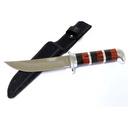
You don’t bring a toy into the woods. You bring a hunting knife you trust. This full‑tang 10" Ridgeline Resolve rides on your belt, 440 stainless clip point ready for whatever a day outside throws at you. The red wood handle warms in your hand, the nylon sheath snaps closed with a quiet, certain click. You walk in with just a plan; you walk out knowing you had the right blade all along. This is the hunting knife that simply does its job—so you can do yours.
| Blade Length (inches) | 5.5 |
| Overall Length (inches) | 10 |
| Blade Color | Silver |
| Blade Finish | Satin |
| Blade Style | Clip Point |
| Blade Edge | Plain |
| Blade Material | 440 Stainless Steel |
| Handle Finish | Gloss |
| Handle Material | Wood |
| Theme | None |
| Handle Length (inches) | 4.5 |
| Tang Type | Full Tang |
| Pommel/Butt Cap | Metal pommel |
| Carry Method | Belt carry |
| Sheath/Holster | Nylon sheath |
You’re a few miles from the truck when you finally spot what you came for. The air’s colder in the shade, your breath hangs, and everything you’ve carried all morning suddenly matters. This is the moment you reach down, feel the weight at your hip, and know your hunting knife is going to do exactly what you need—no drama, no guessing, no hoping.
That’s the quiet promise of a solid hunting knife: it doesn’t make the story about itself. It just helps you finish what you started.
When a Hunting Knife Becomes Part of Your Routine
A good hunting knife disappears on your belt until the second you need it. With a 10-inch overall length and a full 5.5-inch clip point blade, this one sits in that sweet spot: big enough to handle field dressing and camp tasks, compact enough that you’re not fighting it in tight spaces. You slip it into the nylon belt sheath before you leave the house, and by the time you’ve reached the trailhead, it already feels like part of your normal kit.
The hunting knife here isn’t trying to look tactical or extreme. It’s built the way thousands of reliable blades have been built before it: full tang through a solid wood handle, simple guard to keep your hand from sliding forward, and a blade profile that’s proven itself in real field work. You don’t have to baby it, and you don’t have to think about it—just draw, cut, clean, repeat.
Why This Hunting Knife Design Just Works Outdoors
If you look closely at this blade, you can see why it clicks for real-world use. The clip point shape gives you a fine, controllable tip for careful work—piercing, starting cuts, working around joints—while the plain edge provides a long, smooth slicing surface for clean, efficient cuts. At 5.5 inches, the blade is long enough to break down game or handle camp chores, but short enough to stay maneuverable when you’re working close.
The 440 stainless steel matters here, not as a buzzword, but as a simple truth: you get a blade that shrugs off moisture, wipes clean after a messy field session, and doesn’t rust at the first sign of neglect. You won’t need a professional sharpening setup either; 440 takes a working edge quickly, so you can bring it back to life on a basic stone or field sharpener. For a hunting knife that might ride through rain, mud, or a forgotten week in the truck, that kind of corrosion resistance is real peace of mind.
The feel of a real, full-tang blade
When you grab this knife, you feel the steel running all the way through the handle. That full tang isn’t a spec-sheet brag; it’s the difference between wondering if your knife will hold up and knowing it will. Batoning kindling, twisting through a stubborn joint, bracing the pommel in your palm—there’s no flex, no give, just a solid connection between your hand and the blade.
The Red Wood Handle That Warms to Your Grip
There’s a reason wood-handled hunting knives never really went away. The layered red and black wood on this handle doesn’t just look good; it changes how the knife feels in your hand. On a cold morning, wood doesn’t bite your skin like bare steel. As you work, the handle takes the warmth of your palm, the gloss finish smoothing against your fingers while the subtle contouring keeps your grip anchored.
The metal guard stops your hand from sliding forward, especially when things get slick. At the other end, the flared metal pommel gives you a secure backstop—something solid to push against when you need more pressure. You’re not thinking about "ergonomics" in the moment; you’re just noticing that you’re not having to adjust your grip every few minutes.
The small detail you notice in the field
Pulling the knife from its nylon sheath, you hear that soft snap of the retaining strap. It’s a tiny sound, but it’s the kind that tells you the sheath is doing its job. The sheath rides on your belt, out of the way when you sit in the truck or crouch by the fire, yet always in the same spot when you reach for your hunting knife without looking.
Carrying a Hunting Knife You Don’t Have to Baby
Out in the woods, you don’t have time to treat your gear like a display piece. This hunting knife is meant to be used hard and cleaned fast. Blood, sap, dirt—440 stainless doesn’t care. A quick rinse, a wipe with a rag, and it’s back in the sheath. The satin finish hides the small scuffs that come with real use, so you don’t feel like every task is leaving a scar.
A lot of people quietly want the same thing from their everyday carry blade and their field knife: something reliable that doesn’t scream for attention. You can clip a small folding knife in your pocket for daily tasks and keep this fixed-blade hunting knife riding on your belt when you head beyond the pavement. One is for boxes and quick cuts; this one is for the moments that matter a little more.
When a Simple Hunting Knife Beats the Fancy Alternatives
You’ve seen the knives with wild blade shapes, hollow handles, and more features than you’d ever actually use. They look impressive on a screen, but in your hand they feel like a gamble. A straightforward hunting knife like this one wins in the real world because it strips away the noise. No moving parts to fail, no complicated locks, no handle gimmicks—just a solid fixed blade, a wood grip, and a sheath that keeps it where you left it.
In side-by-side use, a dependable hunting knife often outperforms heavier tactical monsters and delicate showpieces. When you’re cleaning game, making feather sticks, or cutting rope, you care about control, edge, and comfort—not how aggressive the design looks. This knife leans into that truth. It gives you a working edge, a stable handle, and a size that feels natural, whether your hands are bare, wet, or gloved.
Questions People Ask Before Buying a Hunting Knife
What size hunting knife is best for actual field use?
For most people, a hunting knife around 10 inches overall with a 5–6 inch blade hits the sweet spot. It’s big enough for field dressing and camp chores without feeling clumsy. This knife sits right in that range, so you get reach and control without overkill.
Is a 440 stainless hunting knife good enough for serious hunting?
Yes—440 stainless is a solid, proven choice for a hunting knife, especially if you want easy maintenance and corrosion resistance. It takes a sharp edge without demanding fancy sharpening gear and stands up well to moisture, blood, and the kind of neglect that happens in real life.
Can I carry this hunting knife on my belt every day?
You can carry it daily as a belt knife if your local laws allow fixed blades of this length. Many people use a hunting knife as a general outdoor and farm tool—just check your area’s knife regulations and be mindful about where you wear it in town versus on the trail.
Is a fixed-blade hunting knife better than a folding knife?
For heavy outdoor work and hunting, a fixed-blade hunting knife is usually stronger and more reliable than a folder, because there’s no hinge or lock to fail. You can still use a pocket knife for lighter everyday tasks and keep the fixed blade for when you really need strength and stability.
Picture your next early start: boots laced, pack slung, cold air on your face. Your hand rests for a second on the handle riding at your hip. The red wood is familiar now, the weight of the blade as known as the route you’re taking. When you draw this hunting knife for the first real job of the day, there’s no question in your mind about whether it can handle it. It simply becomes part of how you move through the woods—quiet, capable, and ready every time you are.