Scope Doctrine Sniper Training and Employment Manual - Teal
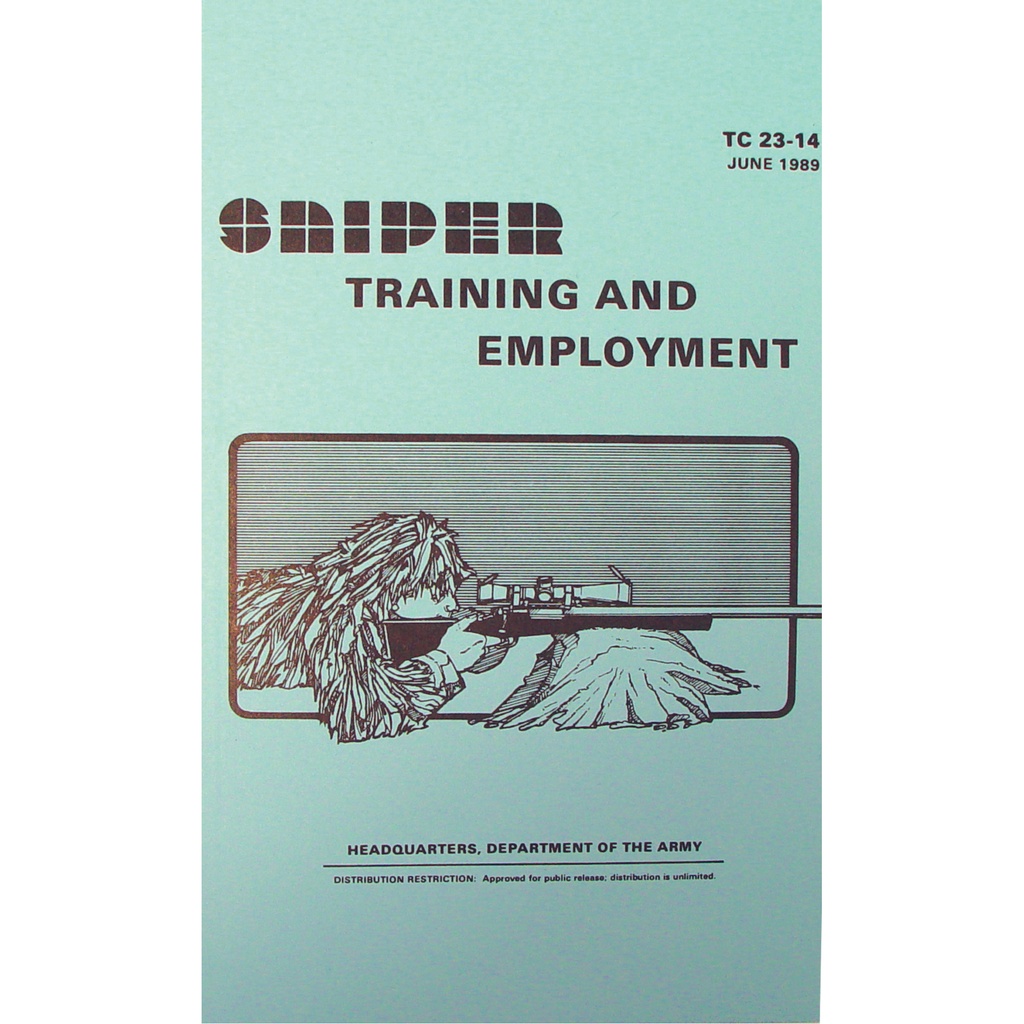
You’re not looking for another shooting book—you’re looking for doctrine. Sniper Training and Employment lets you step into the mindset of the U.S. Army sniper, learning how they think, move, and take the shot. The teal softcover feels like something smuggled out of an armory office: TC 23-14, 1989, straight from Headquarters. You’re not skimming tips; you’re studying how real infantry snipers were trained, page by page, until their calm, methodical precision starts to feel like your own.
You’re alone at the range before the sun burns through the haze. Rifle settled into your shoulder, breath quiet, the rest of the world not quite awake yet. You’ve watched the videos, read the blogs, heard every opinion. But as you line up the reticle, you still feel that gap between where you are and where real snipers live—the ones who were trained to make this moment boringly repeatable. That’s the itch that sniper training book videos never quite scratch: you don’t just want tips, you want doctrine.
Where a Real Sniper Training Book Changes How You See the Shot
Sniper Training and Employment isn’t built like a modern “tactical” coffee-table book. It’s a straight reprint of the U.S. Army’s TC 23-14 from 1989—dense, methodical, unapologetically practical. That matters for you because this sniper training book wasn’t written to entertain; it was written to keep people alive and help them complete missions.
Instead of motivational quotes and glossy photos, you get how an infantry sniper team is actually built, deployed, and used. You see how they choose positions, how they move, how they plan a shot long before their eye ever touches the scope. It quietly rewires the way you think about distance shooting: not as a stunt, but as a disciplined system you can learn and apply.
Inside the U.S. Army’s Sniper Training Book Doctrine
Because this is an official Department of the Army circular, you’re stepping into the same framework commanders, staffs, and instructors used. The sniper training book walks through the tactical employment of the infantry sniper—how a commander thinks about you as an asset on the battlefield, how missions are built around your capabilities, and what’s expected from your first shot to your last.
You see the relationship between spotter and shooter explained in plain, duty-first language. You get training standards, not just “tips and tricks.” You see how they break down marksmanship, observation, camouflage, and movement so that a nineteen-year-old private can execute under stress. Reading it, you start to feel that same expectation settling on you: this isn’t about being a trick-shot artist, it’s about becoming reliable.
Feeling the Weight of Real-World Expectations
There’s a quiet shift that happens as you read. The tone is dry, official, almost blunt—but behind that you feel the weight: these procedures were written assuming the consequences of failure were life and death. When you take that mindset back to your own practice—whether you’re on a rural property line, a lawful long-range match, or your department’s training range—suddenly every rep feels more intentional.
Why This Sniper Training Book Still Matters Decades Later
1989 looks old on paper. But a rifle still recoils, wind still pushes bullets, and human eyes still fatigue the same way. The core of this sniper training book hasn’t expired: it’s about how to think, how to prepare, and how to move. You get ghillie suit considerations, stalking principles, fieldcraft, and the mental process of reading terrain and targets.
If you’re an EDC-minded person, an outdoor shooter, or someone who simply hates doing things halfway, this manual plugs into the part of you that wants systems, not shortcuts. You’re not memorizing internet arguments about calibers; you’re learning how a professional framework handles whatever rifle is in your hands, within its limits.
The Physical Feel of Carrying Doctrine
The teal softcover has that unmistakable government-manual feel: minimal art, block lettering, a prone sniper in a ghillie suit on the front. It slides into a range bag or ruck pocket without asking for attention. And that’s part of the appeal—you’re not broadcasting anything flashy. You’re the person quietly studying between strings, flipping through diagrams and paragraphs while others scroll their phones.
Bringing Sniper Doctrine Into Your Everyday Training
Owning a sniper training book like this changes what “practice” means. You stop thinking only in terms of groups on paper and start thinking in terms of roles: shooter, observer, decision-maker. The manual nudges you to build scenarios, not just drills. You might find yourself rehearsing how you’d approach a field, where you’d set up, what you’d watch, how you’d account for light, cover, and concealment.
If you’re law enforcement, it gives you a point of comparison between military and police sniper employment—where they overlap, where they differ, and how fundamentals carry across. If you’re a civilian long-range enthusiast, it gives you a backbone for your training journals and range sessions. Instead of copying someone’s Instagram routine, you’re adapting tested doctrine to your reality.
When a Sniper Training Book Is More Than Just Marksmanship Tips
Most people think of a sniper training book as advanced shooting guidance. This circular goes beyond the trigger. It treats the sniper as an intelligence asset, a reconnaissance tool, and a psychological presence. You learn how that role fits into larger operations, which quietly changes how you see your own place on a team, even if your "team" is just a buddy spotting for you.
That perspective has a way of bleeding into the rest of your life. You notice more. You move with more intention. You think two, three moves ahead. A rifle is only one expression of that mindset; the doctrine is what sticks with you when the rifle is cased.
Questions People Ask Before Buying a Sniper Training Book
Is this sniper training book still useful if I’m not in the military?
Yes. While it was written for Army units, most of the core content in this sniper training book—marksmanship fundamentals, fieldcraft, observation, camouflage, and mission planning—translates directly to civilian long-range shooting, hunting, and law enforcement training. You simply adapt the mission context to your own lawful use.
How is this different from modern commercial sniper books?
Modern books often blend stories, photos, and opinion. This reprint is straight doctrine. The sniper training book presents a structured system: how to train, how to evaluate performance, and how to employ a sniper team tactically. If you like checklists, procedures, and clear expectations, this will feel more solid than personality-driven guides.
Does this cover gear, or is it only tactics?
The manual mentions rifles, optics, and equipment, but its real power is in how it explains using whatever gear you have. The sniper training book focuses on principles—positioning, concealment, observation, and engagement planning—so you can apply it across different platforms instead of chasing a specific setup.
Will this help improve my long-range accuracy?
Indirectly, yes. The sniper training book details how to build stable positions, account for environmental factors, and structure training. Accuracy improves when your process improves, and that’s exactly what this doctrine walks through in calm, systematic language.
At some point, the gear stops being the thing. You’ve already chosen your rifle, your optic, your carry setup. What you’re really after now is a mental edge—the quiet confidence that comes from knowing you’re following a system that’s been tested far beyond weekend range trips. That’s what slips into your life when you spend time with this sniper training book.
Picture yourself months from now, lying behind the rifle again. Same range, same wind, but a different you—moving through a checklist in your head you didn’t have before, noticing terrain you used to ignore, breaking the shot the way doctrine taught you. No drama, no ego—just the steady calm of someone who did the work. That’s the story this thin teal manual writes you into, one deliberate page at a time.