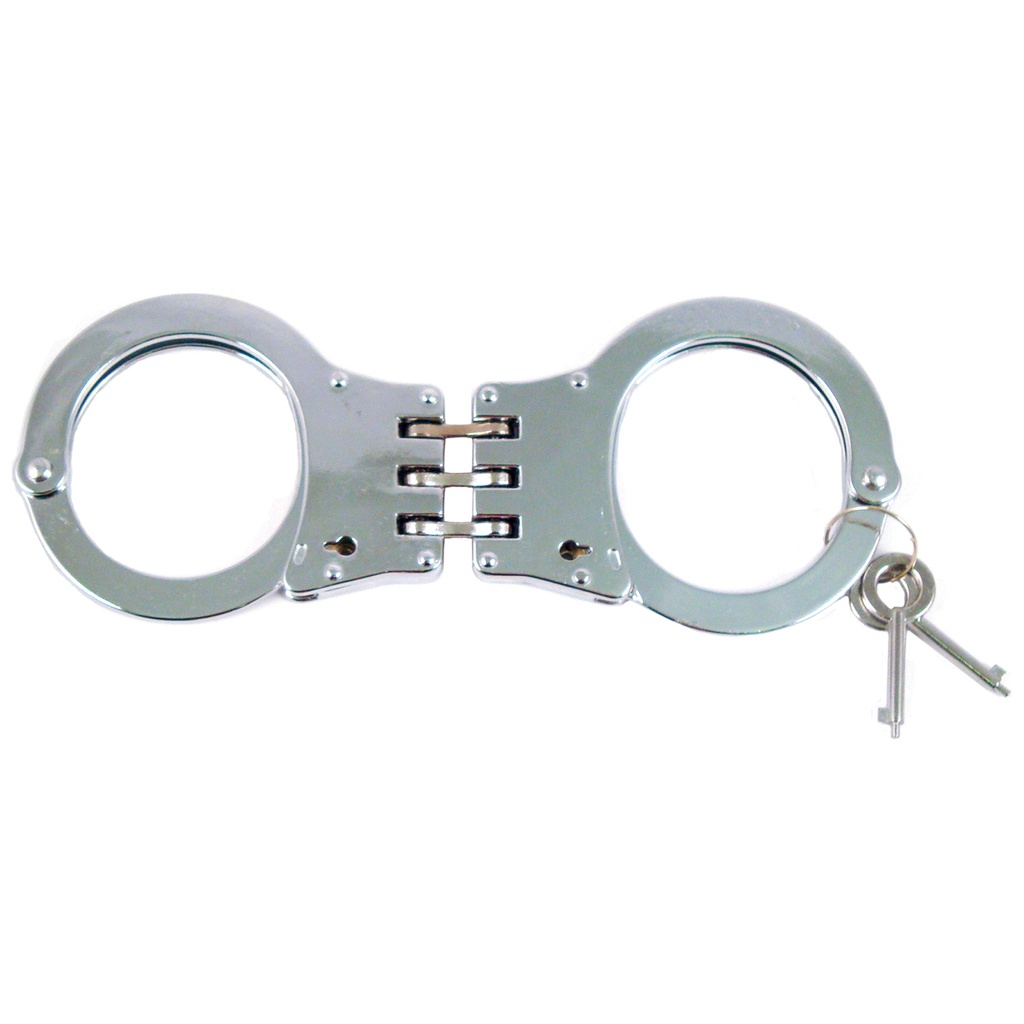
Sentinel Control Police-Grade Hinged Handcuffs - Stainless Silver
You know the moment: adrenaline spikes, voices rise, and you have seconds to turn chaos into compliance. That’s where solid, police-grade hinged handcuffs change everything. The cool weight of stainless steel in your hand, the clean click, the double lock you set by feel alone—you’re not wrestling the gear, you’re using it. Rigid hinge, NIJ-approved build, and a silver finish that shrugs off training, transport, and real-world struggle. You walk in calm because you trust what’s hanging on your belt.
When Police-Grade Hinged Handcuffs Decide How the Night Ends
The first thing you notice isn’t the shine. It’s the weight. Ten ounces of stainless steel resting against your palm while your heart rate climbs and someone in front of you is already arguing with gravity and good decisions. In that split-second before contact, you either trust what’s on your belt—or you don’t.
This is the quiet promise of police-grade hinged handcuffs: when words stop working, your gear doesn’t. You feel the hinge go rigid, hear the clean metallic click, and you know these restraints will hold the line between chaos and control without making you fight them too.
Why Police-Grade Hinged Handcuffs Change How You Control a Struggle
If you’ve ever tried to cuff someone who’s half twisting, half lunging, you already understand why a basic chain cuff can work against you. With police-grade hinged handcuffs, the story changes the instant that hinge locks the wrists into alignment. You’re not chasing hands in space; you’re guiding them where they need to go.
The rigid hinge on these handcuffs does one crucial thing for you: it cuts down the wiggle room. Each cuff is connected by a solid three-link hinge that limits wrist rotation and gives you leverage. That leverage means less wrestling, fewer awkward angles, and more predictable control when you’re transitioning someone from standing to the hood of a car, a wall, or the back seat. Every movement feels more deliberate, more contained, more yours.
Because they’re built as true police-grade hinged handcuffs, they’re designed with compliance in mind—not theatrics. The smooth inner edges respect the fact that you’re securing a human being, even when they’re fighting you. The double lock lets you set the tightness once and trust it, preventing the cuffs from ratcheting down under pressure and cutting into the wrists. You’re controlling the situation, not causing unintentional damage.
The Stainless Steel Story: What Durability Really Means to You
On paper, “die-cast stainless steel” just sounds like another spec. In practice, it’s what keeps your police-grade hinged handcuffs from turning into a liability the first time someone really leans on them. Torque, twisting, sudden jerks—this is where cheap restraints give up and real ones prove why you chose them.
The stainless steel body is built to resist that torque and tampering. When someone tries to brace and wrench their wrists apart, you feel the strain in the suspect, not the cuffs. The solid construction doesn’t flex unpredictably, doesn’t feel like it might shear a pin or pop a rivet. You can run them hard in training, then trust them again on transport days without wondering what invisible damage is waiting to show up when it matters most.
Then there’s the finish. That bright stainless silver doesn’t just look professional—it cleans easily after a muddy ground fight or a sweaty wagon ride. Under station lights or parking lot sodium lamps, a quick visual check tells you if they’re clear, clean, and ready. You’re not babying your tools; you’re working them, wiping them down, and moving on.
Everyday Use: How Police-Grade Hinged Handcuffs Fit Into Your Routine
Most of your shift isn’t adrenaline. It’s routine. Walking a perimeter. Breaking up a loud argument before it becomes something worse. Escorting someone who swears they’ll be calm—right up until they’re not. Police-grade hinged handcuffs earn their place in those quiet stretches just as much as in the loud ones.
Clipped to your belt, that 10-ounce heft becomes familiar. You start recognizing the feel of the key turning in the lock, the subtle resistance as the ratchet engages, the way the hinge guides the wrists naturally into a stacked position behind the back. Two matching silver keys ride with you, ready in your pocket or on your key ring, so you’re never fumbling with some oddball key profile halfway through a shift change.
Because they’re NIJ approved, these hinged handcuffs match the standards used by departments and academies across the country. That matters when you’re moving between training and duty, from range days to ride-alongs, or when your gear is inspected by someone who actually checks. You’re not explaining a novelty restraint; you’re carrying a professional tool that fits the expectations of the job you take seriously.
When Police-Grade Hinged Handcuffs Become the Difference Between Force and Control
There’s a moment in every hands-on encounter where things can tilt either way. A suspect tries to twist out, you feel that surge of resistance, and you have a choice: escalate force, or tighten your control. Police-grade hinged handcuffs stack the odds toward control.
Because the hinge limits motion, even a determined attempt to pull free usually turns into diminished leverage for the person you’re restraining. They can’t spin their wrists to find slack. They can’t easily tuck their hands under their body. That means you can spend less time wrestling for position and more time managing breathing, scanning surroundings, and watching for third parties stepping in.
If you work security, corrections, loss prevention, or train recruits on custody and control, this difference becomes your quiet advantage. You’re teaching or using techniques that work with the hinge instead of against it. The gear reinforces good habits: consistent positioning, clean application, and reliable double locking so you aren’t revisiting a set of cuffs every two minutes because someone complains about them tightening.
The Feel of Control in Your Hands
You notice it first in the sound: that sharp, confident click as the ratchets pass through, then the subtle stop when you hit the sweet spot of snug-but-not-crushing. Your thumb finds the double-lock pin by feel. A quick press, and the cuffs are set. No guessing, no worrying that another sudden movement will crank them tighter. That sensory certainty is what lets you keep your voice level and your focus wide, even while your hands are busy.
From Training Room to Transport Van
Run these hinged handcuffs through drills in the mat room, then take them out on transport duty. The same rigid hinge that made control techniques easier to teach also makes seat-belt checks, van loading, and hallway escorts smoother. You’re not second-guessing whether the restraints will hold up between the classroom and the call-out. They simply do.
Questions People Ask Before Buying Police-Grade Hinged Handcuffs
Are police-grade hinged handcuffs better than chain handcuffs for control?
If control is your priority, police-grade hinged handcuffs usually give you the edge. The rigid hinge limits wrist movement and makes it harder for someone to twist or spin out of position, which means you can maintain leverage with less effort compared to traditional chain handcuffs.
Will these hinged handcuffs hold up to everyday duty and training use?
Yes. These police-grade hinged handcuffs are built from die-cast stainless steel and designed to resist torque, twisting, and tampering. You can run them through repeated training sessions and real-world duty use without feeling like you’re one hard struggle away from a failure.
How does the double lock on police-grade hinged handcuffs protect the person I’m cuffing?
The double lock stops the cuffs from tightening further once you’ve set them. With police-grade hinged handcuffs, you can secure the wrists, check for circulation, hit the double lock, and know that sudden jerks or pressure won’t ratchet the cuffs down and cause unnecessary pain or injury.
Are these hinged handcuffs suitable for security or corrections, not just police?
Absolutely. Police-grade hinged handcuffs are widely used by security officers, corrections staff, transport teams, and training academies. If your role involves safe, controlled restraint and movement of people in custody, this style of cuff supports that work with professional reliability.
The Moment You Close Your First Set of Police-Grade Hinged Handcuffs
Picture the next time you need to go hands-on. Your voice is steady, your breathing even, your awareness wide. You reach for your belt, and the stainless steel feels exactly how it should: solid, familiar, ready. The police-grade hinged handcuffs open, the wrists come together, and the hinge guides everything into alignment like it’s done this a hundred times before—because by then, it has.
You hear the click, set the double lock by muscle memory, and in that instant, the struggle shifts. You’re not hoping the gear holds. You’re already moving on to what comes next: checking on the person in cuffs, scanning the crowd, finishing the call with your professionalism intact. You walk away from the scene as the person who kept their head, trusted their tools, and owned the moment—not because it was easy, but because you were ready.