Shadow Control Hinged Duty Handcuffs - Black Steel
You know the moment: the energy shifts, backup’s still minutes away, and it’s just you and your training. That’s where the right hinged handcuffs matter. With a rigid black profile that kills slack and smooth ratchets you can trust by feel alone, you lock, double-lock, and move on. No second-guessing, no play, no flash—just a solid, duty-grade restraint that does its job so you can do yours.
You feel it before you see it. The voice goes up half an octave, the shoulders square, and suddenly the routine stop isn’t routine anymore. In that split second, you’re not thinking about brand names or finishes—you’re reaching for the one piece of gear you trust to end the moment cleanly. That’s where a hinged handcuff setup quietly decides how the next thirty seconds of your life will go.
When Hinged Handcuffs Turn Tension Into Control
If you’ve ever fought a set of chain cuffs in a cramped hallway or on uneven pavement, you already know why people search for solid, professional hinged handcuffs. Chain gives you slack. Slack gives them options. A hinge takes all that play out of the equation.
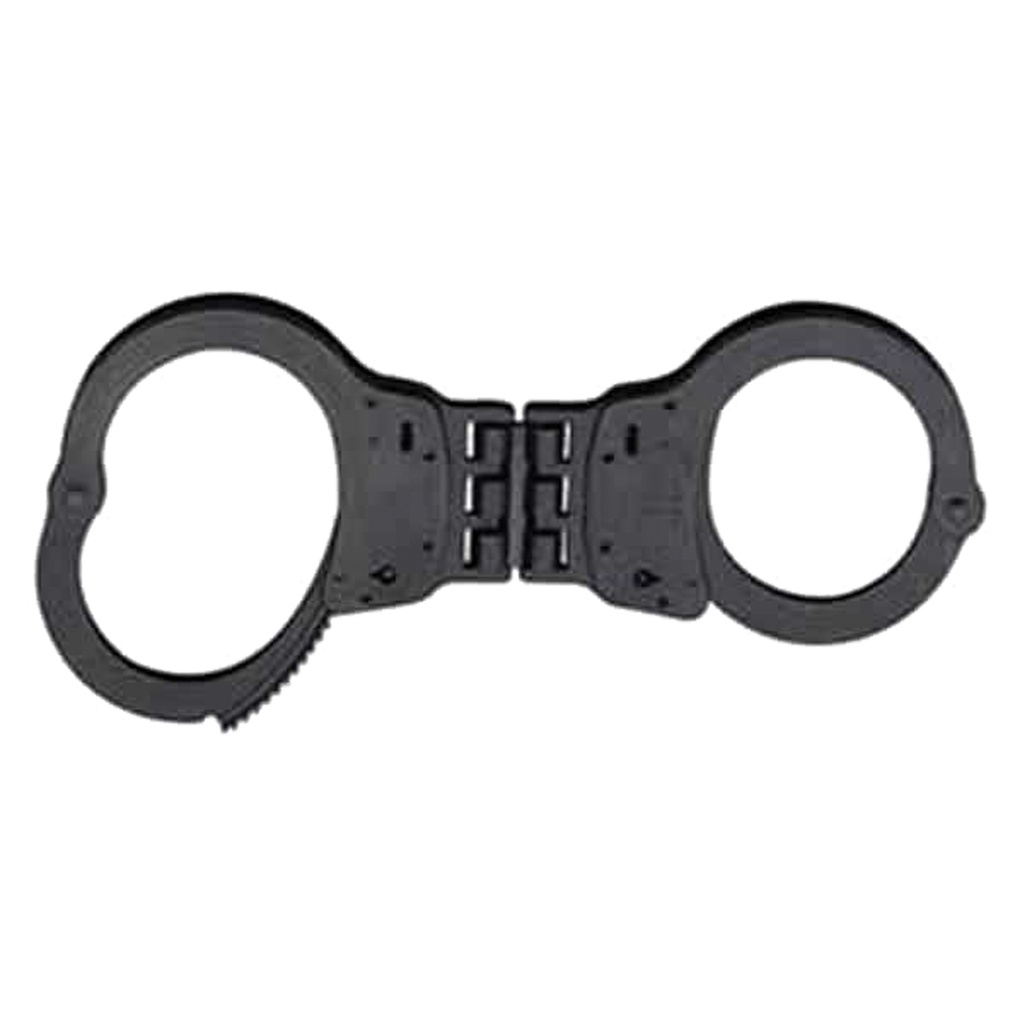
With these all-black, Smith & Wesson hinged restraints, the two cuffs are locked together by rigid plates instead of a chain. That means when you close a wrist, you don’t have a loose, swinging link to manage. You get a compact, controlled bar between both hands—easier to guide, harder to twist against, and quicker to stabilize when adrenaline is spiking.
In real life, that looks like less wrestling, fewer sudden jerks, and more of those quiet, efficient arrests you don’t see on camera—because nothing went wrong.
Why These Hinged Handcuffs Feel Different in Your Hand
There’s a reason so many officers and security pros stay loyal to their chosen hinged handcuffs for years: feel. Not the way they look on a product page—the way they move under your fingers in the dark.
On this black Smith & Wesson set, the ratchets are heat-treated and smoothed so they glide forward with that clean, precise click you can count without looking. You don’t fight the mechanism; it works with you. The internal lockworks are hardened for strength, so you’re not babying them in cold rain or after a scuffle on concrete.
Both sides feature double lock slots, giving you flexibility in the field. You cinch down to the right notch, set the double lock, and know that once that click is in, it’s done—no slow tightening on the ride, no digging into skin, less risk of complaints later. The cuffs meet or exceed U.S. National Institute of Justice standards for strength, corrosion resistance, and tamper resistance. Translation: they’ve already survived tests most of your gear will never see.
The matte black finish doesn’t scream for attention. It just shrugs off glare and blends into your duty belt—the way serious tools should.
Carrying Hinged Handcuffs in Real Life: From Belt to Backseat
It’s one thing to buy hinged handcuffs because they sound more secure. It’s another to live with them on shift after shift. The rigid design changes how your duty belt feels and how your hands move when seconds matter.
These cuffs sit tight and compact, with no chain to hang or catch. That low-profile silhouette makes it easier to seat them in a pouch and reholster by muscle memory alone. When you reach back, your hand finds a familiar, solid shape every time—not a tangle of chain links angling a different way.
On scene, that matters. When you’re guiding someone through a doorway or down a stairwell, the hinge turns their hands into a single, controllable unit. You’re not juggling two independent wrists fighting in opposite directions. You’ve got one clean bar of leverage, close to their centerline, where you can manage movement without escalating force.
The Quiet Confidence of a Duty-Grade Finish
The full blacked-out treatment isn’t about looking tactical for photos. It’s about staying discreet in low light, avoiding reflection, and presenting gear that matches the seriousness of your role. The finish resists corrosion, which means night shifts in the rain, sweat from long transports, and the occasional puddle on the floorboard don’t turn into rust and rough spots.
Over time, the small worn edges and subtle scuffs become a record of the nights you handled and the situations you walked away from in one piece.
When Hinged Handcuffs Make the Difference in Control
There are moments when your choice of restraint changes everything. On a smooth, compliant subject, you might never notice a difference between chain and hinged. But you don’t buy serious hinged handcuffs for the easy nights.
You buy them for the backseat thrashers, the hallway screamers, the unexpected turn when a seemingly calm person decides they don’t want to go. With a rigid hinge design, every twist of their wrists feeds back into a single, predictable movement you can manage. Their ability to roll one hand free, lever a chain, or generate torque against your fingers drops dramatically.
For private security and tactical hobbyists running training scenarios, that extra control means more realistic drills and fewer uncontrolled slips. The cuffs behave the way real duty restraints behave: no play, no gimmicks—just firm, reliable restriction.
How the Small Design Choices Add Up
Look closely at the three hinge plates between the cuffs. That multi-plate layout spreads the stress out and shortens the distance between wrists, which tightens the control profile. Combine that with smooth ratchets and double locks on both sides, and you get a restraint system designed for real hands, real resistance, and real liability.
It’s not flashy. It’s not decorative. It’s simply built to do its job, so you can focus on doing yours.
Questions People Ask Before Buying Hinged Handcuffs
Are hinged handcuffs better than chain handcuffs for control?
If control is your priority, hinged handcuffs usually offer a tangible advantage. The rigid hinge removes slack, so it’s harder for a subject to twist, roll, or lever their wrists independently. That can mean less struggling and more stable escorts, especially in tight spaces.
Are these black hinged handcuffs legal for civilians to own?
In most U.S. states, owning professional-grade hinged handcuffs like these is legal for civilians, including security personnel and collectors. Where laws vary is in how and where you can carry or use them. It’s smart to check your local and state regulations—and, if you’re on duty, your agency or employer policies—before carrying cuffs in public.
Will these handcuffs hold up to regular duty and training use?
These Smith & Wesson hinged restraints are built from carbon or stainless steel with heat-treated internals, and they meet or exceed NIJ standards for strength and corrosion resistance. In plain language: they’re designed to handle daily carry, frequent training, and the occasional fight without becoming loose, rough, or unreliable.
Do the double locks on these hinged handcuffs work easily under stress?
Yes. Each cuff has a double lock slot, so once you’ve ratcheted to a comfortable notch, you can set the lock quickly by feel. That prevents over-tightening during transport and reduces the risk of injury or complaints, giving you one less thing to worry about when adrenaline is high.
Picture the end of a long shift. Your report is finally done, the adrenaline has faded, and as you unclip your gear, your hand brushes over the cool, matte curve of your hinged handcuffs. They’re just there—solid, familiar, unremarkable in the best possible way. Night after night, they’ve taken hard moments and turned them into controlled outcomes. No drama, no failures, no second-guessing. You hang your belt up knowing that when the next situation turns, you’ll reach back and feel that same precise weight in your palm—and you’ll be ready.