Shadow Signal Dual-Action Keychain Personal Alarm - Midnight Black
You’ve felt it—that half-second when a walk to your car doesn’t feel routine anymore. A keychain personal alarm like this rides on your keys, looks like nothing special, and waits for that moment. One thumb-press and your quiet instinct becomes a 120dB boundary everyone hears. The bright LED cuts through dark parking lots, fumbling doorways, and late walks home. You still move through your day the same way—only now, you don’t feel alone when something feels wrong.
You know that moment when the hair on the back of your neck stands up, but nothing has technically “happened” yet? The street got a little too quiet, the parking lot feels emptier than it should, footsteps behind you don’t quite sound right. You tighten your grip on your keys because that’s what everyone tells you to do. But deep down, you know keys alone won’t speak for you if things turn.
That’s the moment a keychain personal alarm actually matters—before anyone lays a hand on you, before you’re close enough to swing, when you just need the world to look your way in an instant.
When a Keychain Personal Alarm Turns Instinct Into Action
There’s a big difference between feeling uneasy and feeling unsafe. Most of your life lives in that gray space in between. A keychain personal alarm bridges that gap so you don’t have to wait until it’s “bad enough” to react. Your thumb finds the recessed button without looking. A light press fires a sharp warning burst—enough to startle, to send a clear message: “I see you.” Hold the press, and the full 120dB siren erupts and stays on until you decide it’s over.
What this means for you: you’re no longer stuck choosing between silence and full-blown panic. You have levels. You can escalate on your terms. That’s what dual-action really gives you—control in a moment where most people feel they have none.
Why This Keychain Personal Alarm Disappears Until You Need It
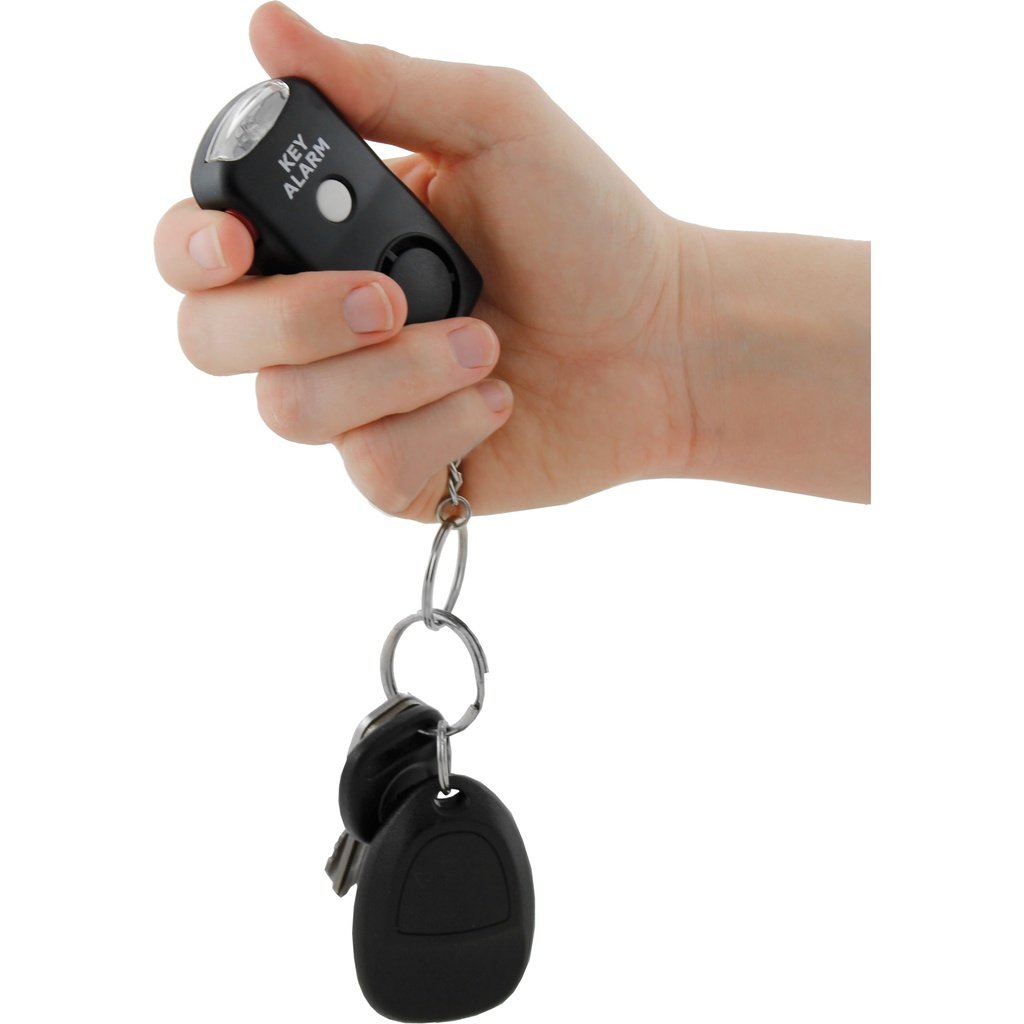
Chances are, you’ve seen bulky safety gadgets that scream “I’m scared” every time you pull them out. This isn’t that. This keychain personal alarm was shaped to look like just another black fob on your ring. Soft, rounded edges sit comfortably against your palm, and the matte black housing blends in with car keys and house keys. No neon plastic. No tactical cosplay. Just quiet readiness.
The LED sits at the top under a clear lens, ready to throw a bright beam across a dark parking lot, into a keyhole, or down an unfamiliar hallway. Yet on your keyring, it barely draws a second glance. The larger recessed button lives where your thumb naturally lands when you grab your keys. You don’t have to hunt for a switch. You don’t have to look down. That ergonomic detail is what turns a gadget into a reflex.
How It Feels in Your Hand
Close your fingers around your keys the way you normally do. Now imagine one small difference: the black fob resting under your thumb isn’t just dead weight. It’s a 120dB voice waiting behind a single press. The plastic shell feels solid but light, so it doesn’t drag on your keyring or bulk up your pocket. The button has just enough resistance that you won’t set it off fumbling for your car, but not so much that you’ll miss it when adrenaline spikes.
Everyday Carry Comfort: A Keychain Personal Alarm That Actually Stays With You
The best safety tool is the one you never talk yourself out of carrying. A keychain personal alarm that’s heavy, awkward, or embarrassing eventually gets “forgotten” on a dresser. This one clips to the ring you already reach for dozens of times a day. No new routine to remember. No extra pocket to find. It becomes part of your everyday carry the same way a favorite pen or wallet does—by quietly being there every time you leave the house.
On morning commutes, it rides beside your car fob. On late walks back from class, it rests in your hoodie pocket, ready under your thumb. On a run, it tucks into a small belt loop or bag clip. Parents can hand it to a teenager walking home from practice. Roommates can share the same simple explanation: “If anything feels off, press this. First tap for a warning. Hold it if you need everyone to look.”
Light When You Need to See, Sound When You Need to Be Seen
The LED isn’t about tactical blinding; it’s about real life. Finding the right key at your apartment door. Checking the back seat of your car. Spotting a crack in the sidewalk before you trip. In a tense moment, that beam gives you information—what’s around you, who’s there, where your exits are. Paired with the alarm, you get both sides of awareness: you see better, and if anything crosses your line, everyone hears it.
When a Keychain Personal Alarm Changes the Story
Most people buy a keychain personal alarm after hearing a story that lands too close to home. A friend followed across a parking garage. A rideshare that didn’t feel right. A stranger who didn’t stop when “no” was said the first time. You can’t control other people, but you can change what options you have in those seconds that count.
Picture this: you’re walking to your car, alone, later than you planned. Someone starts closing the distance behind you. No one else is around. Instead of clutching bare keys and hoping, your thumb moves to that recessed button. A quick tap fires a harsh chirp that cuts the air. If they keep coming, you press and hold. The 120dB siren rips through the quiet, slamming attention onto the scene. Windows light up. Heads turn. The story shifts from “no one noticed” to “everyone heard.”
That’s what you’re really carrying—not just a device, but a way to change the script before it writes itself.
Questions People Ask Before Buying a Keychain Personal Alarm
Is a keychain personal alarm actually loud enough to make a difference?
Yes. A 120dB keychain personal alarm is painfully loud at close range—comparable to a rock concert or a car horn right beside you. It’s designed to draw attention, startle someone who’s too close, and break the silence that lets bad situations escalate quietly.
Will this keychain personal alarm go off by accident in my pocket or bag?
The main activation button is recessed, which helps prevent accidental presses when your keys shift around. You’ll feel a deliberate press under your thumb to trigger the alarm. You still get fast activation in an emergency, but not every time you toss your keys into your bag.
Is a keychain personal alarm legal to carry everywhere?
In most places, a keychain personal alarm is completely legal because it’s a non-violent safety tool that uses sound and light, not force. Laws can vary by country or institution, though, so if you’re traveling or on a specific campus, it’s smart to quickly check their rules on personal safety devices.
Can I use this instead of carrying a weapon for self-defense?
This kind of keychain personal alarm isn’t a weapon—it’s an awareness tool. It won’t replace force if that’s what you choose to carry, but it can be a powerful first line: drawing attention, creating hesitation, and giving you precious seconds to move, shout, or get help without having to get physical.
The Quiet Shift When This Keychain Personal Alarm Is on Your Keys
Imagine tomorrow morning. Same commute, same parking lot, same walk across that stretch of sidewalk that always feels a little too empty. Only now, your keys sit differently in your hand. The small black fob isn’t just dead plastic—it’s a keychain personal alarm that speaks as loudly as you wish you could in your most anxious moments.
You don’t walk like a victim rehearsing worst-case scenarios. You walk like someone who has thought things through. Someone whose instinct doesn’t end with a knot in their stomach. Your awareness stays sharp, but the fear quiets down, because you know that if something feels wrong, you have more than hope in your hand. You have a sound the whole street will hear, and a light that cuts through the dark. That’s who you become when this rides on your keyring: the person who still goes where they need to go—only now, on their own terms.