Shadow Skull Instinct-Draw Push Dagger - Black
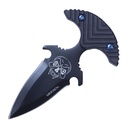
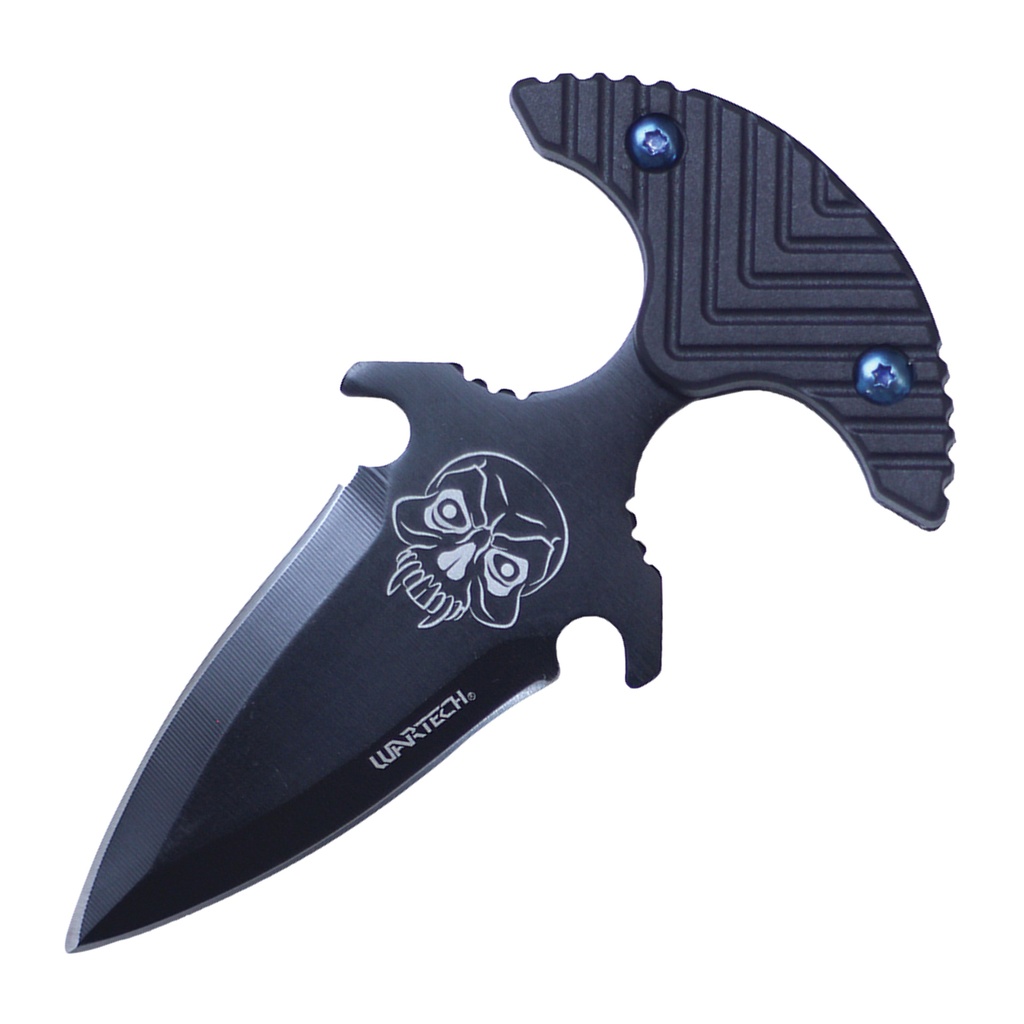
You don’t reach for a push dagger when everything feels safe. You reach for it on the walk to your car, when the parking lot goes a bit too quiet. This shadow-black push dagger sinks into your palm, T-handle locking between your fingers, skull flashing white against the dark. The draw is short, the message is clear: you’re not an easy target. This self-defense push dagger doesn’t make you reckless—it lets you walk like someone nobody should test.
The first time you wrap your hand around a push dagger, you notice something: your heartbeat doesn’t slow down, but your mind does. The noise in your head—the what-ifs, the late-night parking lot worry—drops into a quiet, steady line. This isn’t about starting a fight. It’s about finally feeling like you could finish one if you had to.
When a Skull Blackout Push Dagger Changes the Way You Walk
Picture this: you’re crossing a dim lot, keys in one hand, phone dead in your pocket. You’ve done the mental math—you know exactly how long it would take someone to close 15 feet. With a skull blackout push dagger resting in your palm, that math feels very different.
The T-shaped handle slides between your fingers, your knuckles wrapping around textured grooves that bite just enough to stay put. The double-edge spear point pushes straight out from your fist, not hanging awkwardly off to the side like a traditional knife. Your arm doesn’t need training or angle work—you already know how to throw a punch. This just gives your punch teeth.
This is why so many people search for a push dagger instead of a standard blade when self-defense is on their mind. You’re not trying to become a knife expert. You’re trying to make sure that if the worst moment ever comes, you’re not standing there empty-handed, wishing you’d chosen something simpler, something more instinctive, something exactly like this.
Why This Push Dagger Feels Instinctive in a Fight-or-Flight Moment
When adrenaline dumps into your system, fine motor skills vanish. That’s the quiet truth most people don’t say out loud. In that moment, fumbling for a folding knife, finding a thumb stud, clearing a blade—your body may not cooperate. A push dagger shortens that gap between fear and action.
Here, the fixed blade sits already deployed, locked along the line of your knuckles. At 8 inches overall, with a compact double-edge spear point, it gives you reach without feeling clumsy or heavy. The self-defense push dagger shape means you don’t have to rotate your grip or think about blade orientation—you simply clench your fist, and the business end is exactly where it needs to be.
The blackout stainless steel blade brings a balance of durability and low maintenance. You’re not babying a showpiece; you’re carrying a tool that shrugs off daily humidity, glovebox heat, and the occasional bump against the nylon sheath. The matte finish keeps reflections down—no flash, no shine—just a quiet, dark edge that doesn’t announce itself until you choose.
That Skull Isn’t Decoration—It’s a Message
The white skull splashed across the blackout blade isn’t there to look cool for Instagram—though it will. It does something more important: it telegraphs intent. To anyone who ever ends up on the wrong side of your fist, that skull says, in one instant, that you’ve thought about this moment before. You didn’t stumble into it unprepared.
Even in your own hand, that skull becomes a reminder every time you practice a draw in the mirror: you’re allowed to take your safety seriously.
Build Details That Make This Push Dagger Reliable, Not Just Intimidating
You’ve seen gear that looks aggressive but feels like a toy the second you pick it up. This isn’t that. The value of a push dagger lives in how it feels under stress: locked, predictable, and ready.
The T-handle on this blade is molded from a textured synthetic material, contoured so your fingers naturally fall into deep grooves. That design choice matters. When your hands sweat, or you’re gripping harder than you think you can, those grooves keep the handle from twisting or sliding. The push-style grip uses the line of your forearm—bone, not just muscle—to drive force behind each strike.
The stainless steel blade is ground into a symmetrical spear point, twin cutting edges running up to a centered ridge. That geometry lets you thrust straight without worrying about the blade wandering off-line. In a self-defense context, you’re not carving or slicing. You’re making quick, decisive movements with minimal space—and this profile was born for straight-line work.
Two blue anodized star-head screws pin the handle together, a small but telling detail. Somebody decided it wasn’t enough for this skull blackout blade to just function; it had to feel like a piece of custom tactical gear when you look at it up close. That’s what makes it something you want to carry, not just something you own.
Nylon Sheath: The Quiet Part That Makes Daily Carry Possible
The included nylon sheath doesn’t ask much of you. It just rides where you put it—on a belt, inside a bag, tucked in a console—and keeps the self-defense push dagger accessible without broadcasting it. Nylon means light weight and low bulk, so you’re more likely to actually keep the knife on you, not leave it at home because it’s a hassle.
Carrying a Self-Defense Push Dagger in Your Real Everyday Life
Most days, nothing happens. You know that. The danger isn’t constant violence—it’s that one time when all the normal days stop. The question is whether you arrive at that day with options.
Maybe this blade lives in your car door, right by your left hand. Maybe it sits clipped inside your backpack pocket, skull graphic facing you every time you unzip. Maybe it rides horizontally on your belt, sheath tucked under a hoodie or jacket so it doesn’t print. Wherever it ends up, the promise is the same: your draw is short, your learning curve even shorter.
Compared to a typical tactical pocket knife, a push dagger asks less skill and gives more immediate control in close quarters. In a tight hallway, between cars, over a center console—places where you can’t swing wide or set up a stance—you can still drive your fist forward, letting the dagger do the work your bare hands alone might not manage.
And on the days when nothing happens—most days—you still feel a subtle shift. You walk a little looser. You grip your keys with less white-knuckle tension. You know that if somebody misreads you as harmless, they’re making a bad calculation.
When a Push Dagger Becomes the Edge Between Fear and Readiness
You might be comparing this to a more traditional everyday carry blade, wondering which actually gives you more real-world security. Here’s the honest difference: a folding EDC knife is a multitool; a self-defense push dagger is a single-purpose answer.
You’re not going to open packages or cut fruit with this. You’re going to practice drawing from the sheath with your off hand and your dominant hand. You’re going to shadow a few strikes in front of the mirror, watching how your shoulders, elbow, and wrist all line up like you’re throwing a straight punch.
That’s where the confidence comes from: not just owning a weapon, but understanding how your body already knows how to use it. When you wrap your hand around this skull blackout blade, you’re not pretending to be someone you’re not. You’re just choosing a version of yourself that refuses to be easy prey.
Questions People Ask Before Buying a Push Dagger
Is a push dagger legal to carry where I live?
Laws around a push dagger change from state to state and even city to city. Some places treat a self-defense push dagger like any other fixed blade; others restrict double-edge or knuckle-style designs. The safest move is to check your local and state knife laws by name before you decide how and where to carry it.
Is a self-defense push dagger hard to learn to use?
That’s the point of this design—it’s built for instinct. If you know how to make a fist and throw a straight punch, you’re already most of the way there. Spend a few minutes with an unloaded sheath practicing safe draws and controlled strikes at slow speed, and the motion of this self-defense push dagger becomes second nature.
Can I carry a push dagger as my main EDC knife?
You can, but it depends on what you want from your everyday carry. A push dagger is specialized for close-quarters protection, not everyday utility cutting. Many people pair a small folding knife for daily tasks with a skull blackout push dagger like this as their dedicated defensive option when they want a serious backup edge.
Later, you’ll remember the first time you slid this skull blackout T-handle into your palm before stepping out into the dark. The nylon sheath will brush your fingers, the blade will lock into your grip, and for once, that quiet space between the door and the driver’s seat won’t feel like a vulnerable gap. You won’t be carrying a fantasy weapon—you’ll be carrying a push dagger that fits your hand, your instincts, and the promise you’ve quietly made to yourself: you walk this world prepared.