Shadowline Lifeline Survival Paracord - Black
You notice it the next time something goes sideways—a tarp trying to tear free in the wind, a busted zipper on your pack, a buddy’s gear dangling loose. With this survival paracord clipped to your bag, you don’t stand there wishing you’d planned better. You just uncoil strong, 14-strand black cord, tie it off, and move on. It feels solid in your hands, knots down tight, and quietly says one thing about you: you’re the person who came prepared.
That One Time You Either Improvise… or You’re Ready with Survival Paracord
Picture this: wind picks up hard at camp, the cheap cord holding your tarp starts to stretch, and you feel that slow, sinking thought—“If this lets go at 2 a.m., we’re screwed.” When you carry serious survival paracord, that moment feels completely different. You’re not gambling on dollar-store line anymore; you’re reaching for something you trust to hold when the weather, the weight, and the weekend all lean on it.
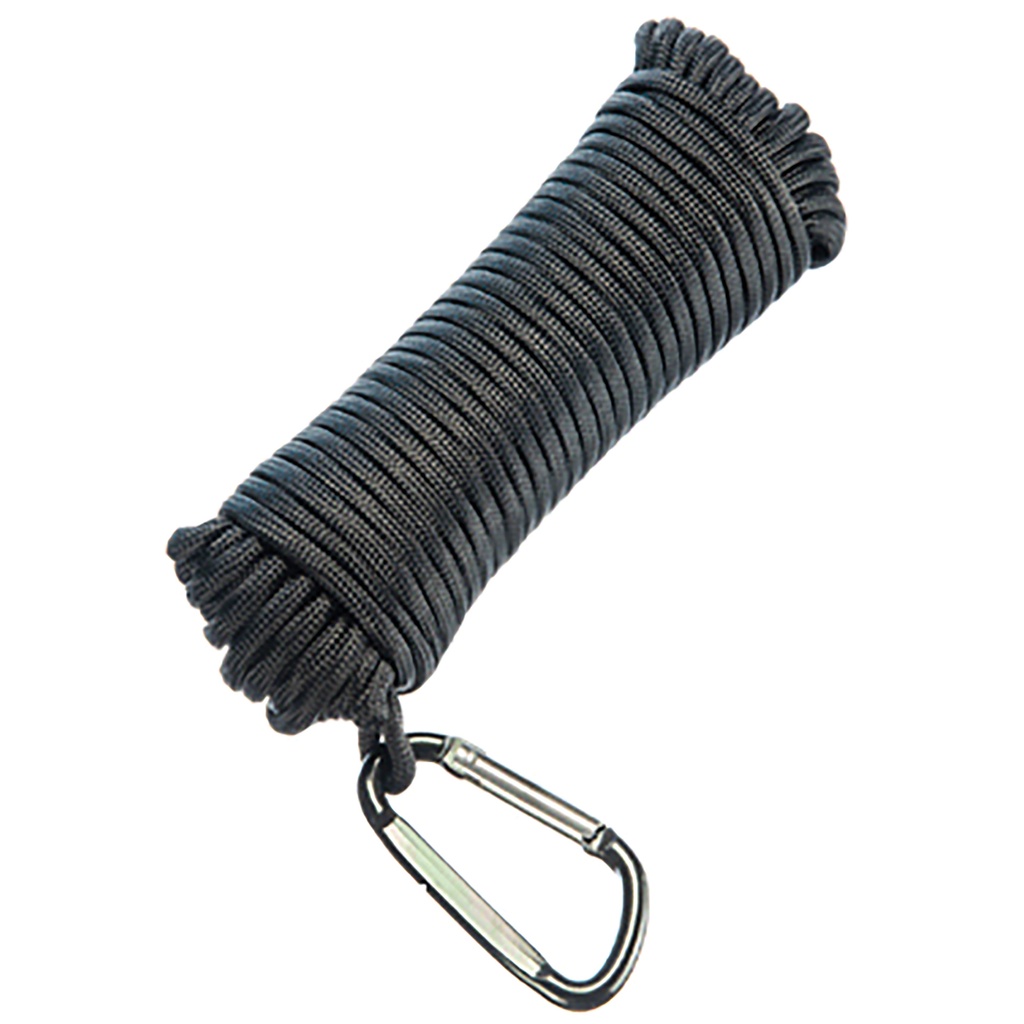
This black 50-foot hank doesn’t shout for attention. It just hangs off your pack by its carabiner, waiting for the exact moment everyone else realizes they should’ve cared about their cordage as much as you quietly did.
How Survival Paracord Changes the Way You Handle Problems
Owning real survival paracord isn’t about collecting more gear—it’s about changing your default reaction when something fails. A tent guyline snaps. A cooler lid won’t stay shut on the river. Your buddy’s hammock is sagging to the ground. Most people shrug and "make do." You reach down, feel dense, round cord under your fingers, and start fixing.
This 14-strand cord is thicker than the flimsy stuff you’ve probably used before—about 13/64 of an inch. That extra body gives you bite when you cinch down a knot, and the 1100 lb breaking strength quietly means, “You can lean on me harder than you think.” The outer sheath feels smooth but not slick, so you can wrap, lash, and tie with control, even when your hands are wet or cold.
What you notice after a few trips isn’t the specs—it’s the way your stress drops. You stop babying your setup. You stop asking, “Is this too much weight?” and start asking, “How do I want to rig this so it’s rock solid?” That’s the mental upgrade survival paracord gives you.
Built Like a Lifeline: The Story Inside This Survival Paracord
There’s a quiet satisfaction in knowing exactly what you’re working with. You’re handling 50 feet of dense black cord, braided with 14 internal strands instead of the usual thin cores you find in craft cord. That internal bundle is what gives this line its 360 lb working load and 1100 lb breaking strength—not a brag, just the honest ceiling of what it can take before it gives.
The synthetic fibers (think tough, outdoor-ready nylon-style materials) shrug off moisture and abrasion better than natural rope. Leave it tied on a roof rack in the rain, drag it over bark and rock, or use it repeatedly to lash gear to a pack—the cord holds its shape, keeps its round profile, and doesn’t turn fuzzy and weak after a weekend of real use.
The black color isn’t just "tactical." It vanishes into the background when you lash it along a frame, around a tent pole, or under a vehicle. Your setup looks clean, not like a craft project. And that little carabiner they’ve attached? That’s the human detail that changes how you carry it: instead of burying your line in a bin, you clip it to your pack, belt, or gear loop—where it actually gets used.
Everyday Carry Moments Where Survival Paracord Quietly Saves the Day
You don’t have to be bushcrafting in the woods to make a survival paracord roll earn its keep. Picture normal life:
On the trail, when “good enough” finally snaps
You’re halfway through a hike when your shoulder strap stitching lets go. With this cord, you can rig a field repair in minutes—wrap, tie a couple of solid knots, and you’re not limping back to the trailhead nursing a torn pack. It’s not pretty bragging rights; it’s your day saved from turning into a slog.
Or maybe you’re setting up camp and want a ridgeline that doesn’t sag overnight. That thicker paracord bites into bark and hardware better than skinny string, so your tarp stays tight even when the air gets damp and heavy.
In the city, when nobody else has a backup plan
Survival paracord isn’t only for pine trees and riverbanks. That same 50-foot hank can lash a loose trunk lid, tie down a kayak or bike, or replace a broken pull on a garage door. You cut a length, thread it, knot it, and now every grab feels solid and sure.
Keep it clipped inside your car, or hang it by the door with your everyday carry gear. The next time a neighbor is wrestling with a flapping load on their roof rack, you’ll be the one who solves it with one calm reach and a coil of black cord.
When Strong Survival Paracord Makes the Difference
There’s a big gap between "rope" and survival paracord you know you can lean on. That gap shows up most when the stakes get heavier. Maybe you’re building an improvised shelter and actually want it to stand through the night. Maybe you’re pulling tension on a canoe line in current, or securing gear before a storm rolls through.
Standard paracord sags and bites into itself under load. Here, the 14-strand core spreads that strain, and the outer sheath resists cutting into tree bark, pack fabric, or itself. With 360 lbs of working load, you can tension lines with real confidence instead of half-guessing if one more pull will be the one that snaps it.
This isn’t climbing line or a substitute for proper safety gear. But for everything short of life-on-the-line loads—rigging, hauling, hanging, binding—this kind of survival paracord becomes your default solution. You stop asking, “Do we have anything strong enough?” and start asking, “How many ways could we solve this with cord alone?”
Questions People Ask Before Buying Survival Paracord
Is this survival paracord strong enough for real outdoor use?
Yes—this survival paracord is built with 14 internal strands, a 360 lb working load, and 1100 lb breaking strength. In real terms, that means it’s more than strong enough for camp rigging, hauling gear, tensioning tarps, and daily utility tasks where you want something you can genuinely trust.
How long will 50 feet of survival paracord actually last me?
Fifty feet goes further than you think. If you cut it into shorter lengths for guy lines, tie-downs, and quick fixes, you’ll get a lot of trips out of one hank. Many people keep it whole and only trim when needed, or pre-cut a few standard lengths and keep the rest coiled for those bigger, unexpected jobs.
Can I use this survival paracord for emergency situations?
Survival paracord shines in emergencies—splinting, improvised harnesses, shelter building, or securing gear when things go sideways. It’s not climbing rope or rated for life support, but for the kind of urgent fixes most people face in the outdoors or on the road, it’s exactly the kind of reliable cord you want within reach.
Is this paracord good for everyday carry or just camping?
It fits both. The included carabiner makes this survival paracord easy to clip to your EDC bag, work gear, or vehicle so it’s always around for city problems and backcountry ones. Once it’s part of your everyday carry setup, you’ll be surprised how often you reach for it instead of hunting down a random piece of string or hoping a flimsy bungee holds.
Later, when you’re sitting by the fire or back at your car, that coil of survival paracord will be hanging off your pack—maybe a little scuffed, maybe a few feet shorter, but already woven into your stories. You’ll remember the tarp that stayed up all night, the load that didn’t shift, the gear that didn’t fail because you had real cord within reach. And that’s the quiet identity shift this simple black line represents: you’ve become the steady one, the prepared one, the person who doesn’t just hope things hold together—you make sure they do.