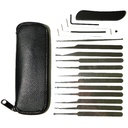
Shirt-Pocket Vault Covert Lock Pick Set - Clockspring Steel
You never announce that you’re the one who understands how locks really work—you just carry the right tool. This compact lock pick set rides unnoticed in your shirt pocket until curiosity or training time shows up. The smooth, polished clockspring steel feels familiar in your fingers, the profiles already where you’d reach for them. Quiet practice in a parked car, a classroom demo, a late-night challenge on your workbench—this is how you move from guessing to knowing, one clean open at a time.
You notice it the first time you slide the black case into your shirt pocket: nobody else can see the decision you just made. They see a normal day. You feel a quiet shift—you’re now the person who understands what’s happening inside a lock, not just someone who hopes the key works.
That’s what carrying a compact lock pick set really does. It isn’t about showing off. It’s about finally having a way to turn curiosity, training, and real-world readiness into something you can practice, not just read about.
How a Pocket Lock Pick Set Changes What You’re Capable Of
A well-built lock pick set doesn’t shout for attention. It sits in your pocket until the right moment appears—a stubborn practice lock on your desk, a classroom of students watching you explain security, a friend handing you an old padlock with a raised eyebrow. In that moment, you either have the right tools… or you don’t.
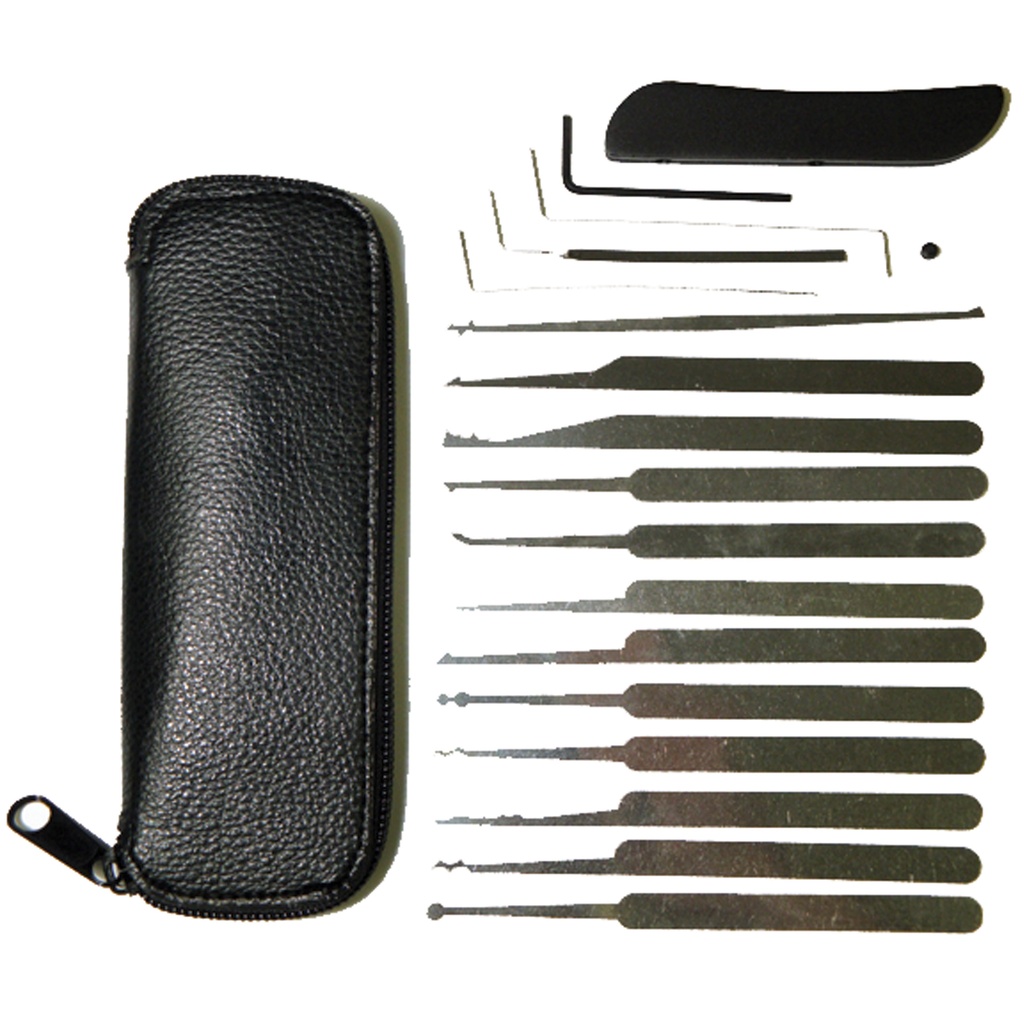
With nineteen pieces laid out in your hand—hooks, rakes, half-diamonds, balls, and multiple tension wrenches—you’re not guessing which profile might work. You’re choosing. You can move from wafer locks to six- and seven-pin tumblers without feeling under-equipped. The lock pick set becomes less about owning tools and more about owning options.
The first time it clicks open
If you’re new, there’s a specific moment coming: the soft, unmistakable click when a pin stack finally sets and the core turns. Your fingers feel it before your brain catches up. That’s when this kit stops being "gear" and starts being feedback—a way to feel progress in your hands instead of just hoping you’re getting better.
Why Clockspring Steel Matters When You Practice With a Lock Pick Set
On paper, "tempered clockspring steel" sounds like a spec. In your hand, it feels like something else entirely. These picks flex just enough to tell you what’s happening at the pins, then snap back to true. No gummy, vague feedback. No mystery about whether you’re bending the metal or lifting the stack.
That feedback loop is what separates a throwaway kit from a training-grade lock pick set. The polished finish slides through the keyway instead of scraping, so the only resistance you’re feeling is from the lock itself. Over time, you start to recognize the difference between a binding pin and a rough-cut practice lock because the metal isn’t lying to you.
Designed to be carried, not just collected
The black leather zip case looks like a small notebook cover or card wallet to anyone else. To you, it’s organization you don’t have to think about. Every pick profile has its place, tension wrenches line up where your thumb naturally finds them, and the whole thing disappears into a shirt or jacket pocket without a bulge or logo announcing what it is.
That’s why the material choice matters: a soft, pebbled leather that doesn’t squeak or flash, paired with bright, polished steel that’s all business once it’s in the lock.
Carrying a Lock Pick Set Quietly in Real Life
There’s a difference between owning tools and living with them. This slim lock pick set is built for the latter. You don’t have to rearrange your entire everyday carry to make room for it. It slides behind a notepad, beside a phone, or in the inside pocket of a work bag and simply becomes part of how you leave the house.
At work, it’s there when a training moment appears and you want to show a coworker why that cheap lock on the back door isn’t doing what they think it’s doing. At home, it waits in a drawer or on a workbench, ready for ten or fifteen minutes of focused practice on a clear-headed evening. On the move, it rides unnoticed behind a shirt button—no jangling, no hard square digging into your ribs when you sit.
Over time, that quiet presence changes how you see the world. Locks stop being obstacles and start being puzzles. You recognize wafer housings versus pin tumblers at a glance. You stop walking past hardware without wondering what’s actually going on inside.
When a Compact Lock Pick Set Makes the Difference
There are moments when having a small, shirt-pocket lock pick set isn’t about drama, it’s about professionalism and preparedness. You might be a locksmith apprentice needing your own kit rather than constantly borrowing tools. You might teach students about physical security and want something that feels serious in their hands, not like a toy. You might simply be the person in your circle who takes skill-building seriously and wants to understand security from the inside out—lawfully and responsibly.
This 19-piece kit supports that shift. The variety of picks lets you experiment with different techniques—single-pin picking on a stubborn six-pin, raking through a cheap wafer lock, using different tension wrench thicknesses to feel how each changes feedback. Instead of blaming the lock, you now have enough profiles and tension options to change your approach and learn.
And because everything lives in a discreet, zippered case, you’re not fishing loose metal out of a bag or leaving sharp edges exposed. Your tools stay where you put them, ready the moment you need to reach for one specific shape.
Questions People Ask Before Buying a Lock Pick Set
Is this lock pick set good for everyday practice or just occasional use?
If you plan to practice regularly, you want picks that hold shape and give clear feedback. The tempered clockspring steel in this lock pick set is made for repetition—flexible enough to communicate what the pins are doing, resilient enough to resist warping under normal technique. It’s a solid choice for consistent training, not just a one-week experiment.
Will this lock pick set work on both wafer locks and pin tumbler locks?
Yes. The kit includes multiple pick profiles and tension tools designed for common wafer locks as well as six- and seven-pin tumblers. That means you can move from practicing on basic padlocks and cabinet locks to more complex door cylinders without needing a second lock pick set just to keep up with your curiosity.
Is it legal to carry a lock pick set where I live?
Lock pick legality varies by region. In many places, simply owning or carrying a lock pick set is legal as long as you don’t use it for unlawful entry, while other areas have stricter regulations or “intent” clauses. It’s on you to check your local laws and use this kit only for lawful purposes—training, education, or professional work.
Is this lock pick set suitable for beginners, or do you need experience first?
You don’t need experience to start; you need tools that won’t hold you back. This compact lock pick set gives beginners enough variety to explore different techniques while still being clean and organized enough for a professional to carry. The important part is your mindset: a focus on lawful use, patience, and a willingness to learn from every click and slip.
The Moment This Lock Pick Set Becomes Part of Who You Are
Picture the first evening you really sit down with it. The room is quiet, the black leather case is open on the table, and a practice lock waits in your hand. You choose a hook, feel the cool clockspring steel settle between your fingers, set a light tension wrench, and listen with your fingertips as the stack starts to talk back.
Minutes turn into a rhythm—lift, reset, breathe, adjust. Then the plug turns, almost casually, as if it had always been ready to move for you. That’s the moment this lock pick set stops being something you bought and starts being part of how you see yourself: someone who doesn’t just accept the surface of things, but understands how they work underneath.
Tomorrow, it slides back into your shirt pocket—quiet, flat, unremarkable to everyone else. But you’ll know. You’re not just carrying tools. You’re carrying proof that you decided to learn a skill most people never even try.