Signal Cross Stormproof First Aid Kit - Red Dry Sack
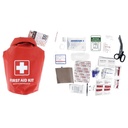
You don’t plan the moment someone goes down. You just hear the silence after the shout and hope you’re not empty-handed. With this waterproof first aid kit riding in your pack or console, you already know where it is, what’s inside, and that every piece is dry. Gauze, bandages, tourniquet, EMT shears, CPR mask—real tools, not token extras. In rain, on the road, or miles from help, you’re not the one panicking. You’re the one reaching for the red bag.
You hear it before you see it—the thud, the swear, the sudden silence that means this isn’t just a scrape. For half a second, everyone looks at each other. Then they look at you. Because you’re the one who always has a plan. Your hand goes straight to the high‑visibility red bag you packed without fanfare, and in that small roll and click of a buckle, you feel something most people never do in an emergency: calm.
Why a Waterproof First Aid Kit Changes the Story When Things Go Wrong
In a real emergency, it’s not the gear you own that matters—it’s the gear you can actually use. A waterproof first aid kit quietly removes the biggest failure point most people never think about: moisture. Rain blowing sideways into camp, a tipped kayak, a spilled water bottle in the truck—wet bandages and soggy gauze turn a "prepared" kit into useless trash. When your supplies ride inside a sealed red dry sack with a roll‑top closure, they stay bone‑dry and ready, no matter how chaotic the moment gets around you.
You know that emergencies don’t wait for good weather. Storms roll in fast. Roads are slick. Trails turn to mud. Having a waterproof first aid kit means you stop worrying about where the kit is or what condition it’s in. You know the alcohol pads will still sting on contact. You know the gauze will actually absorb. You know the elastic wrap will cling instead of sliding off damp skin. That quiet certainty is what lets you step forward when everyone else freezes.
Inside a Waterproof First Aid Kit That’s Built for Real Use, Not Just Checklists
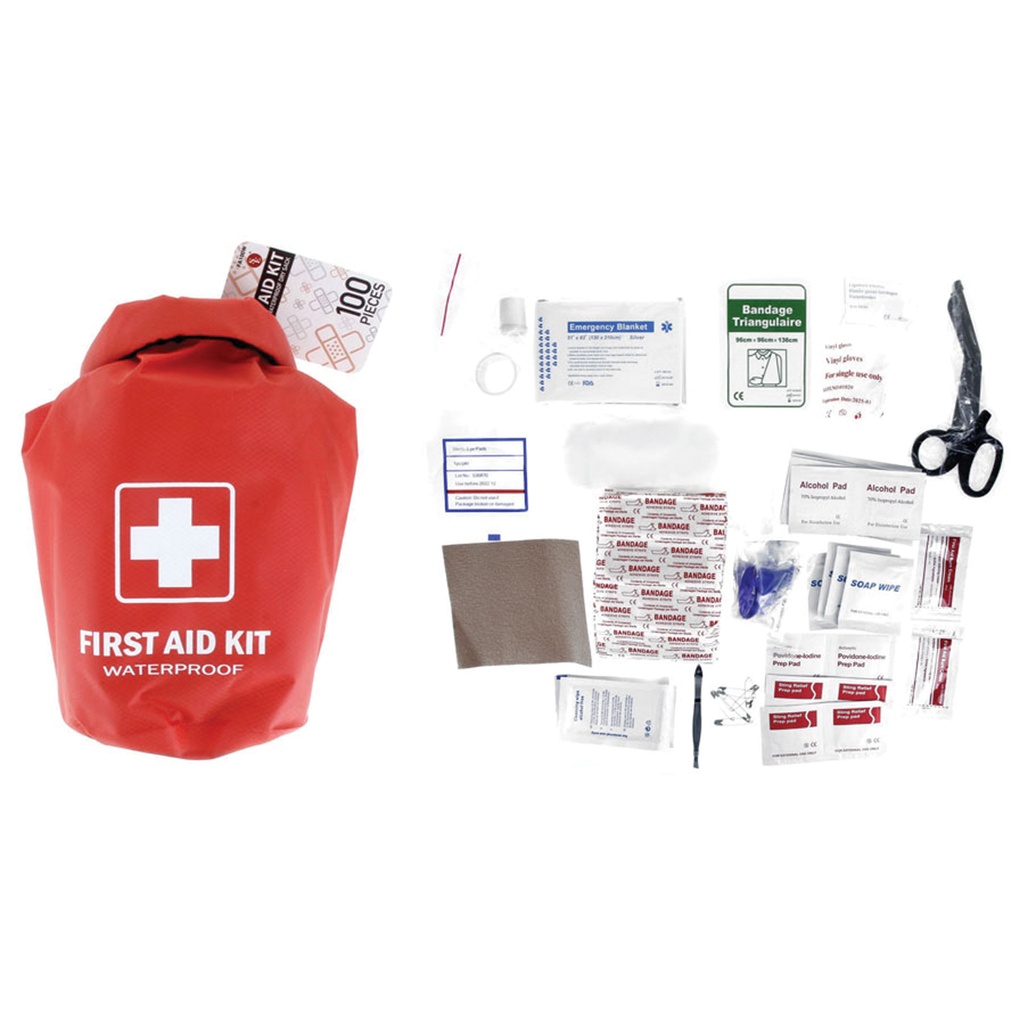
Most people picture first aid as a handful of bandages and a wish. You know better. You’ve seen how messy real injuries get. That’s why you care what’s actually inside your waterproof first aid kit. This 100‑piece system doesn’t just scatter random packets; it gives you a full spectrum of ways to turn panic into a plan.
You’ve got adhesive bandages for the everyday cuts that always seem to show up at the worst possible time. Sterile gauze pads and rolls let you deal with bleeding that won’t quit, building layers until the red slows. An elastic wrap holds everything in place when movement or joint support matters. Alcohol pads and povidone‑iodine wipes sting, smell clinical, and instantly tell you you’re doing something to keep infection out.
Then there are the tools that separate a real waterproof first aid kit from a feel‑good token: EMT‑style shears that actually cut through clothing and tape instead of chewing it. Tweezers that grab splinters and ticks without slipping. A CPR mask that lets you act without that half‑second of hesitation. A basic tourniquet that gives you options when "apply pressure" isn’t enough. Even an emergency blanket—foil crinkling, heat reflecting—wraps someone shivering in shock and buys you time until help arrives.
Designed So You Don’t Have to Think—You Just Reach
Under stress, fine motor skills vanish. That’s why the interior organization matters. Clear pouches and grouped items mean you’re not digging through a chaotic pile. In your mind, you’ve already mapped it: bandages here, meds and wipes there, tools along the side. When it counts, your hand just knows where to go.
How This Waterproof First Aid Kit Fits into Your Everyday and Outdoor Life
You don’t carry gear like this because you’re paranoid. You carry it because you’ve lived long enough to know that "it’ll probably be fine" is not a plan. A compact waterproof first aid kit that lives in a dry sack slides into the spaces you already use: the trunk next to your jumper cables, the side pocket of your hiking pack, under the boat seat, in the closet by the front door.
On the trail, that bright red dry sack stands out the second you pop your pack open. No fumbling between stuff sacks and jackets while someone bleeds. In a vehicle, it lives in the same spot every time, so your family knows where it is without you. At home, it becomes the one bag everyone reaches for when the kitchen knife slips or the kid takes a harder fall than usual in the driveway.
Because it’s a truly waterproof first aid kit, you stop treating it like a fragile object. Toss it onto wet ground while you work. Set it in a puddle next to a crashed bike. Let it roll around in the back of the SUV. The contents stay clean, dry, and usable, while the outside tells a simple story in white letters and a stark cross: this is where help lives.
The Feel of Confidence You Can Actually Hold
There’s a particular feeling when you unroll the top, squeeze past the plastic edge, and pull out exactly what you need. It’s not adrenaline. It’s not pride. It’s relief, sharpened into quiet capability. The waterproof fabric crackles slightly, the buckle snaps shut when you’re done, and you’re left with that small, steady thought: I handled that.
When a Waterproof First Aid Kit Becomes the Difference Between Chaos and Control
You know that most emergencies aren’t dramatic movie scenes—they’re small disasters that escalate because no one is ready. A deep cut on a hand miles from the trailhead. A twisted ankle just as the sky opens up. A kid’s forehead meeting the edge of a coffee table. Having a waterproof first aid kit nearby turns those moments from "What do we do?" into "Here’s what happens next."
Maybe you’re the one who organizes the camping trips, the one your friends text when they buy their first kayak, the one family members call about what gear they should keep in the car. This kit becomes part of that identity—not because you wave it around, but because when something goes wrong, you’re already moving. While others stare at the blood or the bruising, you’re cracking open alcohol pads, cutting away fabric, wrapping, taping, checking breathing with that CPR mask in hand.
And later, when the story gets told—"Remember when the storm hit and Jake gashed his leg?"—you’re not the hero. You’re the steady presence in the background, the one who had the red waterproof bag and knew what to do with it. That’s the quiet reputation this kind of gear builds for you.
Questions People Ask Before Buying a Waterproof First Aid Kit
Is a waterproof first aid kit really worth it if I already have a regular one?
If your current kit lives in a glove box and never sees the outdoors, maybe. But the moment you camp, hike, boat, or even keep gear in a damp trunk, a waterproof first aid kit stops being a luxury and becomes the only kind that still works when things are wet, muddy, or bouncing around.
Is this waterproof first aid kit big and bulky to carry?
It’s compact enough to disappear into a backpack, boat compartment, or vehicle bin, but large enough to hold 100 pieces of real supplies. The dry sack form lets you compress it to fit your space, so it rides along without demanding attention—until you actually need it.
What can I realistically handle with a waterproof first aid kit like this?
You’re set up to handle the real‑world stuff: bleeding control with gauze and wraps, wound cleaning with alcohol pads, immobilizing smaller injuries with bandages and triangular wraps, cutting clothing with EMT shears, offering CPR safely, and keeping someone warm and stable with the emergency blanket until help arrives.
Will a waterproof first aid kit stay organized after being tossed around?
Yes. The internal organization and individual packets keep things sorted even when the red dry sack gets thrown in and out of vehicles or packs. When you open it, you’re not facing chaos—you’re looking at clearly grouped supplies you can grab fast.
Later that night—storm past, road cleared, or living room finally quiet—you’ll remember small details. The way the red dry sack stood out against the dark. How the tape tore cleanly. The sharp snip of the shears, the crinkle of the emergency blanket, the way everyone’s shoulders dropped a little once they saw you had it handled. Owning a waterproof first aid kit doesn’t turn you into a medic. It turns you into something simpler and rarer: the person who shows up prepared, even when the sky opens up and everything else gets soaked. And once you’ve felt that calm in the middle of someone else’s worst moment, you won’t want to go back to guessing what’s in the glove box.