Signal Ember Heat-Reflective Emergency Sleeping Bag - Orange Mylar
You never plan to spend a night shivering in your car or on a trail, but you plan for it anyway—that’s why you pack an emergency sleeping bag. This heat-reflective mylar shell throws your body warmth back at you while that high-vis orange exterior quietly says, “I’m right here” to rescuers. It lives in your go bag, your trunk, your field kit, taking up less space than a water bottle until the one night you’re grateful you thought ahead.
You don’t realize how loud silence is until the engine won’t start and the temperature drops faster than your options. The road is empty. Your phone is dying. The heater’s gone cold. This is when an emergency sleeping bag stops being a nice idea and becomes the thin, bright line between you and a long, dangerous night.
How an Emergency Sleeping Bag Changes a Cold, Bad Night
In that first minute after things go wrong, your brain does quick math: how far can I walk, how long until help, how cold is it really? An emergency sleeping bag quietly rewrites that equation. Instead of bleeding heat into the air, you slide into a crinkling mylar shell that traps what you’re already making—your own warmth—and throws it back at you.
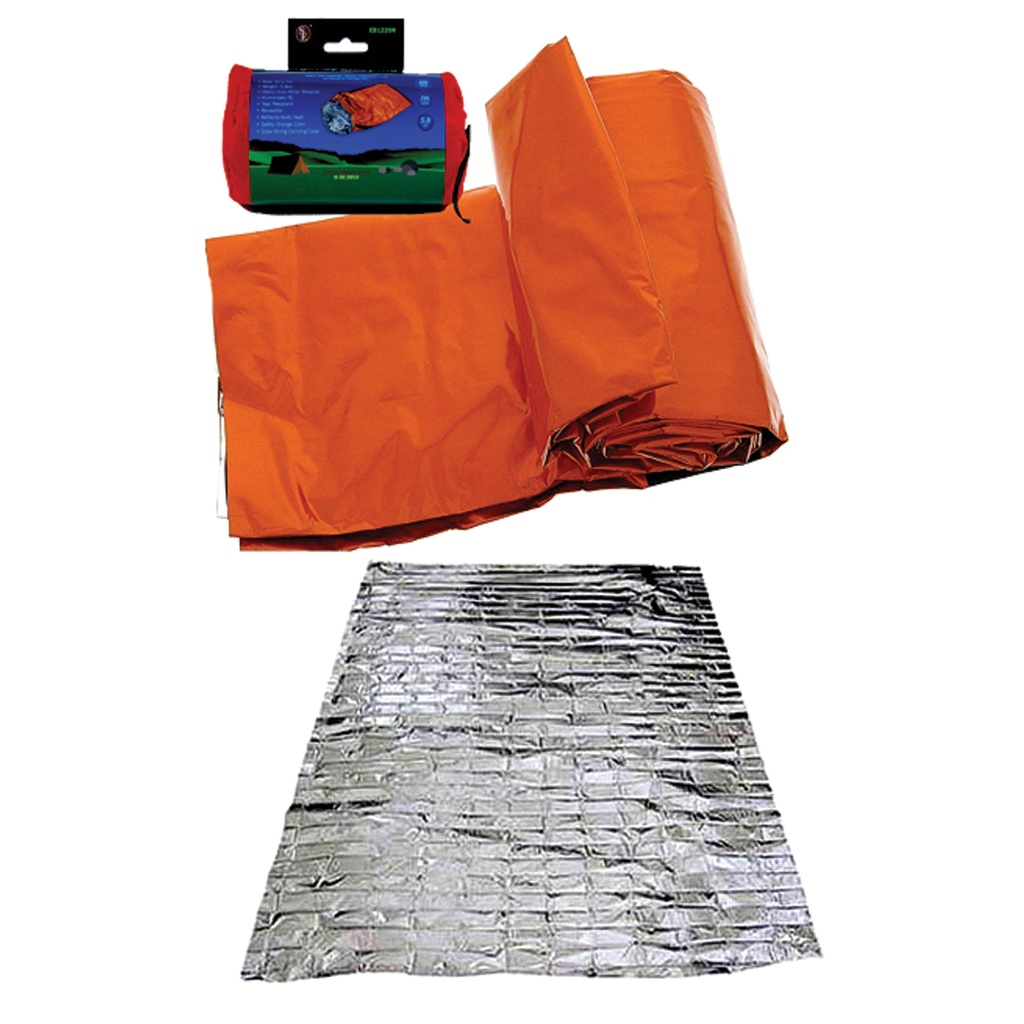
This isn’t a bulky camp setup. It’s a heat-reflective emergency sleeping bag that opens fast to a full 84 by 36 inches, big enough to swallow your boots, your layers, and your shaking. The aluminized PE mylar interior reflects your body heat instead of letting it drift away. The high-vis orange exterior turns you into a signal instead of a shadow. You go from exposed to contained in seconds.
Inside the Heat-Reflective Emergency Sleeping Bag: Why the Materials Matter
There’s a reason almost every serious survival kit includes a mylar-style emergency sleeping bag: it cheats the physics that usually work against you. That thin, silver, crinkled interior isn’t just for show. The aluminized PE mylar reflects a high percentage of your radiant body heat right back at you, creating a microclimate inside the bag that feels dramatically different from the air outside.
The outside tells a different story. That high-visibility orange isn’t a fashion choice; it’s a rescue color. On snow, rock, or asphalt, it stands out hard against the landscape. If someone’s looking for you—from a road, a trail, or a helicopter—you’re not blending into the dark. You’re broadcasting, even when you can’t shout.
Even better, this emergency sleeping bag is wind-resistant. That biting draft that sneaks through jackets and blankets? The mylar shell shrugs it off. The material resists small tears and stretching so it doesn’t disintegrate the first time you actually need it. And because it’s reusable, you’re not gambling on a one-and-done piece of foil—you’re adding a durable tool to your emergency kit.
The Sound and Feel of Real Protection
When you slide into a heat-reflective emergency sleeping bag, there’s a specific sound: that crisp mylar rustle that says, “You’re sealed in now.” The silver side feels cool for a moment, then steadily warms as your own heat builds. The orange shell feels smooth under your hands, not flimsy or tissue-thin. You hear the wind, but you don’t feel it clawing at your bones the same way.
Carry It, Forget It, Then Be Glad You Didn’t: Everyday Use of an Emergency Sleeping Bag
The best emergency gear disappears into your life until the moment you reach for it without thinking. This emergency sleeping bag packs into a compact drawstring mesh bag that actually fits where you need it: glove box, door pocket, side pouch of a backpack, corner of a go bag. It weighs less than the what-ifs it silences.
You don’t have to be a hardcore prepper to justify it. Maybe you drive lonely winter roads. Maybe you hike after work and push daylight. Maybe you camp with kids and want a backstop if the weather turns on you at 2 a.m. In each of those moments, having a heat-reflective emergency sleeping bag close by is less about fear and more about quiet confidence. You know that if the tent floods, the car won’t start, or the trail takes longer than planned, you still have a warm plan B.
From Go Bag to Glove Box: Where This Lives in Your Life
Picture your gear right now. That emergency kit in the trunk. The daypack that rides shotgun on every weekend. The field kit you keep at the cabin. An emergency sleeping bag slides into all of them without asking for space or attention. It becomes part of the background—until the night the background matters more than anything else you own.
When a Heat-Reflective Emergency Sleeping Bag Becomes the Difference
Most people buy their first emergency sleeping bag after hearing someone else’s close-call story. The broken-down car in a snowstorm. The surprise cold front that blew through camp. The twisted ankle two miles from the trailhead with the sun already down. The pattern’s always the same: “We thought we’d be fine. Then we weren’t.”
In those stories, the turning point is rarely a gadget. It’s usually something simple that changed everything: dry socks, one extra layer, a compact emergency sleeping bag someone threw in “just in case.” Suddenly, surviving the night goes from miserable and dangerous to manageable and controlled. You still respect the situation; you’re just not at its mercy.
This is the role this heat-reflective emergency sleeping bag plays. It doesn’t turn you into a superhero. It turns a worst-case scenario into a story you tell later instead of one someone else has to tell about you.
Questions People Ask Before Buying an Emergency Sleeping Bag
Will this emergency sleeping bag actually keep me warm?
It won’t feel like a down comforter, but yes—it makes a huge difference. The aluminized mylar interior reflects your body heat back at you, helping slow heat loss dramatically compared to just sitting in the open or wrapping up in regular clothes. In real emergencies, that boost in retained warmth matters.
Is a mylar emergency sleeping bag reusable or one-time use?
This heat-reflective emergency sleeping bag is reusable if you treat it with basic care. Don’t slash it open or ball it up aggressively, and let it dry if it gets damp before packing it back into the mesh bag. Many people use theirs for practice or unexpected chilly nights and then fold them back into their kits.
How is an emergency sleeping bag different from an emergency blanket?
An emergency sleeping bag fully envelopes your body instead of just draping over you. That sealed, cocoon-like design traps more of your heat and blocks wind better than a flat blanket. If you’re stuck outside or in a cold car, climbing into a bag-style mylar shelter usually feels noticeably warmer and more secure.
Does the bright orange color really help rescuers find me?
Yes. High-visibility orange is a standard search-and-rescue color because it contrasts with most natural environments—snow, forest, rock, and roads. When you’re inside this emergency sleeping bag, you’re not just warmer; you’re easier to spot from a distance, especially in low light or rough conditions.
Imagine the first time you actually use it. The wind is cutting across the parking lot of a dark rest area, or through the trees of a trail you know too well to have gotten lost on. You pull the compact mesh bag from your kit, shake the emergency sleeping bag open, and slide inside. Silver wraps around you, orange flashes in the gloom. Your breath warms the air in front of your face. The shivers ease. You’re not comfortable, exactly—but you’re in control now. That’s who you become when you carry a heat-reflective emergency sleeping bag: the person who doesn’t just hope for the best. You’re the one who quietly prepares for the worst and lives to tell the story.