

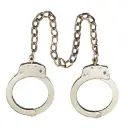
Silent Control Double-Lock Thumbcuffs - Nickel Steel
You’re close enough to smell their adrenaline when things shift. This is when a full set of cuffs feels like too much, and empty hands feel like a risk. With compact, double-lock thumbcuffs, control sits discreetly in your palm—cool nickel against your skin, weight just enough to reassure you it’s there. You move calm, precise, collected. You’re the person who doesn’t need to flash authority; you carry it quietly, clipped, pocketed, ready when the moment goes sideways. These aren’t a gimmick—they’re your backup plan in steel.
You don’t plan for things to go sideways. You just know they can.
Maybe it’s a late-night walk where someone’s had too much to drink and not enough sense. Maybe it’s a small venue, a tight hallway, a back room where you’re the only one thinking clearly. In those close quarters, there usually isn’t room for big gestures. Just you, your hands, and whatever quiet backup you decided to carry.
That’s where owning a set of thumbcuffs changes the story. Not because they look tough, but because in the one second between calm and chaos, you already know what your hands are going to do.
When Thumbcuffs Turn a Mess into a Managed Moment
Think about how it usually happens: the argument that gets too loud, the shove that wasn’t supposed to land, the person who swears they’re fine while their hands keep clenching. You feel that familiar tension—are you about to lose control of the situation, or quietly take it back?
With a compact, nickel-plated thumbcuff set in your pocket, you’re prepared for the kind of restraint that doesn’t need a spectacle. No rattling full-size cuffs, no fumbling with bulky gear. Just a palm-sized restraint that closes securely around the thumbs, locking down the one thing that matters most when someone starts to struggle: their hands.
Double-locking matters here. Once you set the thumbcuffs and engage the secondary lock, they’re not tightening under pressure. That’s the quiet difference between improvising and actually knowing what you’re doing. You’re not just reacting; you’re managing the moment—clean, contained, controlled.
The Build Behind Reliable Thumbcuff Restraint
Nickel-plated steel isn’t just a material choice—it’s a commitment to consistency. When you snap these thumbcuffs closed, you feel that familiar metallic click: solid, repeatable, no mystery. The nickel finish shrugs off pocket carry, glovebox time, and the occasional drop on concrete without turning them into a rusty relic you don’t trust.
The double-lock mechanism is where function quietly outpaces novelty. First, you cinch the thumbcuffs to the right tension—a snug, controlled hold across both thumbs. Then, with a small key movement, you set the second lock, freezing them in place. No creeping tighter, no guessing, no wondering if that last yank is going to hurt someone more than you intend. It’s restraint with boundaries built in.
Over time, you start to trust the feel: the weight of the steel in your hand, the way the hinges move, the clean line of the nickel plating catching the light. This isn’t costume gear or a prop. It’s simple, serious hardware that does one thing very well: keep a person’s hands from doing what they shouldn’t.
Carrying Thumbcuffs Without Making a Statement
Most people who carry full-size cuffs broadcast it. Belt case, visible pouch, shiny arcs catching every eye in the room. Sometimes that’s exactly what you don’t want. Sometimes, authority works better when no one sees it coming.
A thumbcuff set rides differently in your life. It slips into a pocket, disappears in a small bag, tucks into a vest or organizer with the rest of your everyday carry gear. No bulk, no rattle, nothing announcing itself before you decide the moment calls for it.
Think of it as restraint scaled to your reality. Maybe you’re security at a small bar, maybe you’re in private investigations, maybe you’re just serious about having options when things get physical in a way you didn’t choose. You don’t need to carry a duty belt to be prepared. You need a tool that doesn’t get in the way until the second you need it.
The Feel of Readiness in the Palm of Your Hand
There’s something grounding about the weight of steel you can close your whole hand around. Not swinging from your hip, not printing through your jacket—just there, in your grip, ready. When you practice with thumbcuffs, you start to build that quiet muscle memory: how they open, how they close, how the key settles into the lock without you needing to think about it.
That’s when they stop being a novelty and start being part of your real-world plan.
Why Choose Thumbcuffs Instead of Full-Size Handcuffs?
You might be wondering what you really gain by carrying thumbcuffs when traditional handcuffs exist. The answer is simple: situation fit. These are not a replacement for full-size cuffs in every scenario—but in tight, personal, close-in situations, they’re sometimes the smarter move.
Because thumbcuffs lock across the thumbs, they can severely limit hand movement with far less hardware. That makes them easier to carry, faster to deploy, and less obvious before and after use. For backup restraint, for discreet control, for those times when you don’t want the entire room to know what just happened, they fill a gap big cuffs can’t.
And if you’re someone who trains, teaches, or practices control techniques, having a set of thumbcuffs adds another dimension to your toolkit. You’re not just thinking about force—you’re thinking about how to end an escalation quickly without turning the whole moment into a scene.
Practice Makes Them More Than a Conversation Piece
Anyone can buy restraints. Not everyone can use them well. Take the time to learn how your thumbcuff set behaves: how much pressure you really need, how the double lock engages, how to apply them without fumbling. The more familiar you get, the more they fade into that quiet category of gear you don’t brag about—but reach for without hesitation.
Questions People Ask Before Buying a Thumbcuff
Are thumbcuffs actually secure enough for real restraint?
Used correctly, a quality thumbcuff set can provide very effective restraint in close quarters. Because they lock directly on the thumbs and include a double-lock feature, movement is seriously limited. The key is proper application, fit, and using them as part of an overall control strategy—not as a magic fix.
Are thumbcuffs legal to carry where I live?
Legality varies by country, state, and even city. In many places, owning or carrying thumbcuffs is allowed, but there may be rules about who can use restraints and under what circumstances. It’s on you to check your local laws and regulations before carrying or using them in public or professional settings.
Do thumbcuffs hurt more than regular handcuffs?
They can if misused. A thumbcuff focuses pressure on a smaller area, so fit is crucial. That’s why the double-lock is so important—it stops over-tightening once you’ve set the right tension. When applied correctly and monitored, they’re a controlled restraint tool, not a torture device.
Can thumbcuffs be used for training or demonstration?
Absolutely. Many people use thumbcuffs for controlled training, demonstrations, and practice scenarios. Just treat them with the same respect you would full-size cuffs: communicate clearly, check circulation, and always keep the key accessible.
At the end of the day, this isn’t about owning another piece of metal. It’s about who you become when you decide that if things go wrong, you won’t be the one caught empty-handed. Slip a set of double-locking thumbcuffs into your kit and picture that next tense moment—the raised voice, the clenched fists, the split-second where someone has to take charge. Now picture yourself there, calm, prepared, and already reaching for the tool you chose long before tonight ever happened.