Silent Sentinel Guarded Expandable Baton - Black & Silver
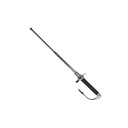
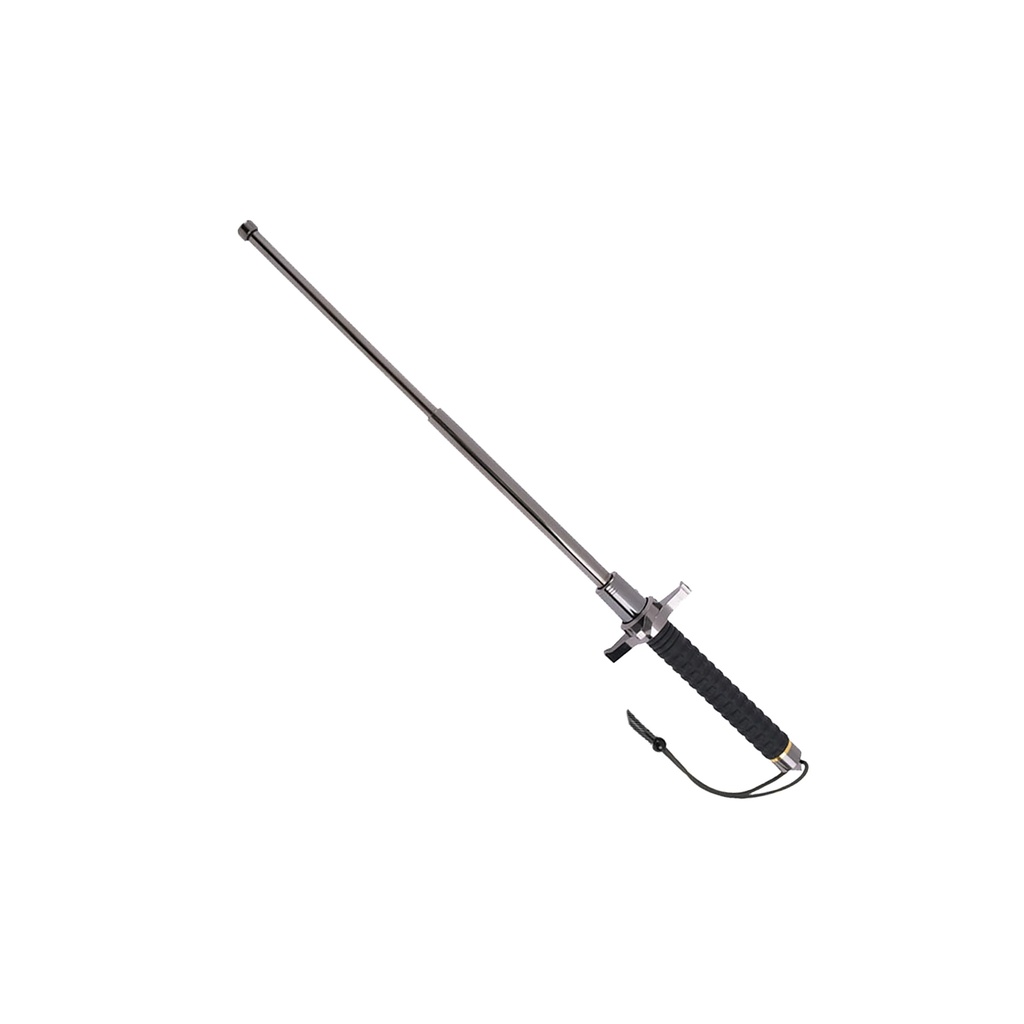
You notice it the moment the crossguard settles in front of your hand. This expandable baton doesn’t just extend your reach, it protects the grip that controls it. Collapsed, it disappears at your side. Extended, that silver shaft and ribbed black handle give you calm, confident leverage. The wrist lanyard anchors it to you, so when things get loud, your movements stay quiet, steady, and completely under your control with a true self-defense baton you chose on purpose.
You don’t buy your first self-defense tool because you want a fight. You buy it because you’re tired of walking to your car with your keys threaded between your fingers, hoping that nothing happens and knowing, deep down, that if something did, you’d be under-equipped.
Then one night, you step out of a building, feel that prickle at the back of your neck, and your hand moves without drama—fingers close around a compact weight at your side. A flick of the wrist, a sharp metallic snap, and suddenly you own the space around you. Not because you’re looking for trouble, but because you’re no longer betting on luck.
When a Self-Defense Baton Changes How You Walk at Night
This self-defense baton isn’t about aggression; it’s about how you carry yourself when you know you’re not empty-handed. Collapsed, it rides quietly—just a slim, black-handled cylinder with a wrist lanyard that disappears against your side. Extended, the polished silver shaft jumps to a full 21 inches with a decisive telescoping action that feels less like a trick and more like a decision.
You feel the crossguard settle in front of your knuckles, and that’s where the story really changes. With most sticks or improvised tools, you’re gambling with your own hand. Here, the guard becomes a small metal line between your fingers and whatever force you might have to meet. The baton simply gives you reach, leverage, and a sense that if things go wrong, you’re not relying on your bare hands and blind hope.
Why This Self-Defense Baton Feels Like Planned Protection, Not Panic
Most people who carry nothing tell themselves the same story: “I’ll be fine. Nothing ever happens here.” You already know that’s not a strategy. This self-defense baton turns that quiet, uneasy awareness into something more grounded—preparation instead of paranoia.
The first thing you notice is the grip. The ribbed black handle isn’t decorative; those segmented rings catch the skin of your palm and fingers so the baton feels anchored, not slippery. When adrenaline spikes and your hands get sweaty, that texture matters more than any marketing claim. The attached wrist lanyard adds another line of security—if your fingers slip, it’s still yours. You don’t have to think about it; you just feel that it’s not going anywhere without you.
Then there’s the business end: a three-section telescopic metal shaft in polished silver. It extends with a clean, linear motion—no wobble, no rattle—locking into a straight, rigid line that puts distance between you and anything coming too close. At full reach, this 21-inch baton creates a clear perimeter, giving you time and space to make choices instead of reactions.
The Crossguard Difference: Protecting the Hand That Protects You
If you’ve ever shadowboxed with a stick, bat, or makeshift club, you know the weak point isn’t the object—it’s your hand. That’s where this guarded self-defense baton quietly stands apart. The crossguard sits just ahead of the handle, a simple, straight metal bar that creates a barrier in front of your knuckles.
In motion, that guard does two things for you. First, it stops your hand from sliding forward if you strike or block with force. Second, it gives you psychological permission to use the baton decisively, because you’re not picturing your fingers absorbing the hit. The guard is removable if you decide you want a more streamlined profile, but most people who feel it in front of their knuckles once decide to keep it on. It’s a small piece of metal that changes how confident you feel about your own grip.
This is where the design clicks: the baton doesn’t try to make you feel invincible; it makes you feel protected where you’re most vulnerable. You hold it and realize someone thought about your hand as much as the shaft—about how impact actually feels in a real situation.
How a Self-Defense Baton Fits Into Your Everyday Carry Without Taking Over
You don’t want your life to revolve around a weapon. You want a normal day where, if you have to walk through a parking garage, across a campus, or down a side street after dark, you’re not mentally rehearsing worst-case scenarios. That’s where a compact self-defense baton earns its place in your everyday carry.
Collapsed, this baton is low profile. The straight cylindrical body tucks into a bag, glove compartment, or discreet carry point without demanding attention. It doesn’t flash tactical logos or neon accents; black and silver keep it serious, almost understated. You can carry it for work if you’re in security and not feel like you’re swinging something oversized. You can keep it in your car or by your front door and know that, if there’s a noise in the driveway at 2 a.m., you’re not opening the door with bare hands.
In real life, readiness isn’t cinematic. It’s mundane. It’s the moment you clip the lanyard around your wrist before walking across a dark lot. It’s the small comfort of feeling solid metal instead of flimsy plastic. It’s knowing that if someone crosses a line, you can extend that baton with one motion and make a very clear statement—without a single word—that you are not an easy target.
When Choosing a Self-Defense Baton Becomes a Line in the Sand
You could keep telling yourself the story that nothing will ever happen. Or you can quietly draw a line in the sand and equip yourself for the day you hope never comes. That’s what this self-defense baton represents: not paranoia, but a private decision to stop being unprepared.
You get more than just length and metal. You get controlled reach—21 inches of telescoping shaft that lets you manage distance. You get hand protection from the crossguard, so you’re not sacrificing your fingers to save your face. You get a grip that stays with you when adrenaline kicks in, and a lanyard that backs you up if your fingers falter. None of this is about looking tough. It’s about moving through the world with a quiet, grounded sense that if something goes wrong, you’re not starting from zero.
Questions People Ask Before Buying a Self-Defense Baton
Is a self-defense baton like this legal to carry where I live?
Legality for a self-defense baton changes from state to state and country to country. Some places allow expandable batons, others restrict or ban them outright. Before you carry this baton in public, check your local and state laws or talk to a knowledgeable legal source. The tool gives you options—but only if you carry it responsibly and within the law.
Will this self-defense baton actually hold up if I need to use it?
This baton is built around a metal telescoping shaft designed to lock out into a rigid 21-inch line, not a loose toy. The ribbed black handle, wrist lanyard, and crossguard all exist to keep it under your control when things get rough. Like any self-defense tool, it works best when paired with some basic training, but the construction is meant for real-world use, not just show.
How hard is it to deploy and collapse a collapsible self-defense baton?
Deployment is simple: a firm flick or swing sends the sections outward until they lock in place, giving you instant reach. Collapsing usually requires a solid impact against a firm surface to release the tension and let the sections slide back in. After a few practice repetitions, the motions become second nature, so when you need it, you’re not fumbling—you’re acting.
Is a baton a good choice compared to other self-defense options?
A self-defense baton gives you distance and impact without relying on sprays, batteries, or complicated mechanisms. For many people, the appeal is that it’s purely mechanical and under your direct control. It won’t replace awareness or avoidance, but as part of your personal safety plan, it offers a clear, physical way to create space when talking and walking away are no longer options.
Picture one more night walk. The lot is half-lit, air a little too quiet. Your hand curls around the compact handle at your side, feeling the ribbed texture and the slight pull of the lanyard around your wrist. With one motion, metal snaps outward—the self-defense baton extends, the crossguard settles in front of your knuckles, and your posture shifts. You’re still the same person, in the same parking lot, but you’re no longer moving like someone hoping nothing happens. You’re moving like someone who came prepared.