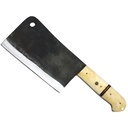
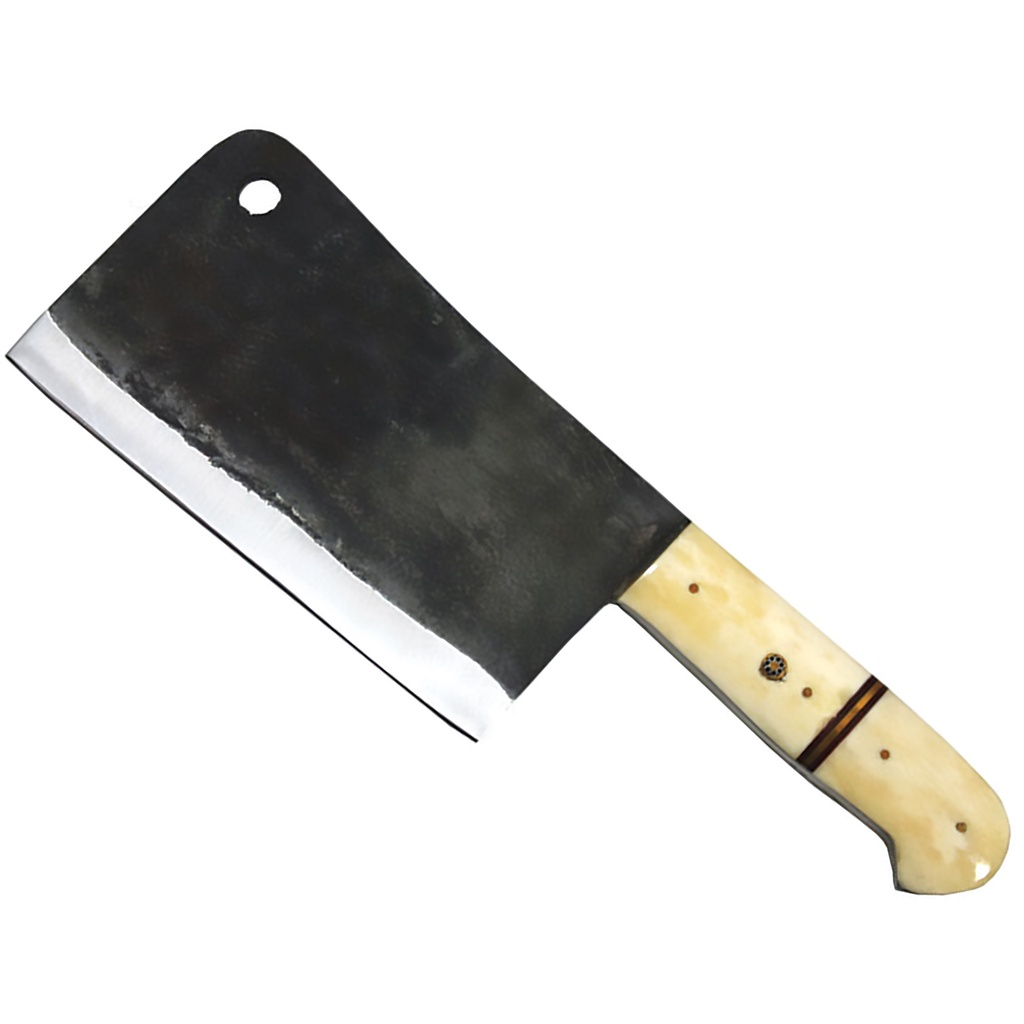
Smokehouse Legacy Full-Tang Meat Cleaver - White Bone
You’re standing over the block, smoke still on your clothes, breaking down what you brought home yourself. A full-tang meat cleaver feels solid in your hand, the white bone handle warming to your grip, the forge-darkened blade biting clean through bone and veg without drama. This doesn’t feel like another kitchen tool; it feels like part of the way you do things—field to fire, with gear that looks like it was made for your kind of work.
| Blade Length (inches) | 6 |
| Overall Length (inches) | 10.75 |
| Blade Color | Silver |
| Blade Finish | Matte |
| Blade Style | Normal Straight |
| Blade Edge | Plain |
| Blade Material | Steel |
| Handle Finish | Polished |
| Handle Material | Bovine Bone |
| Theme | None |
| Handle Length (inches) | 4.75 |
| Tang Type | Full Tang |
| Carry Method | Belt Loop |
| Sheath/Holster | Leather Sheath |
The first time you drop a real meat cleaver onto the board, there’s a moment of quiet before impact. Smoke in the air, boards laid across an old stump or kitchen block, everyone half-watching to see if you’re the kind of person who hacks… or the kind who cuts clean. When the steel lands and the edge glides through bone instead of bouncing off it, you feel it in your hand before you see it on the board—you brought the right tool.
How a Meat Cleaver Changes the Way You Work in the Field and at Home
If you’ve ever tried to break down game or a big cut with a thin chef’s knife, you already know the hesitation—that tiny flinch when steel hits bone and you wonder if today’s the day you chip the blade. A true meat cleaver erases that question. The six-inch, full-height rectangular blade gives you weight where you need it, so the edge does the talking and your wrist doesn’t have to shout.
This one carries a forge-darkened upper blade with a bright, matte-finished cutting edge, so each swing feels guided instead of guessed. You’re not sawing, not twisting, not forcing cuts you know should be simple. You line up, you drop, you’re through. Ribs on a wild hog, joints on a deer, thick chicken backs, hard winter squash—suddenly they all feel like the same confident motion.
Why Full-Tang Meat Cleaver Construction Matters When It’s Your Name on the Cut
There’s a reason old ranch knives feel different from cheap block-store tools. When the steel runs all the way through the handle—full tang, edge to butt—you don’t have to wonder if this swing is the one that loosens the scales or snaps a hidden rat-tail. This full-tang meat cleaver pins the steel between polished white bovine bone, so what you feel is one solid piece, not parts.
The first time you rinse it off and see the dark forge finish meeting that clean ground edge, it clicks: this is a working blade with a little bit of story baked in. The mosaic pin in the handle isn’t there to show off; it’s the detail that makes you notice the rest—how the tang traces the entire handle, how the dark spacer at the bolster breaks up the bone like an old saddle strap. You see it and think, this isn’t a throwaway. This is one you keep.
Out at camp or on the ranch, durability isn’t a talking point, it’s a test. Steel that shrugs off hitting bone. A handle that doesn’t loosen when it’s cold, wet, or greasy. A finish that looks better with a little use. This cleaver is built so that ten, twenty hard drops onto a stump feel the same as the first—aligned, steady, predictable.
From Pack to Belt to Block: Carrying a Meat Cleaver That Actually Goes Where You Go
Most people think a meat cleaver lives in a kitchen drawer. You know better. With a fitted leather sheath and a belt loop, this blade moves with you—from truck to blind, from barn to back porch cook. Instead of wrapping steel in an old towel or burying it in a tote, you thread it onto your belt and forget about it until you need it.
Walking through brush, you’ll feel the solid weight riding at your hip but not swinging loose. When you reach camp and someone says, “Anybody bring something that’ll go through bone?” you won’t dig through bins—you’ll just reach down, slip the leather off, and there it is. The hanging hole near the blade’s corner lets you park it on a nail in the smokehouse or by the grilling station, always in the same spot, always within easy reach.
Handle length matters when you’re working for more than a few minutes at a time. At just under five inches, the white bone grip fills your hand without crowding it, even if you’re gloved or just coming in from the cold. That polished bone warms quickly, so the cleaver feels like part of your hand instead of a chunk of cold metal you’re babysitting.
When a Meat Cleaver Makes the Difference Between Hacking and Clean Work
There are times a regular kitchen knife will get you by. But when you’re splitting racks into portions for the smoker, turning a full chicken into pieces, or dressing out quarters from the field, a dedicated meat cleaver turns frustration into flow. You stop worrying about babying the tip or feathering around joints. You start thinking in clean, confident swings.
This is where the identity shift happens. Instead of apologizing for hacked-up bones or ragged cuts—“It’ll still taste good”—you lay out game and meat that looks intentional, like you knew exactly what you were doing the whole time. People notice. They may not comment on the full tang or the edge geometry, but they’ll talk about how easy you made hard work look.
And on quiet days, when there’s no fresh game to break down, the same cleaver turns into your go-to for dense veg and prep. Hard squash, big carrots, stubborn cabbage—anything that makes a thin blade twist. You’ll find yourself reaching for it not because you have to, but because it feels good to use a tool that stays where you put it, cuts where you aim it, and doesn’t complain.
Questions People Ask Before Buying a Meat Cleaver
Will this meat cleaver hold up to everyday use and bone work?
Yes—this meat cleaver is built for real work, not just looks. The full-tang steel construction means the blade and handle move as one, so you can go through joints, ribs, and dense cuts without babying it. With basic care—washing, drying, and a touch of oil—it will stay ready for both daily kitchen duty and heavy field processing.
Can I comfortably carry a meat cleaver on my belt?
You can with this one. The included leather sheath with belt loop is made for carry, not storage. Thread it onto your belt when you head to camp, the ranch, or a backyard cook, and the cleaver rides securely at your side. When it’s time to process game or handle butchering chores, you’re not hunting through bags—you’re just drawing from your hip like any other trusted field tool.
Is a meat cleaver actually useful beyond butchering?
More than you’d think. While it shines on bone and big cuts, a solid meat cleaver becomes a go-to utility blade for the kitchen and camp. You can crush garlic, split thick veg, portion big roasts, and even use the spine for light pounding. Once you get used to having that weight and surface area, you’ll start finding excuses to use it because it simply makes hard jobs easier.
How do I care for a bone-handled meat cleaver?
Treat it like the working tool it is with a bit of respect. Hand-wash, dry it off completely, and avoid soaking the white bone handle. A light coat of food-safe oil on the steel keeps moisture at bay, especially if you’re taking it into the field. Over time, the bone will pick up subtle character from use, turning the cleaver into something that looks unmistakably yours.
Picture the next time you drop a meat cleaver onto the block. Not a borrowed blade, not a flimsy kitchen stand-in, but your own full-tang, bone-handled workhorse that’s ridden on your belt, seen your campfires, and cut your seasons into meals. The forge-darkened steel carries the story; the white bone fits your grip; the clean, heavy cut answers every doubt. You’re not just the one holding the knife—you’re the one people trust to turn what they bring home into something worth gathering around.