Threshold Sentinel Travel Wedge Door Stop Alarm - Black/Silver
You know that moment in a new room when you lock the door… and still don’t quite relax? That’s where a wedge door stop alarm changes everything. You slide it under the door, feel the rubber bite the floor, flip the switch, and suddenly the room feels like yours. No wiring, no drama—just a compact guardian that screams at 118dB the second someone tests your boundary. In a dorm, a rental, a hotel at 1 a.m., you’re not just hoping the lock holds—you’ve claimed the threshold.
That First Night in a New Room—and the Wedge Door Stop Alarm That Changes It
You close the hotel door, hear the latch click, and still feel that small, unwelcome question: “Is this really secure?” The room is unfamiliar, the hallway noise is too close, and the deadbolt suddenly feels like a suggestion, not a promise. This is the moment a wedge door stop alarm quietly earns its place in your bag. You slide it under the door, feel the rubber dig into the floor, flip the switch, and the whole room feels different—not because anything flashy happened, but because now someone has to get through 118dB of you before they get through that door.
That’s the real job of a wedge door stop alarm. Not to look tactical. Not to impress anyone. Just to turn any room into your room the second it hits the floor.
How a Wedge Door Stop Alarm Puts You Between the Door and the World
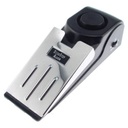
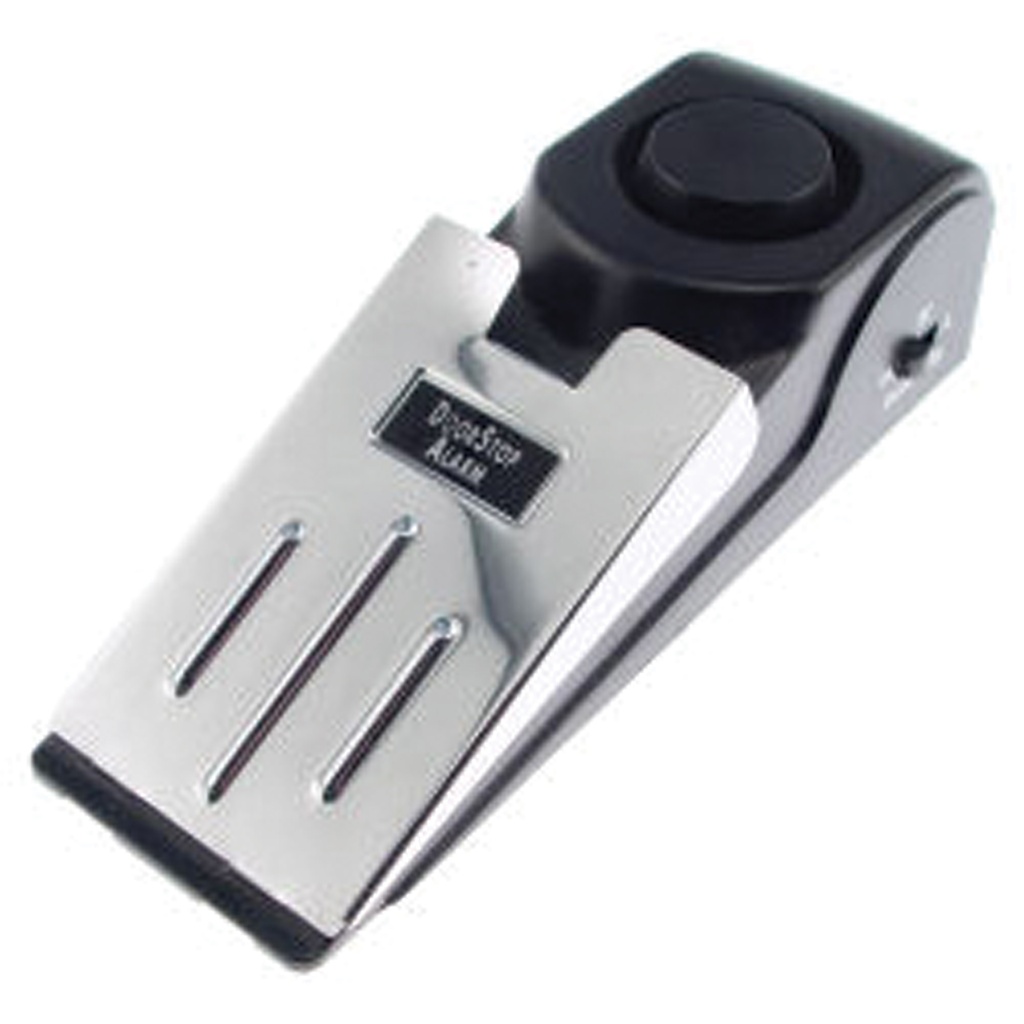
On the surface, it looks simple: a compact black and silver wedge you nudge under a hinged door. But the moment someone presses from the outside, the story changes—fast. The angled body locks itself in place as the door pushes down, the pressure trip-plate feels that force, and the siren answers with 118dB of instant, focused noise. Not a polite chime. A blast that says, in no uncertain terms, “Wrong room.”
For you, that means you don’t have to lie awake wondering if you’ll hear the handle turn. The wedge door stop alarm becomes your early warning system, buying you the seconds that matter most: time to wake, orient, shout, call, move. On a solo trip, in a dorm room, in a first-floor apartment with an iffy lock, you’re no longer trusting quiet hardware in the doorframe—you’re trusting something you can see, set, and control yourself.
The Small Ritual That Changes How You Sleep
There’s a tiny moment that starts to feel addictive: placing the wedge under the door, heel of your hand on the silver top, pressing until the rubber front kisses the base of the door. The tactile grip on the bottom tells you it’s already taking some of the load if anyone tries to push in. Flip the side switch, hear the soft click, and that’s it—the mental load of “what if?” gets outsourced to a piece of gear that doesn’t get tired and doesn’t second-guess.
Why This Wedge Door Stop Alarm Holds Its Ground When It Counts
Security gear you actually use has to be simple enough to set half-asleep and tough enough to work when you’re fully awake and scared. The wedge-shaped body here is built for one job: fight the direction a door moves. As pressure comes in, the front rubber pad bites into the floor while the top rides up under the door edge, converting force into friction. Instead of being knocked free, it digs in harder.
The black housing hides the guts—the pressure plate trigger tied to that 118dB siren at the back. That circular rear element you see isn’t just aesthetic; it’s where the alarm lets the whole hallway know something’s wrong. The silver top with its three recessed lines does more than look modern—it gives your hand a reference point in the dark so you can orient and place it by feel. Every detail is there to support one moment: when someone tries the handle and expects silence but gets a blast instead.
Built for Real Life, Not Just Product Photos
You’ll toss this wedge door stop alarm into crowded backpacks, drop it on questionable tile, shove it into dusty corners behind doors that haven’t been cleaned in months. The smooth plastic body and rubber base are made for that. The on/off switch sits on the side where you’re unlikely to hit it by accident, but easy to find when you’re running on muscle memory. This isn’t delicate tech—it’s a blunt, loud, reliable boundary line.
Carrying a Wedge Door Stop Alarm Quietly Changes How You Move Through the World
There’s a difference between hoping you’re safe and knowing you’ve taken steps to be. When a wedge door stop alarm lives in your bag, you start making different choices without even noticing it. That last-minute cheap hotel? Feels manageable. The sketchy back-facing motel room? Less of a gamble. The new apartment while you’re still waiting on proper locks from the landlord? Bearable.
Because this thing is truly travel-friendly, it doesn’t demand anything from you: no tools, no installation, no landlord permission. You place it on the floor and it’s working. In a dorm, it becomes that quiet insurance policy you set before bed and forget until someone tests your door at 3 a.m. In a rental, it’s your way of saying, “I don’t have to own this building to control this threshold.”
Moments You’ll Actually Use It
Think late-night study sessions when your dorm hall feels more chaotic than secure. Long work trips where hotels blur together and you’re tired of trusting random room assignments. Staying in a friend’s spare room while their roommates come and go. House-sitting in a place with doors that don’t quite line up with the frames. Each time, the ritual is the same: wedge, click, exhale.
When a Wedge Door Stop Alarm Becomes the Difference Between Noise and Warning
You might wonder how a small wedge compares to other personal security options. Pepper spray and personal alarms matter when someone is already too close. A wedge door stop alarm moves that line out to the threshold itself. Instead of reacting to someone in your space, you get alerted the moment they try to cross into it.
That’s the quiet power of this little device. It doesn’t replace other tools you trust—it stretches your safety perimeter. The door is no longer a thin panel you hope stays shut; it’s a tripwire connected to 118dB of very public attention. If someone is testing doors in a hallway, yours instantly becomes the one that’s more trouble than it’s worth.
Questions People Ask Before Buying a Wedge Door Stop Alarm
Will a wedge door stop alarm actually work on different floors?
Most of the time, yes. The rubber grip on the front of the wedge is designed to bite into common surfaces like tile, wood, laminate, and low-pile carpet. On very thick or plush carpeting, you may need to test placement to make sure the wedge door stop alarm sits firmly enough under the door to trigger and hold.
How loud is 118dB in real life?
It’s loud enough to be impossible to ignore. Think along the lines of a car horn or a rock concert at close range. In a hallway, hotel, or dorm, a 118dB wedge door stop alarm will cut through background noise, wake you, and draw attention from anyone nearby—which is exactly the point when someone is pushing on your door.
Is a wedge door stop alarm legal to travel with and use?
In most places, yes, because it’s a passive alarm, not a weapon. Travelers commonly pack wedge door stop alarms in checked or carry-on luggage. As always, if you’re flying or crossing borders, it’s smart to skim airline and local regulations, but this kind of non-invasive, freestanding alarm is generally treated like any other small electronic.
Will this replace locking my door?
No—and it shouldn’t. You still lock and latch every door you can. The wedge door stop alarm is there as a second, independent layer: if the lock fails, is picked, or someone with a key tries to get in, the alarm adds friction, sound, and time in your favor.
Picture your next trip: you step into a room you’ve never seen before, set down your bag, and check the lock out of habit. This time, you don’t stop there. You pull out a compact black and silver wedge, slip it under the door until it fits snug, and touch the switch. The space instantly feels less like “a room you’re borrowing” and more like “a room that answers to you.” That’s what carrying a wedge door stop alarm really buys you—not just noise when something goes wrong, but a quiet, steady sense that wherever you end up tonight, you still decide where the line is.