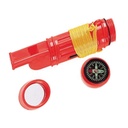
Trail Beacon 5-in-1 Survival Whistle - Red
You know that quiet moment, right before the trail bends out of sight, when you pat your chest to be sure your safety gear is actually there? That’s where this compact 5-in-1 survival whistle lives. A loud emergency whistle, compass, signal mirror, flint striker, and tiny waterproof stash ride on your neck, not buried in a pack. You feel it against your shirt, hear the cord brush your jacket, and know you’re the person who doesn’t leave the basics to chance—a prepared hiker with a survival whistle that’s always ready, even when you’re not.
You hear it before you see anything—the wind pushing through the trees, that low rushing sound that makes the trail feel farther from the parking lot than it really is. Your group spreads out, conversation fades, and there’s that familiar tug in your chest: “If something happens out here, am I actually ready?” Your hand drifts up, fingers close around the small red pod resting against your sternum, and the answer is quiet but solid. Yes. You didn’t just pack a survival whistle. You put a tiny plan around your neck.
How a Survival Whistle Becomes Your Calm-Under-Pressure Switch
In a real emergency, your voice is the first thing to go. It cracks, it dries out, it doesn’t carry. A survival whistle doesn’t need lungs, just intention. You lift it to your lips and that bright red body—impossible to lose against your jacket or the forest floor—turns a single breath into a sharp, cutting blast that travels farther than a shout ever could.
This isn’t just a noisemaker dangling on a cord. The dual-tone mouthpiece is shaped so you can blow hard even when your hands are shaking, even when you’re cold and tired, and you don’t have to line up anything delicate. You just grab, raise, and exhale. That’s the whole point: when your brain is buzzing, your gear should feel stupidly simple.
The 5-in-1 Survival Whistle That Keeps Your Basics in One Place
Most people scatter their safety gear across pockets and pouches—compass in one bag, fire starter somewhere else, maybe a mirror if they remembered. You’re choosing a 5-in-1 survival whistle because you’d rather have one small, obvious anchor than five forgotten gadgets.
Here’s how the pieces quietly earn their space:
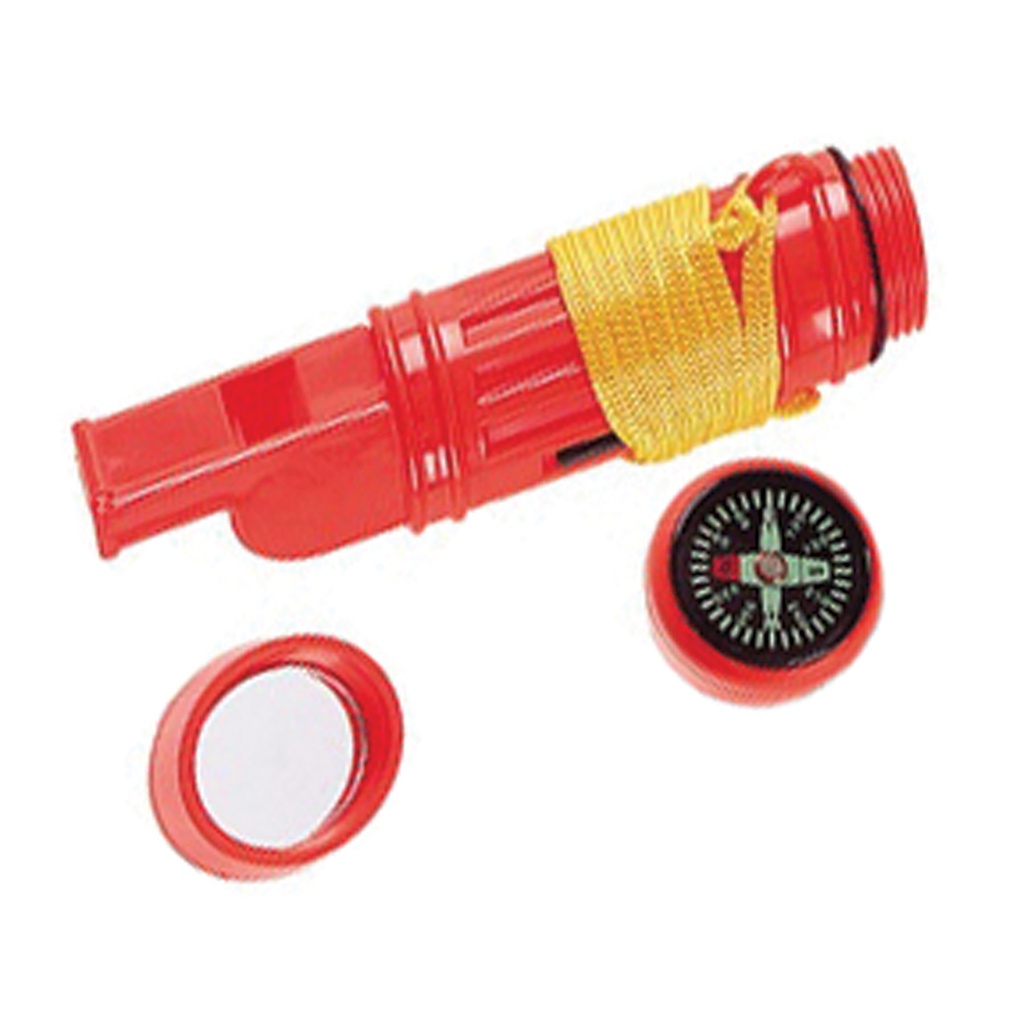
The end cap twists off to reveal a compact compass, sitting right where your thumb naturally rests. It’s not a fragile novelty glued on the side; it’s built into the cap, protected until you actually need to check your direction. Underneath, a threaded opening hides a tiny waterproof compartment with a black O-ring seal. You can tuck in matches, a sliver of tinder, a rolled note with emergency info—whatever little extra makes you breathe easier.
The separate red-framed signal mirror tucks against the cord, bright enough to flash sunlight to a distant point, small enough that it doesn’t feel like a clunky add-on. And the flint striker rides alongside your other tools, giving you an honest way to pull flame from the kind of day that would rather leave you cold.
What this means in real life: instead of packing “a kit,” you wear a habit. Every time you put this on, you’re pulling whistle, compass, signal mirror, fire-starting, and micro-storage into one small, predictable place—exactly where your hand goes when things stop being theoretical.
Neck-Ready Survival Whistle You Don’t Have to Babysit
The best survival whistle isn’t the loudest one in a drawer; it’s the one that’s actually on you when you trip off-trail, when fog crawls over the ridge, when someone doesn’t come back from the restroom at the campground. That’s why this lives on a yellow woven neck cord instead of in a pocket you’ll forget.
The high-visibility red-and-yellow combo is doing quiet work for you. Drop it in the leaves or on a rocky shore, and your eyes find it fast. Look down at your jacket, and it’s right there against the fabric—not blended in, not subtle. That bright plastic sheen isn’t about style; it’s about being able to spot your lifeline with a single glance when your heart’s racing.
The Tiny Sensations That Tell You It’s Still There
You feel the cord slide slightly when you step over a log. You hear a faint tap against your zipper when you lean forward. These aren’t annoyances; they’re reassurance. This neck-ready daily companion stays close without needing babying. No sheath to adjust. No clip to snag. Just a simple carry that works over a T-shirt on a day hike or under a shell on a cold summit push.
From Trail Wandering to Lost-But-Found: When a Survival Whistle Actually Matters
Most days, your survival whistle is just another piece of gear you don’t think about. That’s the goal. It sits there, quiet and light, while you enjoy the view, take photos, or walk a little farther than planned. But there’s always that one moment when “extra” becomes “only.”
Maybe the weather turns fast. The clouds drop, visibility shrinks, and suddenly the trail markers you were half-watching disappear. You check your phone and see the dreaded no-signal bar. That’s when your fingers go instinctively to the compass on the end cap. North and south are no longer vague ideas; they’re real, printed letters under a clear dome, giving you a direction instead of a guess.
Or maybe it’s not you. Maybe it’s the kid on the group hike who wanders off the path to investigate something shiny. There’s a long two minutes of calling their name before you hear a short, sharp whistle reply from somewhere in the trees. You call back, blow your own whistle, and follow the sound. No panic, just a clear signal path back to safety.
Fire, Light, and a Way to Say “I’m Right Here”
Imagine dusk hitting faster than you thought, the shadows stacking up, and your campsite still not in sight. The flint striker on your 5-in-1 tool isn’t a gimmick at that point; it’s your way to pull a stubborn spark into soft, growing flame. You crack steel against flint, watch that tiny shower of sparks leap, and suddenly that small waterproof compartment with dry tinder or matches feels like the smartest decision you made all week.
Now add the signal mirror: a bright flash across the treeline, a deliberate blink of light to a searcher, a friend, or a ranger across the lake. Your voice might not carry that far, but sunlight will.
When a Survival Whistle Beats a Bigger, Bulkier Kit
You’ve probably seen full survival kits packed in tin boxes or overbuilt pouches. They look serious, and they are—until you leave them in the car because they’re one more thing to juggle. A compact survival whistle setup like this trades volume for reality: it goes on in seconds and rarely comes off.
This isn’t meant to replace a full-scale backpacking kit. It’s meant to bridge the gap between “I threw on a daypack and went for a walk” and “Things just got real and I need help, direction, or fire now.” As an everyday carry safety tool, it slides into your routine: clipped to your neck on a hike, draped over a mirror in your car, tossed on a hook by the door so you snag it with your keys.
If you’ve ever asked, “What’s better in an emergency—a big survival pack or a small tool I’ll actually wear?” this answers in its own way. The best choice is the one that turns into muscle memory, not a checklist item you meant to grab.
Questions People Ask Before Buying a Survival Whistle
Is a 5-in-1 survival whistle actually useful or just a gimmick?
It comes down to what you’ll realistically carry. A multi-function survival whistle that hangs on your neck means your signaling, compass, fire-starting, and tiny waterproof stash are with you on casual walks as well as longer hikes. In real situations, the gear you have on you always beats the gear you left behind.
How loud is this survival whistle in real outdoor conditions?
The design focuses on a sharp, piercing tone rather than a low, breathy sound. In open woods or on a trail, that kind of focused blast cuts through wind and background noise better, making it easier for people or rescuers to pinpoint your location over distance.
Will the compass and waterproof compartment hold up over time?
The compass is protected in the end cap rather than exposed on the side, which helps keep it readable and less prone to damage. The threaded opening and O-ring seal of the waterproof compartment are simple by design—fewer moving parts means less to fail when you really need what’s inside to stay dry.
Is a neck carry survival whistle comfortable for everyday use?
The lightweight plastic body and woven cord are meant to disappear into your routine. You’ll feel it move when you do, but it doesn’t drag or dig in like heavy metal gear. Most people forget they’re wearing it until they reach for it—and that’s exactly how an everyday safety tool should feel.
Later, back at the trailhead, you’ll probably unclip your pack and scroll through photos while the day’s adrenaline settles. But there’s a quieter moment, usually when you’re tossing gear on the seat or the floor, when your fingers close around that red pod one more time. You remember the whistle blast echoing through the trees, the compass needle settling, the spark leaping from the flint. Owning a survival whistle like this isn’t about chasing danger; it’s about the calm that comes from knowing that when things tilt sideways, you’re the person with a signal at your lips, direction in your hand, and a plan hanging steady against your chest.