Trail Sentinel Field-Ready Hunting Knife - Black Polymer
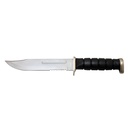
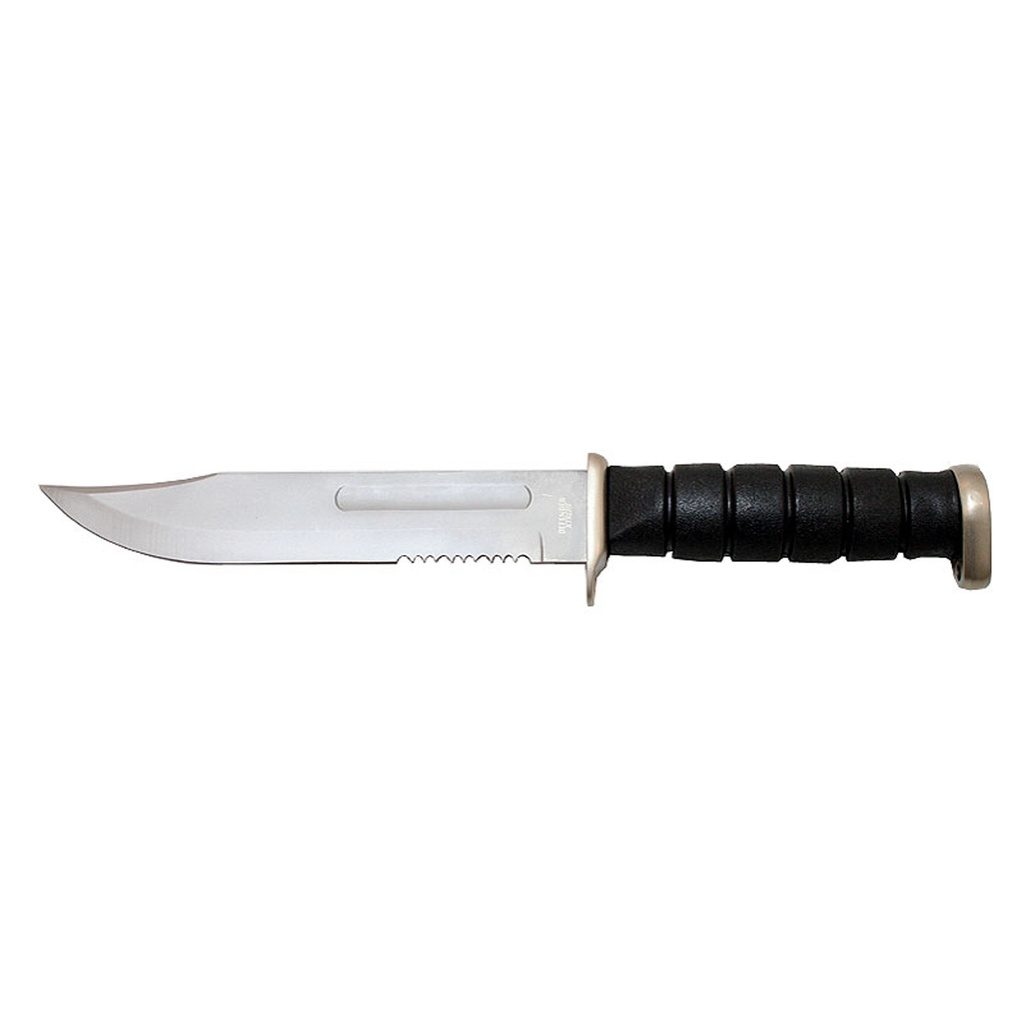
You’re out past the last trail marker when daylight starts to fade, and this hunting knife is already in your hand, not buried in your pack. The clip point blade bites clean through rope, the serrations chew through stubborn brush, and that hard plastic handle stays locked in your grip. You don’t worry about babying it; you just use it. With this hunting knife riding on your belt, you stop hoping your gear will hold up—and start knowing it will.
| Blade Length (inches) | 6.75 |
| Overall Length (inches) | 12 |
| Blade Color | Silver |
| Blade Finish | Satin |
| Blade Style | Clip Point |
| Blade Edge | Partial-Serrated |
| Blade Material | Steel |
| Handle Finish | Matte |
| Handle Material | Plastic |
| Theme | None |
| Handle Length (inches) | 5.25 |
| Tang Type | Full Tang |
| Pommel/Butt Cap | Flat pommel |
You’re a few miles from the truck when the light changes—that quiet moment where you either start wishing you’d packed better gear, or you feel that calm little click of confidence because you know exactly what’s on your belt. Your hand drops without looking, finds the ribbed black handle, and the hunting knife clears the sheath in a single, practiced pull. No fuss. No drama. Just a tool you don’t have to think about.
How a Hunting Knife Changes What You’re Capable Of
When you carry a serious hunting knife, the whole day feels different. You stop treating every task like a risk and start treating it like routine. That 12-inch overall length suddenly makes sense when you’re splitting kindling, breaking down game, or hacking through a tangle of brush that doesn’t care how expensive your jacket was. A 6.75-inch clip point blade gives you reach and control; the partial serrations near the handle turn dense rope, small branches, and tough hide into manageable work instead of stubborn problems.
This isn’t the kind of blade you bring out only for photo ops. The satin-finished steel shrugs off everyday abuse, and the geometry is built around real field jobs: a sharp point for precise work, a slight belly for slicing, and serrations for when clean edges meet dirty reality. You’re not just “carrying a knife.” You’re walking into the woods with a solution already in hand.
Why This Hunting Knife Feels Like It Can Take a Beating
There’s a quiet kind of relief that comes with gear you don’t have to baby. That’s where the full tang construction of this hunting knife comes in. The steel runs straight through the hard plastic handle, ending at the flat pommel—no hidden weak spots, no mystery joints. When you baton wood, pry open a stubborn crate, or tap the pommel to drive a tent stake, you feel the solid, one-piece integrity behind every strike.
The handle itself is unapologetically practical: ribbed, matte black plastic that doesn’t care if your hands are dirty, cold, or soaked from rain. Texturing along the sides gives your fingers something to bite into, while the guard keeps your hand from sliding forward during heavier cuts. It’s not fancy. It’s not fragile. It was clearly built by someone who assumed you’d drop it in mud, rinse it in a creek, and keep going.
The Design Detail You Notice After a Long Day
Some details only matter once you’ve used a blade for hours. The fuller cut into the blade isn’t just there for looks—it lightens the steel slightly without sacrificing strength, so the hunting knife feels more nimble than its size suggests. That means less fatigue when you’re carving, slicing, or processing wood after a full day on your feet. You feel the difference in your forearm before you ever think to name it.
Carrying a Hunting Knife That Actually Fits Your Rhythm
It’s one thing to own a hunting knife. It’s another to have one that naturally becomes part of your routine. At 12 inches overall, this isn’t a pocket toy—it’s a dedicated fixed blade that lives on your belt, in your pack, or in your truck. But the hard plastic handle keeps the weight reasonable, so it doesn’t feel like you’re hauling a slab of metal just to feel prepared.
On a normal day, you might use it to cut cord, slice open feed bags, or trim small branches around camp. On a tougher day, when weather turns or plans change, it quietly steps up into survival mode without needing a different tool. The partial-serrated edge takes over when you’re sawing through wet wood or fibrous material, while the plain edge handles food prep or cleaner cuts around game. You’re not swapping tools; you’re just shifting grip.
The Grip That Doesn't Argue With Your Hands
You notice the handle most when you’re tired. That hard plastic, shaped with subtle contours and deep ribbing, lets you lock in a hammer grip for heavy chopping or choke up closer to the guard for finer control. Even with gloves on, you can feel the orientation of the hunting knife instantly. There’s no slipping, no hot spots that make you dread using it again tomorrow. It’s built for work, not for glass display cases.
When a Fixed Hunting Knife Beats a Folding Blade
There’s a moment when even the best pocket knife starts to feel like a compromise. Maybe it’s when you’re batoning a stubborn knot and you hesitate because you don’t quite trust the pivot. Maybe it’s when you need to drive the pommel against something and realize your folding blade just isn’t built for that. That’s where a fixed hunting knife like this one quietly proves its worth.
No moving parts. No lock to fail. The full tang spine runs straight to the flat pommel, giving you permission to strike, pry, and twist in ways you’d never risk with a folder. When you’re dressing game, building shelter, or dealing with an emergency on the trail, you don’t want another decision to make—you want muscle memory. Draw, cut, done. The simplicity is the safety feature.
If you’ve ever asked yourself whether a folding knife is “enough” for the way you actually use your gear, this is the kind of hunting knife that answers that question without a speech. It just works, again and again, until you forget to doubt it.
Questions People Ask Before Buying a Hunting Knife
Is a 12-inch hunting knife too big for everyday outdoor use?
If your “everyday” means office desks and coffee runs, yes—this is more blade than you need. But if your normal includes trail miles, camp setups, hunting trips, or ranch work, a 12-inch hunting knife hits a useful sweet spot: long enough to chop and baton, compact enough to ride on a belt or in a pack without feeling ridiculous.
Will this hunting knife hold up to real abuse, not just light camp chores?
This fixed hunting knife is built with a full tang steel blade and a hard plastic handle designed for rough handling. You can baton small logs, carve, pry within reason, and use the flat pommel to tap or strike. Like any tool, it will treat you as well as you treat it—but it’s meant to live a hard life, not a delicate one.
Is a partially serrated hunting knife harder to sharpen?
The plain edge on this hunting knife sharpens like any other straight blade. The serrations do take a bit more attention, usually with a tapered or rod-style sharpener. In return, you get cutting power on tough, fibrous materials—rope, straps, wet wood—that a plain edge alone can struggle with. Many people touch up the plain edge frequently and refresh the serrations less often.
Can I use this hunting knife for self-defense if I need to?
Your hunting knife is first and foremost a field tool: cutting, carving, shelter building, and game processing. In an emergency, any strong fixed blade can become a defensive option, and this one is no exception. But its real value is in how it supports you long before anything goes wrong—by helping you stay prepared and in control outdoors.
The Moment This Hunting Knife Becomes Yours
Picture this: first trip out with it on your belt. The sun drops faster than you planned, the air snaps colder, and there’s that familiar edge of urgency as you rush to get camp settled. Your hand finds the handle without looking. Rope parts clean. Kindling splits. A stubborn branch gives way under the steady bite of steel. Ten minutes later, you’re watching the fire catch instead of fighting with dull tools in the dark.
That’s the quiet upgrade a solid hunting knife gives you. Not hype. Not heroics. Just the steady comfort of knowing that when things get rough, you’re not the one scrambling—you’re the one already doing something about it.