Trailline Survivor Utility Paracord - Khaki 550
You notice it the first time your knot holds when it matters. This 550 paracord sits in your pack like a quiet promise, ready when tarps flap, gear fails, or plans change. The khaki blends into dirt, bark, and canvas so your setup looks intentional, not improvised. You stop wondering if the line will slip, stretch, or snap. You just tie in, lean your weight on it, and get back to the moment you came outside for.
You don’t really think about your rope until the wind picks up.
One minute your tarp is a shady retreat, the next it’s snapping like a sail and you’re staring at a cheap, fuzzy cord that suddenly looks questionable. That’s the moment you wish you’d packed real survival paracord—the kind that doesn’t care if the weather turns or a knot takes your full body weight.
This is where that quiet roll of khaki 550 in your pack becomes the most important thing you brought.
When Survival Paracord Turns a Problem Into a Plan
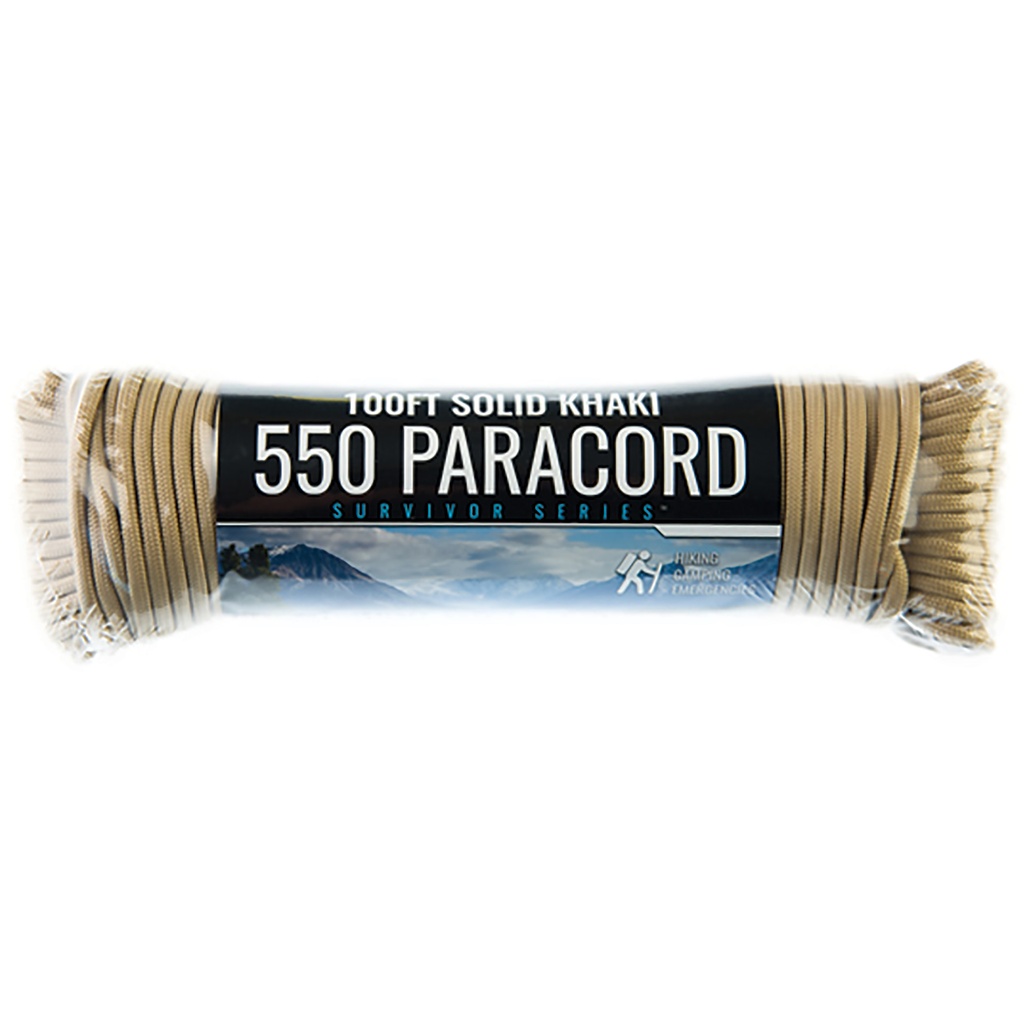
With 100 feet of survival paracord, small problems stop feeling like emergencies. A snapped guyline isn’t a crisis; it’s a quick re-tie. A broken pack strap is annoying, not trip-ending. You pull out the bundled cord—about nine inches long, just over two inches thick—and suddenly you have options instead of worries.
You feel the smooth nylon against your fingers, firm but flexible at about 5/32" thick. It knots cleanly without fighting you and cinches tight without that gritty, cheap-feeling drag. Seven inner strands sit hidden inside, ready to turn one line into many when you need finer cordage for snares, lashings, or repairs. You’re not thinking about specs; you’re thinking, “Yeah, this will hold.”
And it will. A working load of 220 pounds, a breaking strength of 660 pounds—numbers that mean when you lean on a line, hang gear off a ridge pole, or tension a ridgeline over your head, you’re trusting more than wishful thinking.
Why Real Survival Paracord Feels Different in Your Hands
You’ve probably handled paracord that felt off—too stiff, too spongy, or already fraying at the cut ends. This survival paracord tells a different story the second you uncoil it. The nylon sheathing has a subtle gloss, tight-woven so it resists snagging on bark, rock, and metal hardware. The seven-strand core sits snug inside, giving it that reassuring, round profile you can trust under tension.
The 550 rating isn’t just a badge on the label. It’s the quiet confidence behind using it for field repairs, improvised shelter builds, or emergency drag lines. You know that 220-pound working load means you can hoist a loaded pack into a tree, tension a heavy tarp in the rain, or secure a cooler on a roof rack without second-guessing every bump in the road.
And the khaki color? That’s not an accident. Against forest floor, desert sand, or the faded canvas of an old rucksack, it disappears. Your camp looks tidy, intentional, not like it’s wrapped in neon cord from a bargain bin. You get utility without visual noise—something your future self appreciates when you’re walking back into camp at dusk, trying not to trip over your own setup.
Carrying Survival Paracord So It’s There When You Need It
Gear that never leaves the garage won’t help you on the trail. This 100-foot roll of survival paracord earns its place because it’s easy to bring, easy to stash, and easy to deploy. Bundled to about nine inches by two and a half, it slides into a pack side pocket, tucks into a crate in your trunk, or rides in a drawer with the rest of your emergency kit.
Maybe you cut it down the first day you get it—two 25-foot hanks for your hiking pack and glove box, plus a 50-foot length wrapped around a water bottle or trekking pole. The nylon coils neatly; it doesn’t explode into a tangled mess the moment you take off the wrapper. Once you start integrating it into your daily carry or camping setup, you’ll wonder how you ever ran trips without a dependable everyday utility cord within reach.
The Feel of Preparedness in Small Moments
You notice the difference in tiny, forgettable moments. A shoe lace blows out on a wet trail and instead of cursing, you strip a core strand and lace back up. A zipper pull snaps on your tent, but a short loop of paracord gives your cold fingers something to grab. A dog leash fails near the parking lot, so you tie in a quick length and walk out calmly instead of herding chaos.
Preparedness stops being a big, dramatic word and becomes something simple: you had the right cord, in the right color, at the right time.
When Survival Paracord Quietly Matters Most
Most days, your survival paracord will do unglamorous work—clotheslines, tarp corners, flagging off a section of the yard. But there are days when it becomes the unsung difference between a bad situation and a controlled one.
An unexpected cold front blows in, and you’re adding guy lines to a tent that suddenly feels too small. A friend sprains an ankle, and a trekking pole plus a tight wrap of paracord turns into support good enough to limp back to the trailhead. A storm knocks out power at home, and you’re hanging lanterns and securing tarps over exposed spots before the next band of rain hits.
In those moments, you’re not wishing for more gadgets. You’re glad you chose a single, reliable cord strong enough for real work, fine enough for detailed tasks, and long enough—100 feet—to give you margin when plans fall apart.
Sensory Details That Build Trust
There’s a particular sound when good cord cinches under load—a quick, tight slide followed by silence. No creaking fibers, no gritty snag. When you pull this line through a knot and lean back, you hear that silence and realize you’re not bracing for failure. The sheath doesn’t fuzz immediately. Knots bite clean, but release when you’re ready to break camp, not three hours later with a knife in hand.
Over time, the cord weathers, softens a bit, and takes on the faint memory of pine smoke and dust. That’s when it starts feeling less like gear and more like part of your personal kit—something you reuse, repurpose, and trust because you’ve already watched it do hard things.
Questions People Ask Before Buying a Survival Paracord
Is 550 survival paracord strong enough for real outdoor use?
For most camping, hiking, and everyday emergency tasks, 550 survival paracord is more than enough. With a 220 lb working load and 660 lb breaking strength, you can confidently use it for shelter building, gear hanging, lashings, and field repairs without babying it.
How much survival paracord do I actually need to carry?
One 100-foot bundle gives you breathing room. You can cut multiple lengths for ridgelines, guylines, and repairs while still keeping extra for unknowns. Many people carry 25–50 feet in their pack and leave the rest in a vehicle or home kit so they’re covered in both daily and emergency scenarios.
What’s the point of khaki instead of bright, high-visibility cord?
Khaki survival paracord blends into natural environments and tactical setups. If you prefer a clean, low-profile camp or don’t want bright lines disrupting your field of view, khaki keeps your rigging functional without screaming for attention, while still being visible enough at close range.
Can I use survival paracord for inside strands and small repairs?
Yes. The seven inner strands of 550 survival cord can be pulled out and used for finer work—sewing a torn pack strap, reinforcing gear, or improvising fishing line in a pinch. The outer sheath still works as a lighter-duty sleeve once the core is removed.
Later, when you’re back home and unpacking, you’ll see that length of khaki survival paracord a little differently. It won’t just be a roll of line—it’ll be the reason your tarp held in that sudden gust, the stand-in shoelace that got you off the trail, the quiet backup that let you stay calm instead of scrambling. From then on, it won’t be “extra” gear. It’ll be standard—part of who you are when you step outside: the person who has more than hope holding everything together.