
Blackout Command Field-Ready Tactical Knife - Black Pakkawood
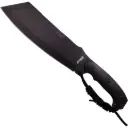
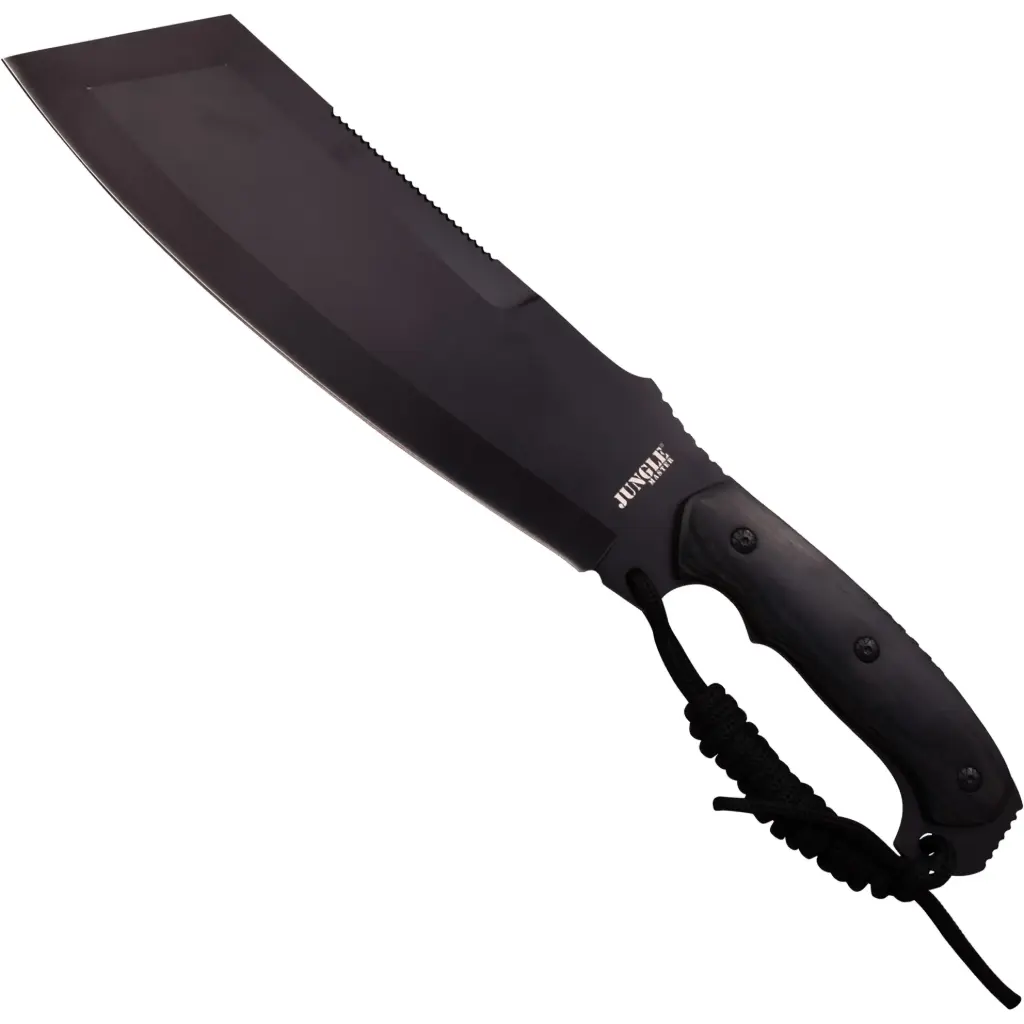
You don’t carry a tactical knife to look prepared. You carry it so when things go sideways, your hands already know what to do. The Blackout Command tactical knife sits in your gear like a quiet promise: 10 inches of blacked-out steel, full-tang confidence, pakkawood shaped to your grip, glass breaker waiting at the pommel. One tool that turns “I hope I’m ready” into “I’ve got this.”
| Blade Length (inches) | 10 |
| Blade Color | Black |
| Blade Finish | Black |
| Blade Style | Clip Point |
| Blade Edge | Plain |
| Blade Material | Stainless Steel |
| Handle Material | Pakkawood |
| Theme | None |
| Spine Thickness (inches) | 0.1375 |
| Sheath/Holster | Nylon |
You’re halfway down the trail when the light starts to go wrong. That weird gray hour when shadows get long, temperature drops fast, and the forest feels like it’s quietly testing you. A branch snaps low, your pack snags, and suddenly you’re not thinking about views or photos—you’re thinking about getting a shelter up, getting a fire started, getting out. Your hand goes to your side, and what matters in that moment isn’t how a knife looked on a website. What matters is that your tactical knife feels solid, predictable, and brutally simple in your palm.
This is where a blackout, full-tang tactical knife stops being gear and starts being the thing you quietly trust more than the weather app.
How a Tactical Knife Changes the Moment You’re In
A tactical knife doesn’t ask for attention. It’s the tool you forget about until you need it—then it becomes the only thing that matters for a beat. With a 10-inch black stainless blade, this one gives you reach and authority in your hand. You’re not fumbling with a folding mechanism, hoping the lock holds. You’re already cutting cord for a tarp line, batoning through wrist-thick wood, or clearing brush with sweeping, confident chops.
The clip-point profile earns its keep the first time you need precision at the tip: opening a stubborn package without wrecking what’s inside, making a clean notch in a branch, or sliding the point exactly where you want it on a stubborn cut. That’s the quiet promise of a real tactical knife—you stop worrying about what it can handle, because you’ve already seen it do more than you expected.
Why This Tactical Knife Feels Like It Was Built for Your Hand
There’s a reason this blade doesn’t feel like a cheap wall-hanger the second you pick it up. The steel runs full tang from tip to glass-breaker pommel, a solid black spine you can track with your eyes and feel with your thumb along the jimping. That thickness—about an eighth of an inch across the spine—means when you drive the blade into something and twist, you’re not wondering if you’re about to snap it. You’re just doing the work.
The handle is where the design really clicks into place. Black pakkawood scales wrap the tang, contoured with finger grooves that lock your grip without forcing it. Pakkawood has that strange, satisfying balance between organic warmth and engineered stability: it feels like wood, but behaves like something that doesn’t care about a bit of rain, sweat, or cold. When your palms are damp, those grooves and the gentle swell of the handle keep the tactical knife where it belongs—anchored in your hand, not sliding around while you try to control a cut.
The feel of confidence in your grip
Imagine driving the blade down through stubborn, knotty kindling. You choke up, thumb resting against the jimping on the spine, feeling the bite of the texture under your skin. The pakkawood doesn’t flex, the tang doesn’t complain, and you get that small, private satisfaction of a tool doing exactly what you asked of it.
Carrying a Tactical Knife That’s Built for Real Use
Some knives live in drawers. A real tactical knife lives where you can reach it without thinking. This one rides in a nylon sheath, ready to lash to a pack strap, belt, or vest. Lightweight enough that you don’t resent the weight, substantial enough that when you grab it by the handle, it feels like you’re about to make progress on whatever problem is in front of you.
The blacked-out blade doesn’t glare in the sun or flash in headlights. That matters more than you think—on a night hike, during a roadside emergency, or while working quietly around camp, you’re not broadcasting what’s in your hand. You’re just getting things done. The paracord lanyard at the pommel gives you options: wrap it around your wrist for heavy chopping, hook it to a carabiner when you’re swapping tools, or use it as a quick-grab tail when you’re reaching into gear in the dark.
Small details that matter when it’s not a drill
At the base of the handle, the pommel comes to a focused point—a built-in glass breaker that you hope you never need but feel better having. Picture a rolled truck window, a locked door, or even just a stuck crate. One sharp, committed strike with that pommel tip and you’re through. It’s the kind of feature that feels like overkill, right up until the day it doesn’t.
When a Tactical Knife Becomes Your Go-To Problem Solver
There’s a moment with any serious gear where you realize it’s graduated from “cool new thing” to “trusted default.” With a tactical knife like this, that moment might look like:
— Cutting heavy nylon straps in the dark because your hands are too cold for finesse.
— Clearing a quick path through stubborn brush to get your group back on the trail.
— Using the flat of the blade to baton through damp logs so you can reach dry heartwood and get a fire going.
— Breaking a stuck car window in a roadside emergency when seconds are louder than your heartbeat.
In each of those scenes, you’re not thinking about specs or finishes. You’re thinking, "I’m glad I’ve got this." That’s what a well-designed tactical knife really buys you: not bragging rights, but quiet readiness. You stop improvising with tools that weren’t made for the job, and start handling chaos with something that was.
Questions People Ask Before Buying a Tactical Knife
Is a big tactical knife actually practical for everyday carry?
If your everyday life is mostly office and errands, a huge tactical knife might feel like overkill in your pocket. But on a pack, in a truck, or as part of your go-bag, a full-size tactical knife shines. You get chopping power, reach, and resilience that smaller everyday carry blades can’t offer, making it a smart choice for camping, roadside emergencies, and home preparedness.
Will this tactical knife hold up to hard outdoor use?
The full-tang stainless steel construction and solid spine thickness are built for abuse: chopping, prying, batoning, and repetitive camp tasks. Stainless steel shrugs off moisture better than high-carbon options, and the pakkawood handle resists swelling or warping in changing weather, so your tactical knife stays dependable across seasons instead of becoming a “fair weather only” tool.
Is it legal to carry a tactical knife like this?
Knife laws vary wildly by state, city, and even specific locations like schools or government buildings. A large fixed-blade tactical knife is usually treated differently than a small pocket folder, so it’s important to check your local regulations on blade length and carry style. Many people keep a tactical knife like this in a vehicle kit or camping gear instead of on-body carry for that reason.
How does a tactical knife compare to a survival knife?
There’s a lot of overlap. A tactical knife leans into fast deployment, control, and defensive capability, while a survival knife focuses on camp chores and long-term field use. This design threads the needle: the blackout aesthetics and glass breaker speak tactical, while the long clip-point blade, full tang, and pakkawood grip give you the chopping and carving confidence you’d want from a survival blade.
Who You Become the First Time You Trust This Tactical Knife
Picture the first real test. Maybe it’s not dramatic—just a cold evening at camp when the cheap hatchet is chewing and bouncing off damp wood. You pull the knife, set the spine on the log, and tap it through with another piece of wood. The blade bites, splits, and suddenly you’ve got dry kindling instead of frustration. Or maybe it’s a late-night road stop where broken glass and bent metal become a puzzle you actually know how to solve.
In that moment, the tactical knife in your hand stops being an accessory and starts being part of your identity. You’re not the person hoping someone else shows up with the right gear. You’re the one who came ready, quietly, without a lot of talk. The blackout steel, the solid pakkawood, the full tang running through your grip—they’re just the physical proof of a decision you’ve already made: when things get real, you’d rather be the calm one holding a tool you trust.
After that, clipping this tactical knife to your pack or sliding it into its sheath before you head out won’t feel like a big gesture. It’ll feel like buckling a seatbelt. Simple. Automatic. Just part of who you are now.