Blackout Sentinel Rigid Hinged Handcuffs - Black Steel
There’s a moment when conversation stops working and you have to take control—cleanly, confidently, without drama. That’s when a pair of blackout hinged handcuffs in your hand says what words can’t. The cold weight in your palm, the rigid hinge locking wrists where you set them, the quiet click of a double-lock engaged. You’re not guessing, you’re not hoping they hold. You’re the steady one in the chaos, moving on to the next call because your restraints did exactly what you needed.
You’ve been here before—the tension is high, voices are up, and everyone is looking for who’s actually in control. Your heart rate spikes, but your hands know exactly where to go. You reach back, feel the cold, familiar weight of your hinged handcuffs, and something in you settles. This isn’t about force. It’s about certainty. One clean move, one smooth click, and the moment shifts from chaos to custody.
When Hinged Handcuffs Turn A Risky Moment Into A Controlled One
If you’ve ever watched a subject twist and roll like their life depends on slipping a cuff, you know the difference between cartoon restraints and real control. With hinged handcuffs, that first snap around the wrist doesn’t just close—it anchors. The rigid center gives you leverage; it turns flailing into something you can manage. You feel the hinge resist their movement, keeping their hands exactly where you put them, not where they want them.
This is where the blackout steel matters. Under streetlights, in a crowded hallway, or inside a dim transport van, these cuffs don’t flash or draw attention. They just look like part of your uniform—quiet, serious, and ready. NIJ approval isn’t a logo; it’s the reassurance that when you cinch them down, they’re going to stay closed, hold true, and back you up when the report needs to match what happened.
Why Blackout Steel Hinged Handcuffs Change How You Move
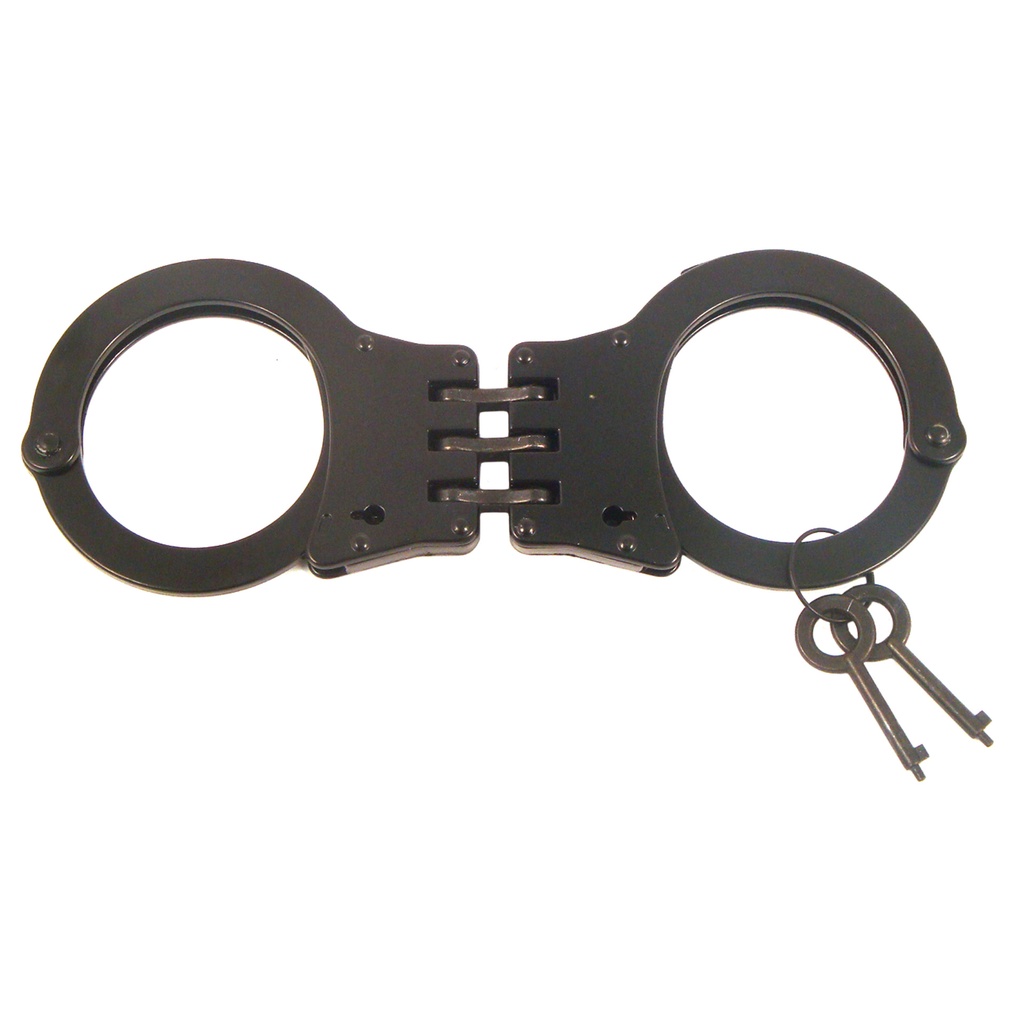
The first time you carry true hinged handcuffs in blackout steel, you notice it before you even put them on your belt. Ten ounces of solid stainless in your hand, no rattling play, no cheap flex—just a dense, balanced weight that tells you these aren’t novelty cuffs. The triple hinge is tight and deliberate. Each plate is low-profile, so nothing catches on clothing, gear, or seatbelts.
Then you notice the finish. A deep, tactical black that doesn’t scream for attention, but also doesn’t chip at the first sign of a concrete floor. This blackout surface lets the cuffs disappear against a dark uniform, a duty vest, or nighttime surroundings. You aren’t advertising power; you’re carrying it quietly.
The double-lock mechanism is where the design really clicks. You close the bracelet around a wrist, feel the pawl engage, and with a simple key press you set the double-lock. That means no over-tightening, no creeping down on the wrist mid-transport, and far fewer complaints when the adrenaline wears off and someone starts to notice the pressure. You’re not just restraining; you’re managing risk—for you, for them, and for whatever comes after the incident report.
The Feel Of Gear You Don’t Have To Second-Guess
What you want from duty restraints is simple: no surprises. The swing arm on each cuff moves with a smooth, confident arc—no grinding, no stutter. The hinge doesn’t wobble, and when you fold them to re-holster, they collapse into a compact, predictable shape that fits your muscle memory after a few shifts. You stop thinking about "if" they’ll work and start focusing fully on "how" you’ll use them.
Carrying Hinged Handcuffs In Real Life, Not Just On Paper
Off a spec sheet, hinged handcuffs sound like hardware. On your belt, they become part of how you move. Walking a perimeter at 3 a.m., escorting someone down a narrow stairwell, loading into the back seat of a patrol car—every one of those moments feels different when you know your restraints won’t fold under pressure or let a subject worm their hands under their legs.
The rigid center section gives you control without the awkward, extended chain dangling between wrists. When you guide someone by the cuffs, that short hinge gives you a direct line of influence—you can adjust their posture, keep them off-balance if needed, and reduce those sudden lunges you’ve learned to anticipate. For security and transport work, that means fewer hands on, fewer chances for a scuffle, and a clearer boundary between you and them.
The two included keys live where you want them—on a vest loop, in a uniform pocket, on your keyring—because losing a key mid-shift isn’t an option. When backup arrives or a partner needs to release the cuffs, everyone’s working with a standard keyway and a familiar motion. In the hallway, in the sally port, or at the booking desk, you’re not hunting for special tools; you’re already moving to the next step.
Moments You’ll Notice The Difference
You’ll feel it the first time a combative subject tries to spin out and the hinge holds their wrists square. You’ll notice it when you double-lock in a moving vehicle and don’t have to recheck every few minutes. You’ll appreciate it when a supervisor glances at your gear and sees NIJ-approved blackout cuffs that match your professional standards, not something that looks like it came from a bargain bin.
When Hinged Handcuffs Are The Safer Choice
There are nights when chain cuffs might be enough—and nights when you know they won’t be. Hinged handcuffs change the calculus when you’re dealing with higher-risk subjects, tighter environments, or limited backup. That added rigidity doesn’t just control the wrists; it reduces the acrobatics. It’s harder for someone to twist, thread their feet through, or turn the restraints into leverage against you.
If you work patrol, you already know how fast a "routine" call can turn. Security teams, especially in crowded venues, need to move people out of volatile spaces quickly, cleanly, and with as little spectacle as possible. Transport teams need consistency: once someone is restrained, they stay restrained from door to door. In all those moments, hinged restraints offer a quieter kind of safety—for your joints, for your reports, and for the people watching with phones in their hands.
And the blackout finish isn’t just about looking tactical. It keeps the focus where it belongs: on your words, your commands, your presence. The gear fades into the background, doing its job without stealing the scene.
Questions People Ask Before Buying Hinged Handcuffs
Are hinged handcuffs better than chain handcuffs for control?
For pure control, hinged handcuffs usually win. The rigid hinge limits wrist rotation and gives you more leverage when guiding or restraining someone. Chain cuffs offer more flexibility and comfort during longer wear, but when you’re prioritizing officer safety and minimizing subject movement, hinged cuffs typically feel more secure.
Do blackout hinged handcuffs hold up to daily duty use?
Yes—blackout steel hinged handcuffs made from stainless are built for repeated use, not display. The finish is designed to resist chipping and surface wear, and the solid hinge design holds alignment through countless applications. You’ll still see honest wear over time, but it’s the kind that says "worked hard," not "failed under pressure."
Are hinged handcuffs harder to double-lock under stress?
They can actually make it easier. With rigid hinged handcuffs, the wrists stay in a consistent position, so the keyholes are more predictable when you reach in to set the double-lock. Once you develop the muscle memory, you’ll likely find you can double-lock faster and more confidently, even in cramped or moving environments.
Can civilians or security personnel legally carry hinged handcuffs?
In many places, private security and civilians can legally own and carry hinged handcuffs, but local laws vary. Some jurisdictions restrict their use or require licensing for professional security work. It’s always smart to check your local regulations and, if you’re on a security team, follow your company’s policies before adding them to your carry.
End of shift. You’re back in the locker room, gear laid out on the bench. Your blackout hinged handcuffs sit there, quiet and unassuming, still carrying the slight warmth from the last call. They didn’t need to draw attention or make a statement. They just did their job—held firm when someone fought, stayed locked when the ride got rough, released clean when it was time. As you holster them again for tomorrow, you’re not thinking about whether they’ll hold up. You’re thinking about how it feels to walk into the next unknown already knowing you have real control in your hand.