Ceremonial Resolve Hand-Forged Samurai Sword - Black 1045 Steel
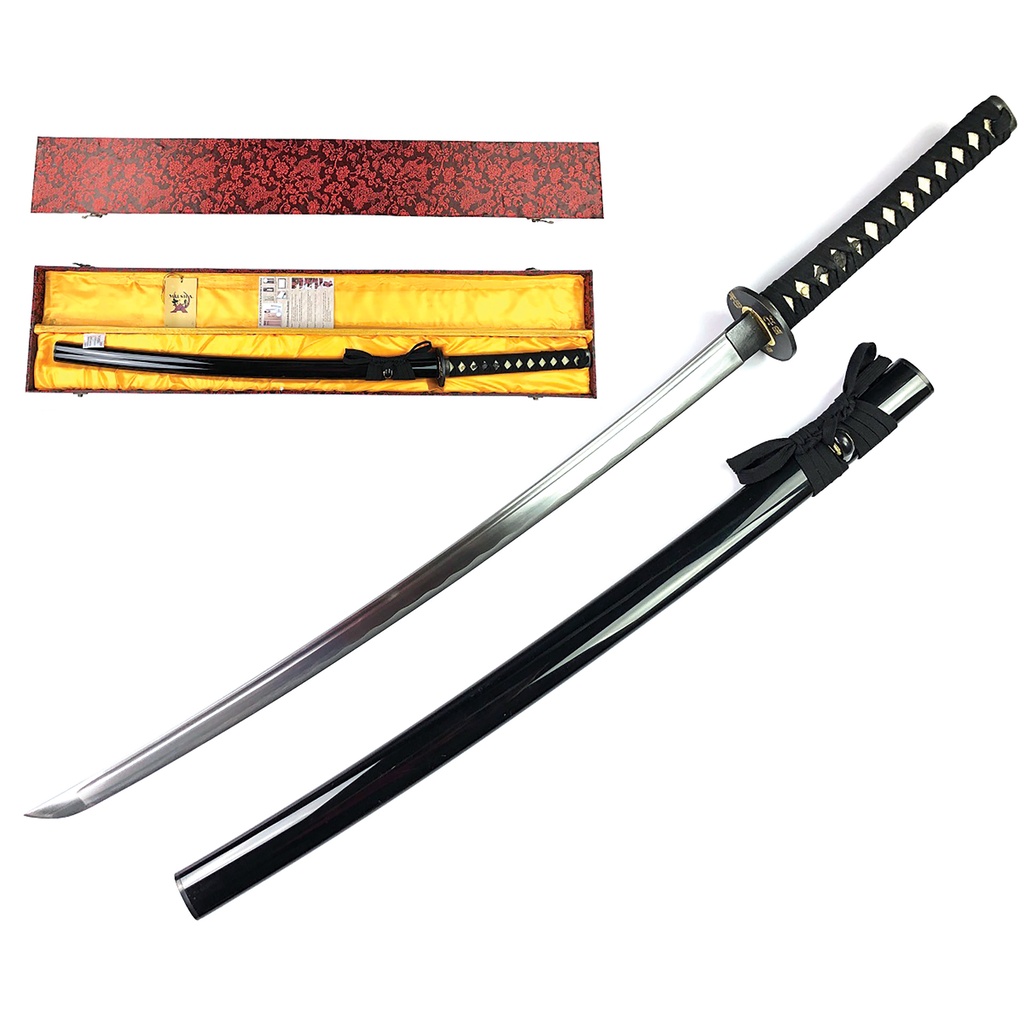
You don’t add a samurai sword to your life by accident. You choose a hand-forged samurai sword because part of you respects discipline, ritual, and steel that means something. This 41" blade arrives sharp, full-tang, and sheathed in a black scabbard inside a red-and-gold gift box that feels like ceremony in your hands. You feel the weight, hear the blade clear the saya, and realize: this isn’t décor. It’s a promise to carry yourself with more intent.
You don’t pick up a samurai sword on a casual day. You reach for one when some part of you is ready to take things more seriously—your space, your training, your story. You slide open the red gift box, see the black scabbard resting in yellow satin, and feel that quiet jolt in your chest: this isn’t a toy. This is a hand-forged samurai sword that asks you to show up a little more like the person you’ve been imagining.
Why This Hand-Forged Samurai Sword Feels Different the Moment You Draw It
The first time you draw this hand-forged samurai sword, you notice the sound before the shine. That soft, clean hiss as the 41-inch blade leaves the black scabbard tells you more than any spec sheet ever could. Full-tang construction, 1045 high carbon steel, a true katana curve—those matter. But what you feel is control.
Your lead hand finds the black cord wrap, fingers settling into the familiar diamond pattern. There’s texture, not slickness. The sword balances in front of you, not fighting your grip or dragging your wrist down. That’s the Bo-Hi at work—the long groove running the blade. People call it a blood groove, but what it really does for you is lighten the samurai sword, so your cuts feel smoother and changes in direction don’t punish your joints.
If you practice, this matters. Less weight along the spine means your swing stays precise, not sloppy, even as you repeat a kata for the tenth time. If you display, it matters too—because you’ll find yourself drawing and sheathing this samurai sword more often than you admit, just to feel that balance in your hands.
How a 1045 High Carbon Steel Samurai Sword Changes Your Sense of Quality
You’ve seen wall-hanger blades before. They look the part until you get close—loose handles, mystery metal, edges that feel like kitchen butter knives. This hand-forged samurai sword is different because of what happens when steel meets intent.
1045 high carbon steel isn’t a marketing phrase; it’s a real-world balance between hardness, resilience, and practicality. For you, that means a samurai sword that arrives sharp right out of the box and is tough enough for light to moderate cutting practice, form work, or kata without feeling fragile. The blade’s polished silver finish catches light in a way that shows its line, not its flaws. You can trace the curve with your eye and see a weapon built for motion, not for a shelf alone.
Full-tang construction means the steel runs through the entire handle, hidden beneath the black cord and ivory underlay. You may never see that tang, but you feel it—no hollow flex, no unsettling rattle, just a solid line from tsuba to tip. When you cut through a mat or even just move through an empty swing in the backyard, your hands receive feedback you can trust.
The Small Details You Notice When You Live With It
The round tsuba doesn’t scream for attention, but it does its quiet job every time your lead hand nudges against it, reminding you where your grip should land. The black lacquered wood scabbard slides into its place in the gift box each time you put the sword away, becoming part of a daily or weekly ritual instead of a random object on a hook. These are little things, until they aren’t.
The Gift-Boxed Samurai Sword That Turns Unboxing Into a Ceremony
Most gifts are opened and forgotten. A gift-boxed samurai sword like this becomes a moment people remember in detail years later. You slide off the lid and that red-and-black patterned box opens to a burst of yellow satin. The black scabbard, the dark fittings, and the polished blade feel staged, but not staged for social media—for you.
If you’re giving this as a samurai sword gift, you’re not handing someone another gadget. You’re handing them a ritual. They’ll untie the sageo cord, draw the blade, and feel that split-second of respectful silence you can’t fake. If you’re keeping it for yourself, the gift box does more than store the sword—it sets the tone. Every time you open it, you’re reminded that this isn’t some impulse buy; it’s a piece you chose because you wanted your space, or your practice, to carry more meaning.
Display, Practice, or Both—You Decide the Story
Maybe this samurai sword anchors a display above your desk, pointed toward the door as a quiet promise to yourself about focus and resolve. Maybe it lives near your training area, where you work through cuts and footwork, feeling the Bo-Hi channel air and hearing that distinct whoosh. Either way, the gift box, the scabbard, and the included documentation turn ownership into something you return to, not just something you bought.
Living With a Samurai Sword: Comfort, Control, and Everyday Presence
Owning a samurai sword isn’t about swinging it wildly once and then forgetting it in a corner. It’s about how it fits into your real life. At 41 inches overall, this katana has presence, but it doesn’t feel unmanageable. When you practice, the lighter weight from the Bo-Hi reduces fatigue, especially if you’re still building strength or coming back from a break. Your grip stays steady, your shoulders don’t burn out as quickly, and you can focus on form instead of just hanging on.
The black cord-wrapped handle gives you tactile feedback. No slipping, no over-slick faux leather—just a firm, traditional tsuka-ito wrap with ivory diamonds showing beneath. That contrast isn’t just visual; your fingertips find those small ridges as reference points, so your grip lands in the same place every time. Over weeks, that consistency builds muscle memory, and your movements start to feel smoother, more deliberate.
Even when the samurai sword is resting in its black scabbard inside the red gift box, it changes how your space feels. Maybe it sits on a shelf that used to hold random clutter; now that spot looks intentional. You don’t have to be a practitioner or a collector to feel it. Just knowing that there’s a hand-forged blade in the room—a tool forged from 1045 high carbon steel, sharpened, balanced, and ready—adds a quiet kind of confidence to your environment.
When a Hand-Forged Samurai Sword Becomes More Than Decoration
There’s a moment, often unexpected, when this hand-forged samurai sword stops feeling like “a cool thing you bought” and starts feeling like a marker in your own story. Maybe it’s the first time you manage a clean, controlled cut in the yard. Maybe it’s a slow morning when you open the gift box just to hold the handle and breathe for a second before the day hits. Maybe it’s when a friend notices it and asks, “Why a samurai sword?” and you realize you have a real answer.
This isn’t about pretending to be a warrior from another time. It’s about borrowing their focus. The Musha collection vibe runs through this blade: forged with enough honesty to be used, presented with enough respect to be displayed. You don’t have to swing it every day to feel the difference; just knowing it’s there, sharp and ready, changes the way you see yourself in the room.
Questions People Ask Before Buying a Hand-Forged Samurai Sword
Is this hand-forged samurai sword actually functional or just decorative?
This hand-forged samurai sword is built to be functional, not just a display piece. The full-tang 1045 high carbon steel blade comes sharp and balanced with a Bo-Hi to reduce weight, making it suitable for light cutting practice, kata, and training, as well as display.
What can I realistically do with a 1045 high carbon steel samurai sword?
With 1045 high carbon steel, you get a practical balance of durability and maintainability. You can use this samurai sword for form work, light target cutting, and handling practice while still having a blade that looks clean and polished for display in its black scabbard and gift box.
Is it safe to own and display a samurai sword at home?
Owning a samurai sword at home is generally legal in many areas, but you should always check your local laws. From a safety standpoint, keeping the blade sheathed in the scabbard, stored in its gift box, and out of reach of unsupervised children turns it into a respected object instead of a risk.
How do I care for a hand-forged samurai sword so it doesn’t rust?
Carbon steel needs a bit of attention, but nothing complicated. Wipe the blade clean after handling, apply a light coat of oil if it will be stored for a while, and keep your samurai sword in a dry place. That minimal care preserves the polished finish and keeps the edge ready.
At some point, you close the red gift box, set it back on the shelf, and catch your reflection in the gloss of the black scabbard. You’re not just someone who owns a hand-forged samurai sword now—you’re someone who chooses symbols with weight behind them. The 41-inch blade, the full-tang 1045 high carbon steel, the Bo-Hi humming through the air when you move—it all adds up to one quiet truth: you didn’t buy décor. You brought a story into your space, and you’re the one who decides what it means from here.