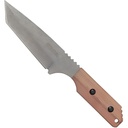
Frontier Timber Piercing Tanto Fixed Blade Knife - Wood Handle
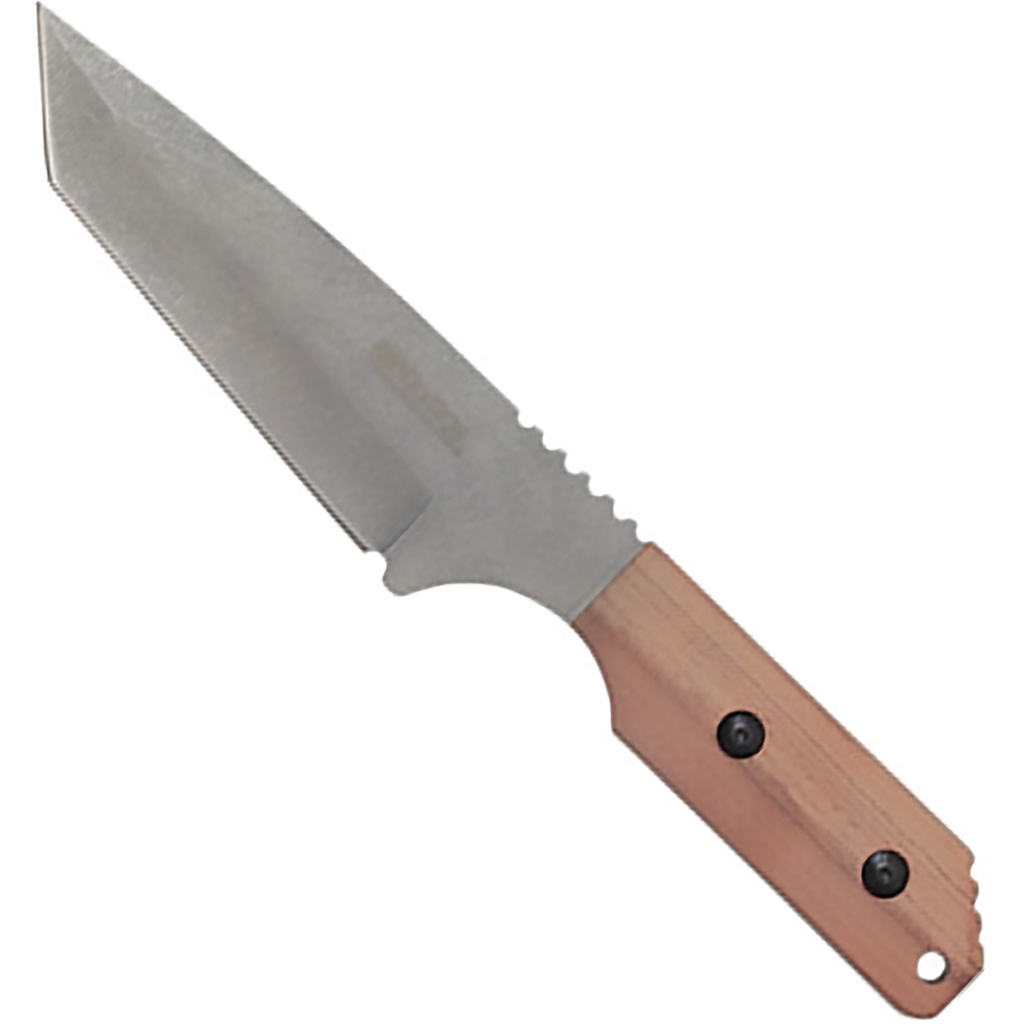
You’re at the edge of camp when the day throws you a problem—tight cordage, stubborn branch, a job that needs a steady hand. Your tactical fixed blade knife is already in your palm, wood warm against your skin, matte steel catching first light. The American tanto tip bites clean, the full tang stays sure. No drama, no fuss—just a daily carry field blade that lets you handle campsite work like you’ve been doing it for years.
| Blade Length (inches) | 6 |
| Overall Length (inches) | 10 |
| Blade Color | Silver |
| Blade Finish | Matte |
| Blade Style | American Tanto |
| Blade Edge | Plain |
| Blade Material | Stainless Steel |
| Handle Finish | Matte |
| Handle Material | Wood |
| Theme | None |
| Handle Length (inches) | 4 |
| Tang Type | Full Tang |
| Pommel/Butt Cap | Lanyard Hole |
| Carry Method | Sheath Carry |
| Sheath/Holster | Nylon Sheath |
Dawn slips through the trees, and you’re already moving. Coffee cooling on a stump, tarp line sagging, firewood needing to be split down. Nobody has to ask who’s got a real blade on them—you’re already thumbing the wood handle of your tactical fixed blade knife, feeling that calm click in. Whatever today throws at you, you know you’ve got steel in your hand that can actually do the work.
Why a Tactical Fixed Blade Knife Belongs in Your Everyday Kit
If you’ve carried folders your whole life, the first time you run a true tactical fixed blade knife on the trail, something shifts. There’s no hinge to baby, no lock to worry about, no grit grinding in the pivot. Just a solid, full-tang piece of stainless steel running from tip to pommel, wrapped in smooth wood that settles into your grip like it’s been there for years.
This one gives you a six-inch American tanto blade—matte silver, straight-edged, and cut to pierce. That angular tip isn’t about looking aggressive; it’s about punching through stubborn material without slipping. Cutting cordage, opening heavy plastic, notching stakes, or scraping bark for tinder—you feel the control instantly. At about ten inches overall, it rides that sweet spot: big enough for camp work, small enough that it doesn’t feel like overkill on your belt.
How This Tactical Fixed Blade Knife Earns Its Place on Your Belt
You know the difference between gear you bring "just in case" and gear that actually earns carry space. This tactical fixed blade knife lives in the second category. The full-tang stainless steel gives you confidence when you lean into it—splitting kindling by batoning the spine, twisting through stubborn knots, or digging out a quick notch in a green branch. There’s no flex, no weird rattle, just solid, honest resistance from blade to butt.
The handle is where you feel the thought that went into it. Natural wood scales are pinned down with black hardware, shaped into a gentle swell that locks into your palm. Your index finger settles into the choil at the guard, your thumb finds the jimping along the spine, and suddenly the knife isn’t a thing you’re holding—it’s a direction your hand is pointing. You’re not fighting the grip, you’re just working.
The Quiet Confidence of Wood and Steel
There’s something grounding about a wood handle in a world full of neon plastics and tactical drama. The grain under your fingers feels familiar, almost old-world, but the blade profile is all modern purpose. That American tanto shape gives you a reinforced tip for controlled piercing and a long, straight edge for slicing. It’s a field knife that looks at home next to a campfire, lashed to a pack, or sitting quietly by the back door.
Carrying a Tactical Fixed Blade Knife in Real Life, Not Just in Theory
On paper, you can make anything sound like the ultimate survival tool. In real life, you care about simpler things: does it ride comfortably, does it draw cleanly, and does it actually get used—daily carry, not just "someday" gear. This tactical fixed blade knife slides into its black nylon sheath and just disappears along your hip. No huge tactical billboard, no overbuilt plastic, just a low-profile sheath that stays put and lets you move.
Walking through camp, bending to grab firewood, climbing up into a truck bed—you’re not constantly checking to see if the sheath has shifted or the knife is digging into your side. The draw is simple: hand down, fingers find the handle swell, thumb pushes against the sheath mouth, blade clears. That simplicity means you actually use it for the small stuff: opening feed bags, trimming rope, shaping a marshmallow stick for a kid who suddenly trusts you with every little emergency.
From Camp Knife to Quiet Everyday Backup
Even when you’re not deep in the woods, this becomes the blade that lives close. Hanging by the back door for garden work, tossed in the truck as a go-to utility cutter, lashed to a pack as your trail backup. The lanyard hole at the pommel lets you add a bit of paracord so you can grab it blind out of a bag or hang it where you’ll actually remember to take it. Over time, the wood darkens, little scars appear in the grain, and the knife starts telling your story back to you.
When a Tactical Fixed Blade Knife Beats a Folder Without Trying
You’ve probably asked yourself the question at some point: do you really need a tactical fixed blade knife when a decent folding knife rides easier in the pocket? The answer shows up the first time the work gets rough. Heavy cutting, twisting, prying, batoning—it’s the kind of abuse you hesitate to give a folder, even a good one, because deep down you know that pivot and lock weren’t built for every kind of punishment.
Here, the blade is the handle. That full-tang construction means no moving parts to fail, no spring to gum up, no lock to slip. Stainless steel shrugs off moisture, a quick wipe keeps the matte finish honest, and you’re back in business. Around camp, a fixed blade becomes the tool you automatically reach for when the job is messy, wet, or a little bit unknown. You don’t baby it, and you don’t have to.
Sensory Moments You Start to Count On
You’ll notice small, specific things over time. That clean, almost muted sound when the blade draws from nylon. The way the matte silver edge catches just enough light to line up a precise cut, but never flashes loud. The feel of jimping biting gently into your thumb when you’re bearing down on a stubborn cut. These details aren’t specs on a product page—they’re the reasons this becomes your default field knife without you ever making a big decision about it.
Questions People Ask Before Buying a Tactical Fixed Blade Knife
Is a tactical fixed blade knife practical for everyday carry, or just camping?
If you’re willing to wear a sheath on your belt or keep a blade in your truck, a tactical fixed blade knife is absolutely practical beyond camping. You get faster access, more strength, and less to go wrong. Many people keep it as a dedicated work or field knife, while still carrying a small folder in-pocket for light urban use.
What makes this better than a folding knife for outdoor use?
For outdoor work, a tactical fixed blade knife wins on simplicity and strength. Full-tang construction means no moving parts, so heavy cuts, batoning, and twisting loads are less likely to cause failure. You also get a consistent grip and immediate deployment—no fumbling with a thumb stud when your hands are cold, wet, or gloved.
Will the stainless steel blade and wood handle hold up in bad weather?
The stainless steel blade on this tactical fixed blade knife resists rust far better than carbon steel, especially with basic care: a wipe-down and the occasional light oil. The wood handle will pick up character over time, but that’s part of the appeal. Treat it once in a while with a bit of oil and it will handle rain, morning dew, and camp life without complaint.
Is an American tanto blade good for more than piercing tasks?
Yes. While the American tanto tip is excellent for piercing and controlled entry cuts, the straight main edge still slices cordage, food, and wood cleanly. Many people like a tanto-style tactical fixed blade knife because the reinforced tip holds up well when other blade shapes would chip or roll under rough use.
Later, when the fire is down to coals and camp has gone quiet, you’ll feel the weight of the day in your muscles and the weight of the blade at your side. Your tactical fixed blade knife is back in its nylon sheath, handle warm from your hand, a faint trace of woodsmoke and sap on the edge. You weren’t just the person who "had a knife"—you were the one who made things easier, faster, safer. That’s who this kind of blade turns you into: the quiet constant in the background, steady as wood and steel, ready without saying a word.