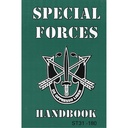
Green Beret Crest Special Forces Survival Guide - Olive Cover
You don’t grab this special forces survival guide to look tactical. You carry it because you like knowing that when plans fall apart, you don’t. The olive cover disappears into your pack; the Green Beret crest quietly reminds you this playbook was born from real operations, not armchair theory. In your hands it feels like a calm voice over your shoulder—survival basics, first aid, comms, unconventional tactics—laid out so you can act, not freeze. You’re not hoping things go right anymore. You’re ready when they don’t.
The weather turned faster than the forecast. One minute you’re following a familiar trail; the next, wind is cutting sideways and your phone drops from three bars to none. That small, olive-covered book in your pack isn’t there to impress anyone. It’s there for this exact moment—when you’d rather reach for a special forces survival guide than rely on guesswork and half-remembered YouTube tips.
How a Special Forces Survival Guide Changes What You Do Next
Owning a special forces survival guide isn’t about playing commando. It’s about what happens in the space between “this might be bad” and “here’s my plan.” With this handbook, that gap shrinks. You flip to the survival section and the steps are right there—shelter priorities, fire in ugly weather, water when the obvious sources are gone. No fluff, no macho hype, just clear, field-tested instructions you can follow even when your hands are shaking.
You start to notice something: your breathing slows as you read. That’s what this compact military survival guide really does—it gives your brain a checklist when your instincts want to panic. You don’t have to remember everything; you just have to remember you brought the book and you know where to look. The Green Beret crest on the cover isn’t a decoration; it’s a reminder that this isn’t theory. It’s distilled from people who’ve had bad days in far worse places and walked out anyway.
The Build: A Pocketable Special Forces Survival Guide That Disappears Until You Need It
When you first pick it up, the design choices make sense in a way you feel more than admire. The olive cover doesn’t scream from your dashboard or your desk. It blends into gear, glove box, or go-bag. The matte finish doesn’t glare in harsh light, so you can angle it under a headlamp or a dim dome light and still read the small diagrams and notes inside.
Because it’s a slim, paperback-style special forces survival guide, it rides flat against a tablet in your pack or tucks easily into a cargo pocket. You’re not wrestling some oversized coffee-table “tactical” book that looks great online but never leaves the house. This one is sized to live in the real world: glove box, range bag, trunk organizer, bedside drawer. The ST31-180 code and the bold crest signal something simple—you’re holding a quiet professional, not a novelty.
The pages move from survival basics to communications, first aid, and unconventional operations in a layout that feels methodical rather than academic. You don’t have to read it cover to cover to get value. You can dip in on a slow evening, dog-ear a section on land navigation or signaling, and those same pages will be right where you need them when you’re under stress later.
Carrying This Special Forces Survival Guide in Daily Life
Most days, your life doesn’t look like a movie. It looks like commutes, weekend hikes, road trips, kids’ sports, late returns on empty highways. That’s exactly where this special forces survival guide quietly earns its keep. It rides under a seat or in a side pocket, never in the way, always within reach.
On a long drive, you might crack it open at a rest stop, skimming the comms section—how to pass clear information fast, how to think in contingencies instead of wishes. Suddenly, that talk with your family about rally points and backup plans feels less dramatic and more responsible. On a camping trip, it becomes the evening challenge: can you follow the shelter diagrams with what you actually have in your kit? The book turns hanging out into sharpening up, without ever turning you into the guy lecturing everyone else.
You start to notice the ripple effect. Because this military survival guide is part of your everyday carry world, you make small upgrades without forcing them. You tuck a better first aid kit in the trunk because the trauma section made you realize what you were missing. You choose a headlamp over a cheap flashlight after reading about hands-free work in low light. You go from hoping you’ll think straight under pressure to quietly stacking the deck in your favor.
When a Special Forces Survival Guide Becomes the Silent Tie-Breaker
There’s a moment that separates people who talk about being prepared from people who actually are. It isn’t dramatic. It’s that quick, internal, almost throwaway decision: “Do I bring it?” When what you’re grabbing is a slim special forces survival guide that weighs next to nothing and vanishes into your pack, the answer becomes automatic.
Maybe you’re heading into unfamiliar backcountry with friends who overpack snacks and underpack gear. Maybe you’re driving cross-state in winter and the forecast looks fine “as long as nothing changes.” Maybe you’re putting together a small emergency bin for someone you care about who doesn’t think about any of this yet. In each case, this guide changes the baseline. You’re not hoping someone else knows what to do. You’re ensuring that someone is you.
Compared to random online printouts or half-baked survival books, this special forces survival guide carries a different weight. It was built around missions where comms fail, plans break, and people still have to move, treat, signal, and adapt. You feel that in the structure: survival first, then communication, then medical, then the less-talked-about unconventional pieces. It’s the opposite of entertainment. It’s the kind of reference you can hand to a calm teenager or a tired teammate and say, “Start here,” knowing what they’ll find is practical and clear.
Questions People Ask Before Buying a Special Forces Survival Guide
Is a special forces survival guide actually useful if I’m not military?
Yes, because the core problems don’t change. Staying warm, finding water, treating injuries, and communicating clearly are the same whether you’re deployed or stuck on a roadside. This special forces survival guide focuses on fundamentals you can apply with everyday gear, not just specialized equipment.
How small is this special forces survival guide—will I really carry it?
It’s intentionally compact, closer to a field manual than a big reference book. That means it slides into a backpack sleeve, glove box, or cargo pocket without demanding its own space. The whole idea is that you’ll actually bring it, not admire it on a shelf.
Is this special forces survival guide just survival tips, or does it cover more?
Survival is a big part, but it isn’t the whole story. Inside you’ll move from survival basics to communications, first aid, and unconventional operations. It functions as a broader military survival guide, giving you a playbook for both immediate emergencies and longer, more complex situations.
Will a special forces survival guide be too technical for beginners?
The language is direct and instructional, not jargon-heavy. You don’t need a military background to use it. If you can follow clear steps and simple diagrams, you can put this guide to work. Over time, you’ll grow into the deeper sections at your own pace.
Later, when the sky is clear again and the moment has passed, you’ll slide the special forces survival guide back into its place. The olive cover will disappear into your gear, but something in you won’t go back to how it was. You’ll catch yourself checking exits in buildings, noticing weather shifts sooner, topping off the gas tank before the light comes on. Not out of anxiety, but out of quiet confidence. You’re the person with a plan now—the one who carries a Green Beret crest in paper form, not as decoration, but as a reminder that when everything else gets loud, you know where to find the next right move.