Heritage Current Precision Fillet Knife - Faux Stag
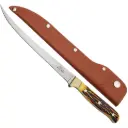
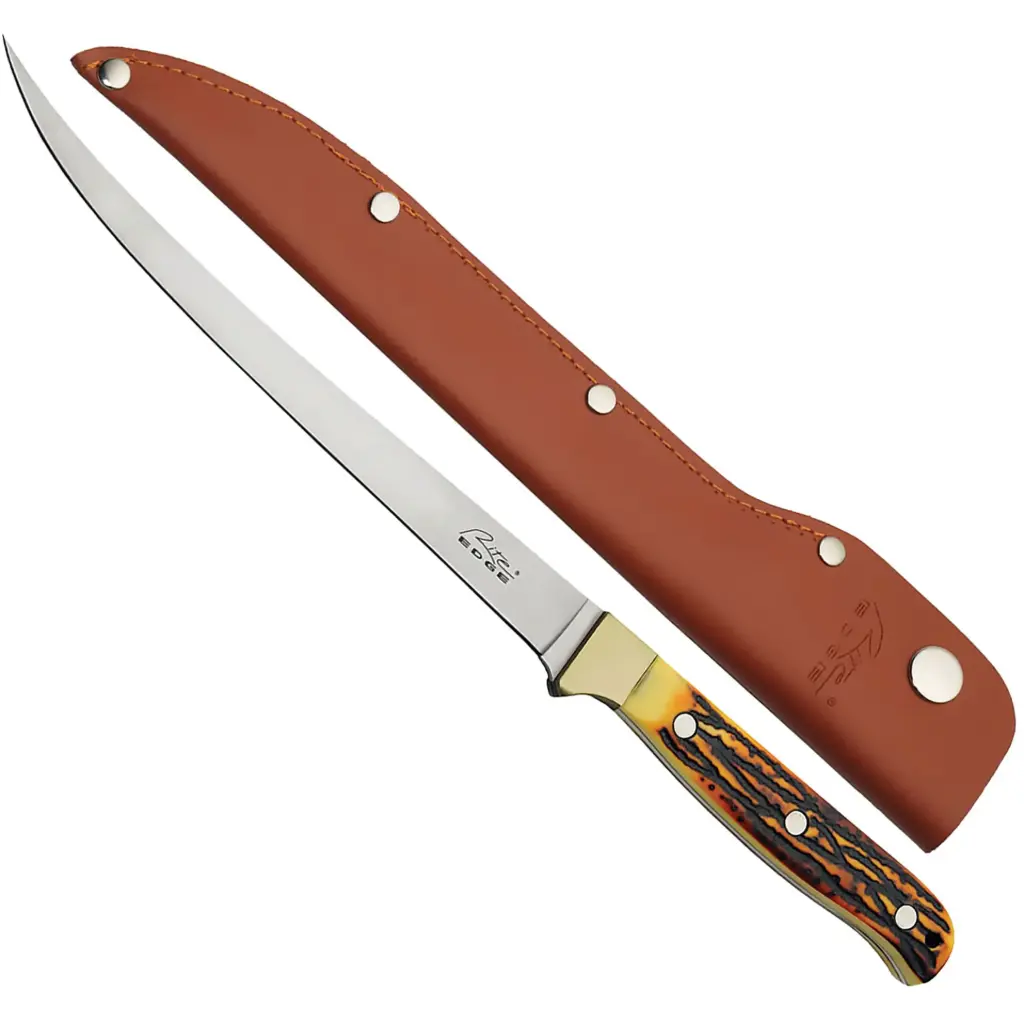
You’re at the cleaning table, sleeves rolled up, fish on the board—and your fillet knife just glides. The Heritage Current precision fillet knife feels like something you found in your grandfather’s tackle box, but it cuts with crisp, modern confidence. The long, polished blade flexes exactly when you need it. The faux stag handle locks into your grip, even when wet. On your belt, in its leather sheath, it quietly says what you already know: you’re the one who brings the catch home and turns it into dinner.
| Blade Length (inches) | 7.5 |
| Overall Length (inches) | 12.25 |
| Weight (oz.) | 3.19 |
| Blade Color | Silver |
| Blade Finish | Polished |
| Blade Style | Trailing Point |
| Blade Edge | Plain |
| Blade Material | Steel |
| Handle Finish | Glossy |
| Handle Material | Faux Stag |
| Theme | Hunting |
| Handle Length (inches) | 4.75 |
| Tang Type | Full Tang |
| Pommel/Butt Cap | Brass cap |
| Carry Method | Belt Carry |
| Sheath/Holster | Split leather sheath |
The fish is on the cutting board, the day’s light starting to fade, and everyone’s waiting to see what you do next. This is the moment where a good fillet knife doesn’t just make the work easier—it makes you look like you’ve done this a thousand times. One clean cut behind the gill, the blade rides the spine, and the fillet peels away in a single smooth motion. No sawing, no waste, no drama. Just you, the fish, and a tool that finally moves the way your hands always wanted it to.
When Your Fillet Knife Makes You Look Like You’ve Been Here Before
You’ve probably used enough cheap blades to know how they make you feel—hesitant, slow, a little clumsy. With a real fillet knife in your hand, that changes. The 7.5-inch trailing point blade on this one gives you reach along the length of the fish, letting you start the cut farther back and ride it all the way to the tail in a single, confident pass. The steel is ground thin enough to flex along the bones, but not so floppy that you’re guessing where the edge will land. You get that subtle bow as you press, the kind that lets you chase every ounce of meat off the rib cage without digging in.
What this means for you: less waste, more clean fillets, and a rhythm at the cleaning table you can actually enjoy. You’re not fighting the blade anymore—you’re just guiding it.
Why This Fillet Knife Feels Like Something Passed Down
The first thing you notice isn’t the blade; it’s the handle. That faux stag, in warm amber and dark brown, looks like the kind of hunting knife you saw in old photos—only here, it’s wrapped around a purpose-built fillet knife. The jigged texture gives your fingers something to bite into when things get wet and slick. It doesn’t feel like plastic. It feels like a real field tool that’s lived some stories.
Underneath that handle, the full tang runs the entire 12.25-inch length, locked in with three visible rivets. You can feel that solidity the first time you bear down along a stubborn backbone. There’s no flex where there shouldn’t be, no vague movement between handle and blade. Just a straight, honest connection from your grip to the cutting edge.
The brass guard catches your index finger before it ever slips forward, and the brass butt cap gives the knife visual weight and balance in your hand. It’s a small thing, but when you lay this on the table next to someone’s bright plastic daily carry blade, everyone knows which one looks like it belongs at a hunting camp.
Carrying a Fillet Knife That Always Feels Ready, Never In The Way
Owning a good fillet knife doesn’t mean much if it lives forgotten in a drawer. This one is built to actually ride with you—to the dock, the riverbank, the cooler in the back of the truck. The split leather sheath is simple, traditional, and honest: stitched, riveted, and shaped to hug that long, narrow blade. Slide it in and you get that soft leather friction and a quiet reassurance that the edge is protected.
The integrated belt loop means you can wear it at your hip while you’re hauling gear, checking lines, or running the boat. No flopping around, no cheap nylon straps to fiddle with. When you need it, your hand doesn’t search—it just lands on the faux stag handle, pulls, and the polished blade is in your hand, catching the light.
For you, that means less improvising with pocket knives and multitools, and more feeling like you brought the right tool for the job on purpose. It becomes part of your fishing kit the same way your favorite rod or tackle box is: automatic, expected, trusted.
When The Right Fillet Knife Changes The Whole Cleaning Table
There’s a quiet difference between hacking through a pile of fish and working through them with calm, steady precision. The right fillet knife turns a chore into a ritual. You notice it in tiny moments: the way the edge slips under the skin and pulls it away in one clean sheet; how easily you can trace the contour of a rib cage by feel, not guesswork.
This long, narrow blade is built for those exact movements. The trailing point tip gives you the reach to start delicate cuts and the control to follow tight lines along bone. At just 3.19 ounces, the weight almost disappears in your hand, so you’re steering with fingertips instead of brute force. That lightness lets you work longer without fatigue, especially when you’ve got a cooler full to get through.
And here’s the part you don’t think about until you experience it: when your tool keeps up with you, you’re more patient. You trim better, you waste less, and the fillets that go into the pan or freezer actually look like something you’re proud to serve.
The Feel Of Steel On Bone And Board
Close your eyes and picture it: the soft scrape of steel along the backbone, the whisper as the edge kisses the cutting board without digging in. That’s the tactile feedback you get when a fillet blade is ground right and balanced well. This one gives you that every time—enough stiffness to track straight, enough flex to hug the bones so you know exactly where you are with every pass.
The Quiet Confidence Of A Knife That Looks The Part
There’s also what this knife says about you without a word. The polished blade, the faux stag handle, the brass accents, the leather sheath—they don’t shout. They just sit there with the easy confidence of gear that belongs outdoors. When you lay it on the tailgate or the cleaning table, it doesn’t look like something you grabbed last minute. It looks like something you chose.
Questions People Ask Before Buying a Fillet Knife
How long should a fillet knife be for everyday fishing trips?
For most freshwater fish and average saltwater catches, a fillet knife around 7.5 inches hits the sweet spot. It’s long enough to run full-length cuts on bass, trout, walleye, and similar fish, but still manageable when you’re working closer to the head or trimming around bones. If you’re cleaning a mixed haul, this length keeps you covered without feeling oversized.
Will this fillet knife hold up to regular outdoor use?
Yes. The full tang construction, three-rivet handle, and solid brass guard make this fillet knife feel planted and durable even when you’re working fast or pressing harder along thick spines. The polished steel blade shrugs off normal wet use as long as you rinse, dry, and sheath it—basic care that matches how you already treat the rest of your fishing gear.
Is it comfortable to carry a fillet knife on my belt?
If you like having your tools where your hands can find them without thinking, belt carry works well for a fillet knife like this. The split leather sheath sits flat against your side with a fixed belt loop, so the knife doesn’t swing wildly or dig awkwardly into your hip. You can walk, bend, haul gear, and it just stays put until you need it.
Can a fillet knife be used as a general camp knife?
You can absolutely press a fillet knife into lighter camp duty—slicing food, trimming bait, making clean cuts where precision matters. It’s not meant for prying, batoning wood, or heavy chopping, though. Think of it as your specialist blade: the one that shines when thin, clean, controlled cuts are what you actually want.
Picture the next time you step up to the cleaning station—hands a little cold, fish lined up, everyone half-watching to see how this goes. You slide this fillet knife from its leather sheath, the polished blade catching the last light of the day, faux stag fitting into your palm like it’s always belonged there. The first cut lands exactly where you meant it to, the steel flexes along the bone just enough, and suddenly you’re not just the one who caught dinner—you’re the one who knows how to turn it into something worth gathering around. That’s who you become every time this knife is in your hand.