LineGuard Service-Ready Honing Steel - Black Handle
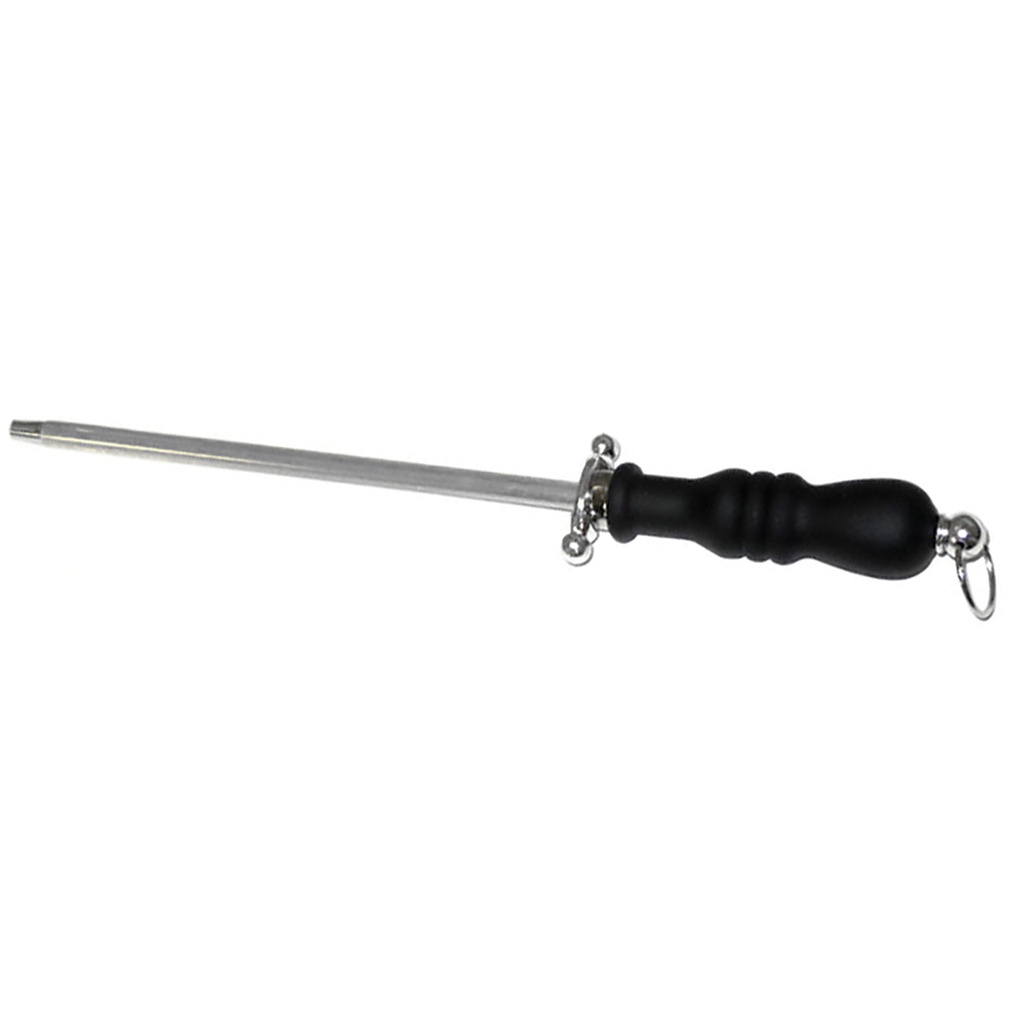
You know the moment—the board’s wet, the ticket rail’s full, and your chef’s knife starts dragging. A quick pass on a reliable honing steel keeps your rhythm, not just your edge. This 12-inch carbon steel rod hangs where you work, black handle locked in your grip, finger guard between you and the rush. A few smooth strokes, the blade bites again, and service keeps moving like you never broke tempo. That’s your standard now—with a trusted honing steel always within reach.
The rail is packed, the grill is smoking, and you feel it before you see it—your knife doesn’t glide through that next tomato, it crushes. In a busy kitchen, that tiny drag is the first sign your edge is slipping, and you don’t have the luxury of walking away from the line. This is the moment a dependable honing steel either lives where you work… or your whole station starts to slow down.
When a Honing Steel Lives on the Line, You Stay in Rhythm
Picture your station mid-rush. Cutting board wet, towel half-soaked, tickets stacking. Your chef’s knife has been hitting plastic all night, kissing the pan rims, tapping the board. The edge hasn’t died, it’s just wandered. With a honing steel hanging right above your station, your fix is measured in seconds, not minutes.
You wipe the blade once, grab the contoured black handle without even looking, and feel your fingers fall into those subtle curves. The finger guard plants itself between your hand and the 12-inch carbon steel rod. Three, maybe four strokes. That familiar whisper of steel on steel cuts through the kitchen noise. You go back to work and the knife slides through onions like the first cut of the night. Nobody at the pass knows you just saved yourself from a slow spiral of ragged cuts and crushed prep—they just see plates leaving on time.
How a Honing Steel Quietly Keeps Every Knife in Your Kit Honest
If you’ve ever watched an edge go from laser to butter knife in a week, you already know: sharpening and honing are not the same thing. A honing steel doesn’t grind metal away; it realigns the microscopic teeth along your blade’s edge. It’s the difference between waiting until a knife is unusable and giving it quick, respectful maintenance every shift.
This 12-inch round rod gives you enough length to reset chef’s knives, slicers, and boning knives without short, awkward strokes. Carbon steel grabs those tiny edge teeth just enough to nudge them back into line, instead of skating uselessly over them. You feel the blade settle into the rod’s surface as you pull it down, a smooth, consistent drag that tells you the edge is actually being corrected, not just polished.
That small ritual—blade at the right angle, a few confident passes on a honing steel before service—adds up. Your knives stay sharper between real sharpening sessions, your cuts get cleaner, and your bandaged-finger days show up less often. It’s not flashy, it’s not dramatic. It’s just one of those professional habits that quietly separates a cook who fights their tools from one whose tools keep up.
Grip, Guard, and Hanging Loop: Why This Honing Steel Feels Made for Real Service
There are tools that look good in a catalog, and there are tools that make sense after four hours on a slammed station. The handle on this honing steel was built for the second reality. That black, contoured grip isn’t about style—it’s about staying locked in when your hands are wet, greasy, or flying between tasks.
The synthetic handle stays secure even when your fingers are slick from chicken fat or tomato juice. Those curved bulges give your hand a natural index point, so you can pick it up mid-conversation, mid-yell, mid-ticket, and still land the same solid hold every time. The metal finger guard? That’s the quiet barrier between your knuckles and a moving blade when you’re working on autopilot.
The Feel of a Tool You Don’t Have to Baby
Run the blade down the rod and you hear a clean, even ring of metal on metal—not a harsh scrape, not a dull clank. You feel just enough resistance to know you’re making contact all along the edge, but not so much that it feels like work. When you’re done, the hanging loop at the end of the handle sends it right back to its home above the line or on a hook by the butcher block, ready for the next pass.
Built for Kitchens That Don’t Slow Down
In a butcher shop or high-volume kitchen, a honing steel becomes part of the scenery. The round carbon steel rod shrugs off daily use, the smooth matte finish hides the inevitable scuffs of a life lived in stainless and steam, and the metal fittings at each end reinforce that this is meant to be grabbed, used, and hung again. No polishing, no coddling—just work.
How a Honing Steel Changes the Way You Use Your Knives Every Day
Think about all the times you’ve worked around a dulling edge instead of fixing it. You press harder on the board. You saw instead of slice. You start avoiding delicate cuts because they’re just annoying now. A honing steel within arm’s reach interrupts that slide into bad habits.
At home, it might live on a magnetic strip next to your favorite chef’s knife, ready for a few strokes before you break down a chicken or prep vegetables for the week. On the line, it hangs where you can grab it between tickets, keeping your carry knife, your 8-inch workhorse, and your slicer tuned without leaving your station. Every quick pass buys you more time between full sharpening sessions and less frustration in the middle of actual work.
Over time, you start to trust that your knives will behave the way you expect. That confidence shows up everywhere—in the way you julienne faster without fear, in the clean faces of your roasts, in the thin, even slices that make your plates look composed instead of forced. The honing steel doesn’t take credit. It just makes sure your blades are ready when you are.
When a Honing Steel Becomes the Quiet Fix Between Chaos and Control
The difference between a dragging blade and a clean cut isn’t just about speed; it’s about safety and sanity. A honing steel is the tool you reach for when you feel tension creeping into your shoulders because the knife in your hand isn’t doing what it should.
In a moment where another cook might grit their teeth and push through with a tired knife, you pause for ten seconds. Blade. Rod. Stroke. Stroke. Stroke. You check the edge with a quiet slice through a scrap of onion skin or a stray herb stem, feel it bite again, and go right back to service. No drama. No announcement. Just control restored with a tool you barely had to think about.
Questions People Ask Before Buying a Honing Steel
Do I still need to sharpen my knives if I use a honing steel?
Yes. A honing steel realigns the edge; it doesn’t remove metal like a sharpener does. Think of honing as daily or weekly maintenance that keeps your knives cutting well between proper sharpening sessions. You’ll sharpen less often, but you won’t eliminate sharpening entirely.
How often should I use a honing steel on my kitchen knives?
If you cook professionally or prep a lot at home, a few light passes on a honing steel before each session is a good rhythm. In a restaurant, that might mean honing before service and again mid-shift. At home, once a week or every few uses is usually enough to keep your edge feeling crisp.
Is a 12-inch honing steel too big for home use?
A 12-inch honing steel is standard in professional kitchens because it works with a wide range of blade lengths. At home, it might feel big at first, but the extra length actually makes honing safer and smoother, giving you full strokes on chef’s knives and slicers without awkward, cramped movements.
What’s the difference between a honing steel and those pull-through sharpeners?
A honing steel lets you control angle and pressure, gently realigning your knife’s existing edge. Pull-through sharpeners remove metal quickly with fixed angles that can be harsh on blades. Many cooks use a honing steel regularly and reserve more aggressive sharpening tools for when the edge is truly dull.
End of the night, last ticket called, and the kitchen finally exhales. You wipe down your board, rinse your knives, and before you hang the apron, you give your favorite blade a few final strokes along your honing steel. The edge sings quietly, realigned and ready. Tomorrow’s prep will start the way you like to work—clean cuts, steady pace, no fight between you and your tools. You hang the steel by its loop, kill the lights, and walk out knowing your knives will be as ready as you are when the line heats up again.