Outpost Hammer-Back Tactical Hatchet - Black Powdercoat Wood
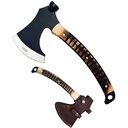
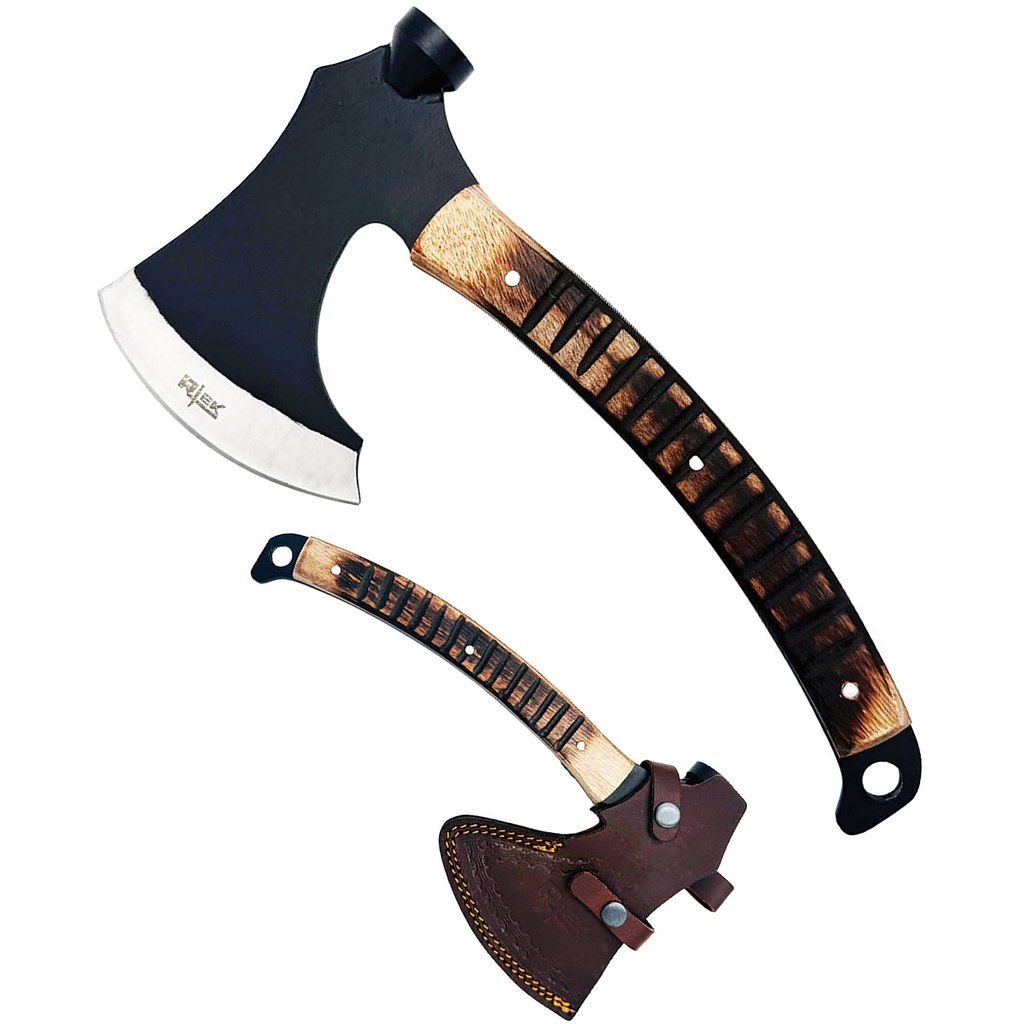
You know that moment in camp when everyone realizes the cute little multitool isn’t cutting it? That’s when your tactical hatchet comes out. The black powder-coated head bites clean; the hammer-back sets stakes with a couple of solid blows. Full-tang steel runs through warm, grooved wood in your hand, leather sheath still creaking from the hike in. You’re the one with the tool that just works—no fuss, no drama, just clean cuts and quiet confidence.
You notice it the first time a cheap camp axe glances off a knot and sends a shiver up your arm. In that split second, you realize something: you’re trusting a piece of metal and wood to do a job that actually matters—shelter, fire, safety—and it feels sketchy. That’s the moment a tactical hatchet stops being gear on a screen and starts being the difference between “good enough” and “I’ve actually got this.”
Where a Tactical Hatchet Changes the Whole Camp
Picture rolling into a rough little outpost of a campsite as the light drops faster than you wanted. You don’t have time to debate tools. You pull this compact tactical hatchet from its leather sheath, feel the 12-inch length settle into your hand, and start working. The black powder-coated head drops cleanly into kindling, the bright edge biting with a solid, confident thunk instead of a jarring bounce.
Because the head carries enough weight—about 26 ounces total—you’re not swinging harder, just smarter. The bearded-style curve gives you control on finer cuts when you choke up near the head, then real chopping power when you slide back on the handle. You’re not babying it. You’re not asking if it can handle another knot. You already know it can.
How This Tactical Hatchet Earns Trust in Your Hand
Trust doesn’t come from marketing lines; it comes from how a tactical hatchet feels when you’re actually using it. Here, the full-tang construction is doing quiet work under the surface. Steel runs the entire length from blade through the handle, backed by stainless reinforcement plates you can see and feel. That means when you strike, the force goes into the wood and the target—not into some weak joint waiting to fail.
The handle itself tells you a lot about how this was designed. Grooved, dark-accented wood fills your palm with warmth instead of that dead, plasticky feel. Those carved grooves aren’t for looks; they give your fingers something to lock into when sweat, rain, or morning frost slicks everything else. You’re not readjusting your grip every other swing. You’re focused on the task in front of you: splitting, trimming, building, fixing.
The black powdercoat on the head adds more than attitude. It cuts down glare when the sun hits just wrong and adds a layer of protection against rust when you toss it back in the truck or forget to wipe it down after a wet night in the woods. You get to be human and a little imperfect; the tool is built with that in mind.
Carry a Tactical Hatchet That Actually Fits Your Life
A tactical hatchet doesn’t help if it keeps getting left behind. At 12 inches overall, this one threads that line between compact and capable. It’s short enough to ride on your belt in the leather sheath without feeling ridiculous, but long enough that each swing means something. The sheath itself feels like gear, not packaging: dark brown leather, contrast stitching, and snap closures that you can work even with cold, clumsy fingers.
You can see this riding on a belt in camp, sliding into a side pocket on your pack, or living behind the seat of your truck as part of your quiet emergency kit. The lanyard hole at the base gives you options—tie in a wrist cord for river-edge work, or add a bright marker so it’s easy to spot in tall grass or a cluttered gear bin.
The Everyday Moments This Hatchet Quietly Solves
This isn’t just for big, dramatic survival scenes. It shows up in the small, real moments: tapping in tent stakes with the hammer-back while everyone else fights bent aluminum with a rock; trimming low limbs so you’re not waking up with branches pressing into your tent; making feathersticks when the wood at camp is too damp and you need every bit of dry core you can tease out.
And when someone hands you a “camp axe” from the bargain bin that rattles in its handle, you’ll understand the quiet confidence of having your own well-built tool hanging at your side.
When a Tactical Hatchet Beats the Knife, the Saw, and the Multitool
There’s always that debate around the fire: which is better—knife, saw, or tactical hatchet? You already know the answer isn’t one-size-fits-all. But you also know there are jobs where nothing short of a real hatchet makes sense.
The hammer-back changes the equation. Instead of beating on stakes, hooks, or wedges with the side of a knife handle or a random rock, you use an actual striking surface built for it. You set rebar pins, tap in hardware for makeshift shelters, or crack through frozen ground without chewing up your blade edge. The cutting side stays sharp for chopping and shaping. The hammer side takes the beating.
That’s what makes this feel like field gear, not just another camping accessory. You’re reducing the number of tools you need to bring without increasing the number of compromises you accept.
The One Specific Detail That Sticks With You
Every good piece of gear has that one memory burned in. Maybe it’s the time you used the hammer-back to straighten a bent trailer latch on a rainy roadside, or the morning you split stubborn, twisted hardwood without a single deflected swing. You’ll remember the weight, the sound of the strike, and the simple relief of thinking, “I’m glad I brought this.”
Questions People Ask Before Buying a Tactical Hatchet
Is a 12-inch tactical hatchet actually big enough for real camp work?
For most camp chores, yes. A 12-inch tactical hatchet with a full-tang build and around 26 ounces of weight gives you solid chopping power without feeling like a full-size axe. You won’t be felling big trees, but for kindling, small limbs, stakes, and general utility, the size works in your favor.
Can a tactical hatchet replace my camp knife and saw?
In many situations, it can cover what you actually use those tools for. A tactical hatchet handles chopping, splitting, light carving, and hammering. A saw is still better for quiet, clean cuts in thicker wood, and a knife excels at fine detail work, but this kind of hatchet lets you carry fewer tools without feeling underprepared.
How do I carry this hatchet safely on the trail?
This compact hatchet comes with a fitted leather sheath that snaps securely over the head. You can run it on your belt, lash it to a pack, or tuck it into a side pocket. As long as the sheath is snapped and you respect the edge, carrying a tactical hatchet is straightforward and trail-safe.
Will the wooden handle hold up if it gets wet or cold?
The grooved wood handle is backed by full-tang steel and stainless reinforcement, so you’re not relying on wood alone. Treat it like any good wooden tool—don’t leave it soaking in standing water, and let it dry between trips—and it will give you years of steady use in rain, cold, and heat.
Later, when the fire is down to coals and the last log you split is hissing in the ring, you slide the head of your tactical hatchet back into the leather sheath and feel that small, satisfying click of the snap. Your hands are tired in the good way, the way that says you chose the right tool, not the flashy one. This isn’t just another piece of gear to toss in a tote. It’s the compact, hammer-back hatchet that quietly becomes part of how you show up—prepared, capable, and ready to handle what the outpost throws at you next.