Ridgebound Full-Tang Hunting Skinner Knife - Polished Wood
You’re at the tailgate, headlamp throwing a circle of light on fresh game, and your hunting skinning knife just…disappears into your hand. The polished wood is warm against your palm, the full-tang steel feels steady, and that curved drop point slides exactly where you intend. No drama, no wrestling—just clean, confident cuts. By the time you sheath it, you’re not thinking about the knife at all. You’re thinking, “Yeah. This is how it’s supposed to feel.”
| Blade Length (inches) | 4 |
| Overall Length (inches) | 7.5 |
| Blade Color | Silver |
| Blade Finish | Patterned |
| Blade Style | Drop Point |
| Blade Edge | Plain |
| Blade Material | Steel |
| Handle Finish | Polished |
| Handle Material | Wood |
| Theme | Patterned |
| Handle Length (inches) | 3.875 |
| Tang Type | Full Tang |
| Carry Method | Nylon Sheath |
| Sheath/Holster | Nylon |
You’re out past the last fence line, the light fading faster than you planned. The work still has to be done—field dressing, skinning, making sure nothing gets wasted. You reach for your gear, and here’s the quiet test you never say out loud: will your hunting skinning knife make this moment easier…or something you have to fight?
When a knife is right, you don’t notice it. You just notice that your hands are steady, your cuts are sure, and the job gets done without drama. That’s the whole point of this one.
How a Hunting Skinning Knife Changes the Work You Dread
Skinning is where a lot of knives get exposed. Too thick. Too slippery. Too toy-like once there’s real weight in your hands and real hide to work through. With this full-tang skinner, you feel something different the second you pick it up: balance that settles in low, near your fingers, not way out at the tip where it can get away from you.
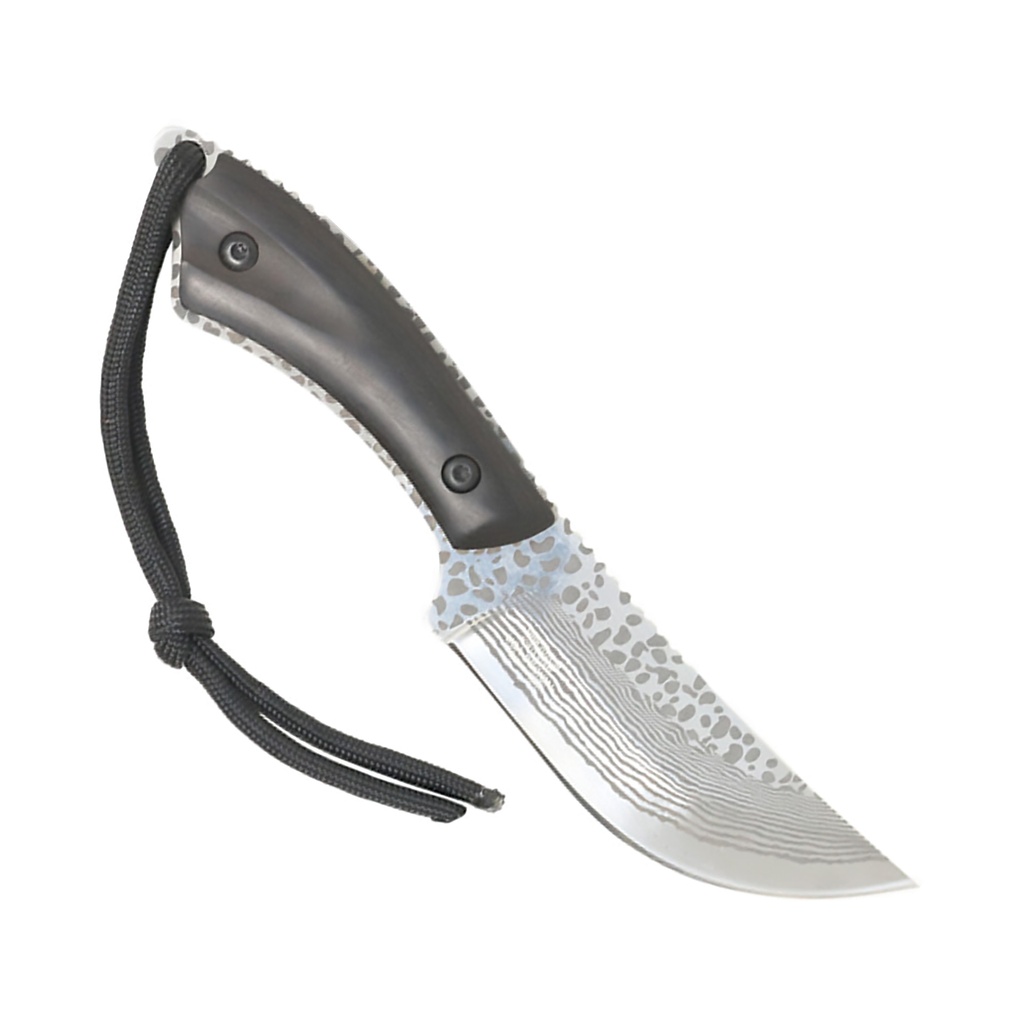
The 4-inch drop point blade gives you enough belly to ride cleanly along the hide, but not so much that you lose control in tight spots. That’s where the patterned steel becomes more than just looks. You feel that solid, one-piece confidence running the full 7.5 inches from tip to lanyard. When you twist your wrist or choke up on the spine jimping with a bloody thumb, the knife responds like it’s an extension of your hand, not some clumsy tool you’re questioning with every cut.
The moment you stop thinking about the knife
You know that rhythm you fall into when everything goes right? Slice, pull, separate, move on. A good hunting skinning knife doesn’t demand your attention—it gives it back to the animal, the meat, and the process you respect. That’s the shift this design is built for.
Why This Hunting Skinning Knife Feels So Natural in Hand
Look at the curve of the handle and you’ll see what your palm already knows. The polished wood isn’t just there to look traditional. That smooth contour lets your fingers lock in along the inside edge while the swell toward the butt of the handle keeps your grip anchored when things get slick. It’s the difference between wrestling a blade and guiding one.
The full-tang construction runs visibly through that wood, framed by a hammered-style pattern along the spine and tang. It’s not a fragile show finish—you can see the story of work in it before you ever use it. Two solid handle screws pin everything in place. No mystery joints. No hidden weak points. Just an honest, compact fixed blade that’s meant to be used, knocked around, wiped clean, and used again.
Sensory details that matter in the field
Close your eyes and picture this: cold steel against your thumb where the spine jimping bites just enough to stop slipping. The faint texture of patterned steel under your index finger as you choke up for finer cuts. The warmth of that polished wood handle after it’s been riding on your hip all day in the nylon sheath. These are small things, but they’re the exact details your hands remember when you’re tired, cold, and still not done.
Carrying a Hunting Skinning Knife You Don’t Have to Baby
In real life, your knife doesn’t live in a padded case. It rides on your belt, tossed in with other gear, dropped on tailgates, and put away faster than you mean to when the wind picks up and the temperature drops. This is where a compact fixed blade earns its place in your everyday kit.
The included nylon sheath does one basic job very well: it keeps the blade where you put it and protects it from everything else getting thrown in the truck or pack. It’s light, it’s tough, and it doesn’t complain when it gets muddy or bloody. You wipe it down, maybe hit the blade with a little oil, and you’re back in business. A lanyard cord on the handle butt gives you options—hang it in camp, pull it from a pocket with gloves on, or lash it where you want it in your rig.
Even away from the hunt, this knife earns its keep. As a compact field knife, it opens feed bags, trims rope, cleans up kindling, or preps camp food without feeling like overkill. You get the steady feel of a full-tang fixed blade without the bulk of a big survival knife swinging off your hip.
When a Hunting Skinning Knife Makes the Difference Between Struggle and Skill
You already know this: your gear either amplifies your skill or exposes its limits. A dedicated hunting skinning knife is one of those quiet tools that can make you feel more capable without you changing anything else. It’s not about looking tactical or collecting another blade for the drawer. It’s about having the right shape, the right length, and the right feel when you’re elbow-deep in a job you don’t want to repeat because of one bad slip.
That moderate belly along the edge helps you roll through long skinning cuts without digging in too deep. The drop point tip stays strong and predictable, so when you’re working around joints or easing into tight areas, you have precision instead of guesswork. Steel, wood, full tang, simple sheath—none of that is fancy. But when each piece is done right, the experience becomes something you trust.
You start to notice that you’re calmer when the knife’s in your hand. You move cleaner, you waste less, and you work faster without rushing. That’s not hype. That’s what happens when the tool stops getting in the way.
Questions People Ask Before Buying a Hunting Skinning Knife
Is a 4-inch hunting skinning knife big enough for real field dressing?
Yes. A 4-inch blade on a compact full-tang skinner is more than enough for most deer, hog, and similar game. You get better control, less fatigue, and easier maneuvering around joints and tight spots than with an oversized blade.
Can I use this hunting skinning knife as a general camp or everyday carry blade?
You can. While it’s shaped for skinning, the drop point profile and plain edge work well for camp chores, cutting cord, light food prep, and daily utility. Think of it as a reliable field knife that happens to excel at processing game.
How hard is it to maintain a patterned steel hunting skinning knife?
Maintenance is straightforward. Wipe the blade clean after use, dry it thoroughly, and add a light coat of oil before it goes back in the nylon sheath. The patterned finish doesn’t change how you sharpen or care for the steel—it just adds grip and character.
Is a polished wood handle too slick when it’s wet or bloody?
The polished wood looks smooth, but the handle shape does most of the work. The contour, palm swell, and full-tang outline give your fingers anchor points, and the spine jimping adds extra control. Once you’ve used it a few times, it tends to feel even more secure in hand.
Picture your next trip: the sun dropping behind the trees, the quiet after the shot, that familiar mix of gratitude and responsibility settling in. You reach for your hunting skinning knife and don’t hesitate. The polished wood handle fits like it did the last time. The steel shows its patterned scars like a record of work already done. You make the first cut, and the blade moves exactly where your mind intends. In that moment, you’re not someone fumbling with gear—you’re the steady one, the prepared one, the person whose tools match the way they show up in the field.